

Group fitness games can turn a regular workout into an experience people want to repeat. Instead of following another predictable circuit, participants move, laugh, communicate, and work toward a shared challenge.
The best games are still real workouts. They simply add surprise, teamwork, choice, and friendly competition. This guide gives group fitness instructors, personal trainers, and bootcamp coaches 10 games they can run indoors or outdoors with clear rules and easy modifications.
Quick answer: Choose a group fitness game that matches your class goal. Use BoardGains or a team AMRAP for a full workout, Fitness Bingo for mixed levels, a dice workout for surprise, a relay for high energy, or Four Corners for a quick warm-up or finisher.
Need help teaching the exercises in your next group workout?
Use the BoardGains Exercise Guide to review each movement, coach safe form, and offer easier or harder options for different fitness levels.
Table of Contents
- Why Use Games in Group Fitness?
- How to Choose the Right Game
- 1. BoardGains Fitness Game
- 2. Fitness Bingo
- 3. Team AMRAP Challenge
- 4. Roll-the-Dice Workout
- 5. Partner Rep Challenge
- 6. Fitness Relay Race
- 7. Workout Scavenger Hunt
- 8. Beat-the-Clock Circuit
- 9. Reaction Cone Challenge
- 10. Fitness Four Corners
- Ready-to-Use 45-Minute Class Plan
- Frequently Asked Questions
Why Use Games in Group Fitness?
A workout game gives participants something to focus on besides the clock. The goal may be to complete a lap, collect points, solve a challenge, or help a partner. Exercise becomes part of the experience instead of the only thing people think about.
Group fitness games can help you:
- Build connection between class members
- Add variety without changing every exercise
- Give beginners and experienced participants ways to contribute
- Create energy during warm-ups, full workouts, and finishers
- Encourage communication and positive competition
- Make bodyweight workouts feel less repetitive
Games do not need to be complicated. Clear rules, familiar exercises, and one simple goal are often enough to change the mood of the whole class.
How to Choose the Right Group Fitness Game
Start with the result you want from the session. Then choose the game format that supports it.
| Class Goal | Best Game Options | Suggested Time |
|---|---|---|
| Complete full-body workout | BoardGains, Team AMRAP | 20–35 minutes |
| Build class connection | Partner Rep Challenge, Fitness Bingo | 10–20 minutes |
| Raise energy quickly | Relay Race, Reaction Cone Challenge | 5–12 minutes |
| Add surprise and variety | Dice Workout, Scavenger Hunt | 10–25 minutes |
| Finish the class | Beat-the-Clock Circuit, Four Corners | 4–10 minutes |
Before You Start
- Check the floor and remove bags, loose equipment, and other hazards.
- Explain the goal and show one complete example round.
- Review every exercise before adding speed or competition.
- Give each movement an easier and harder option.
- Use small teams so people spend less time waiting.
- Tell participants that control and range of motion matter more than rushing.
1. BoardGains Fitness Game
Best for: Full classes, bootcamps, team workouts, and special events
Equipment: BoardGains game
Time: 15–35 minutes
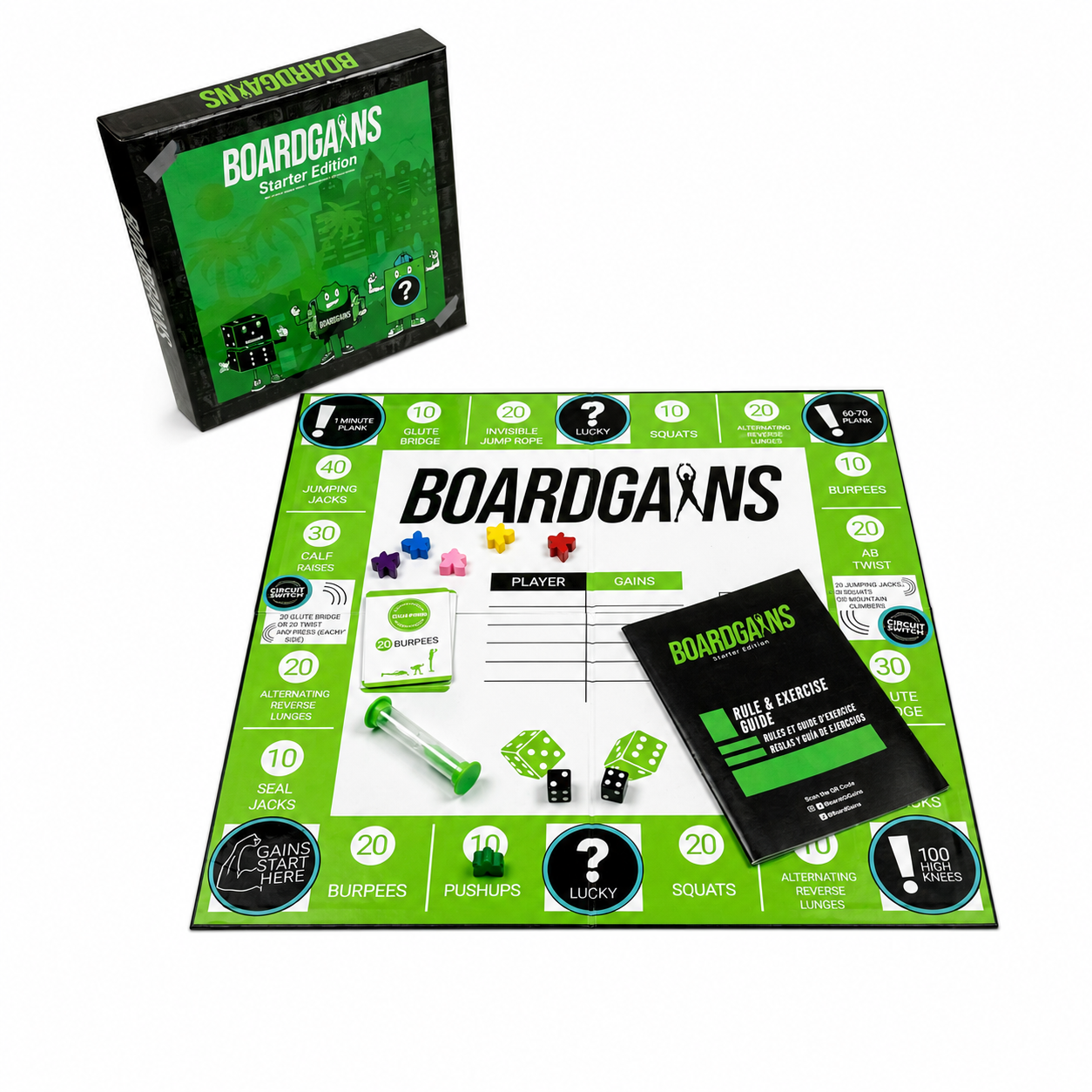
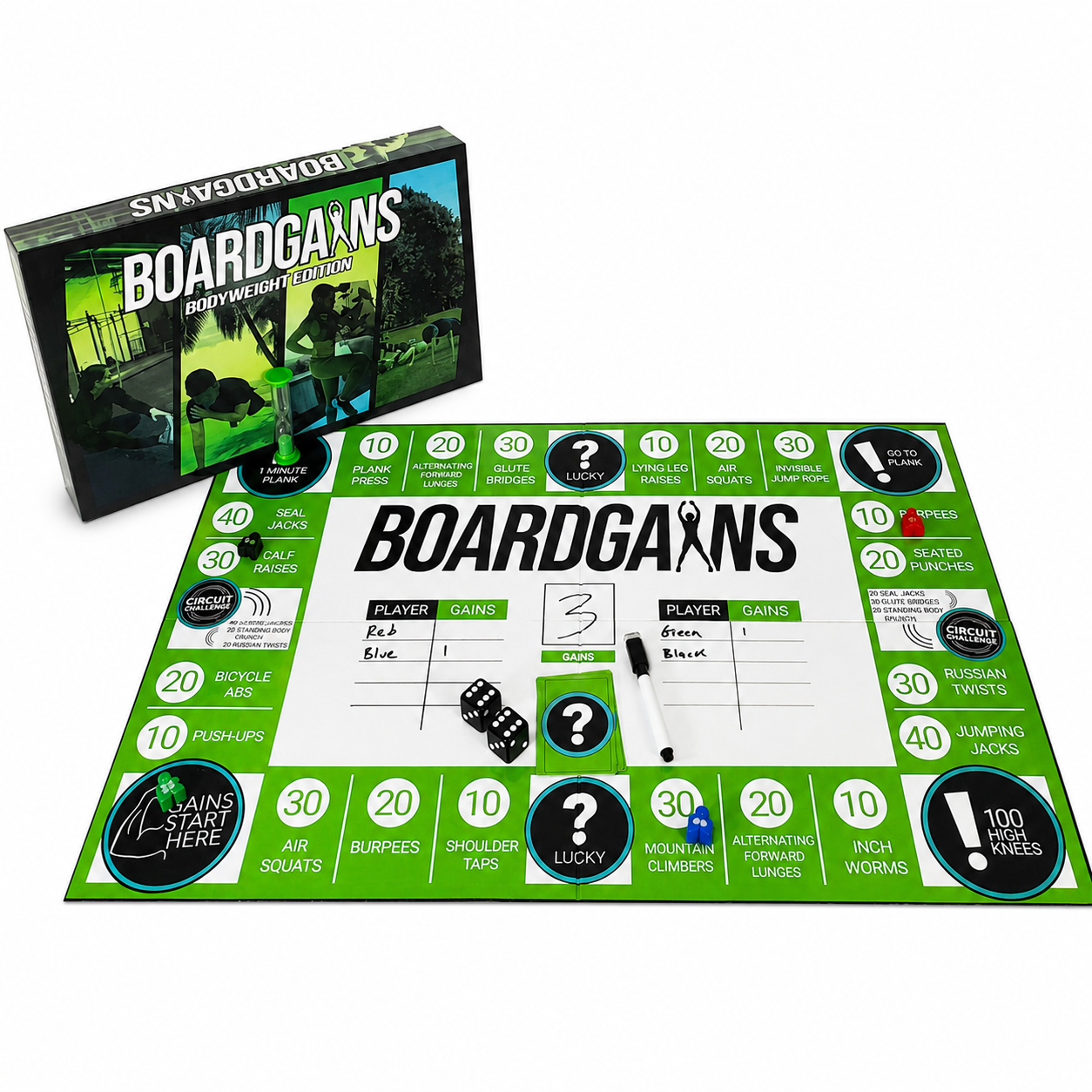
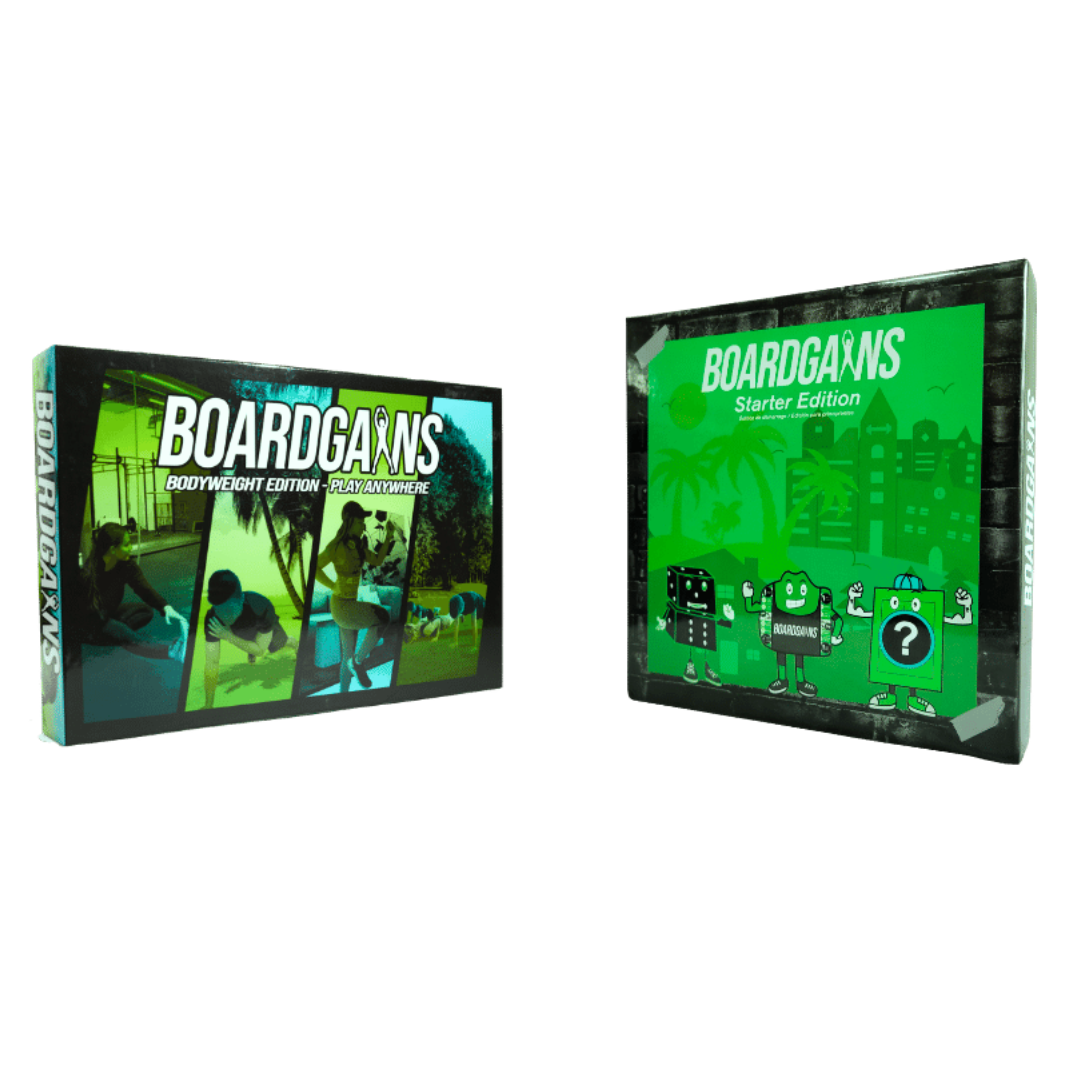
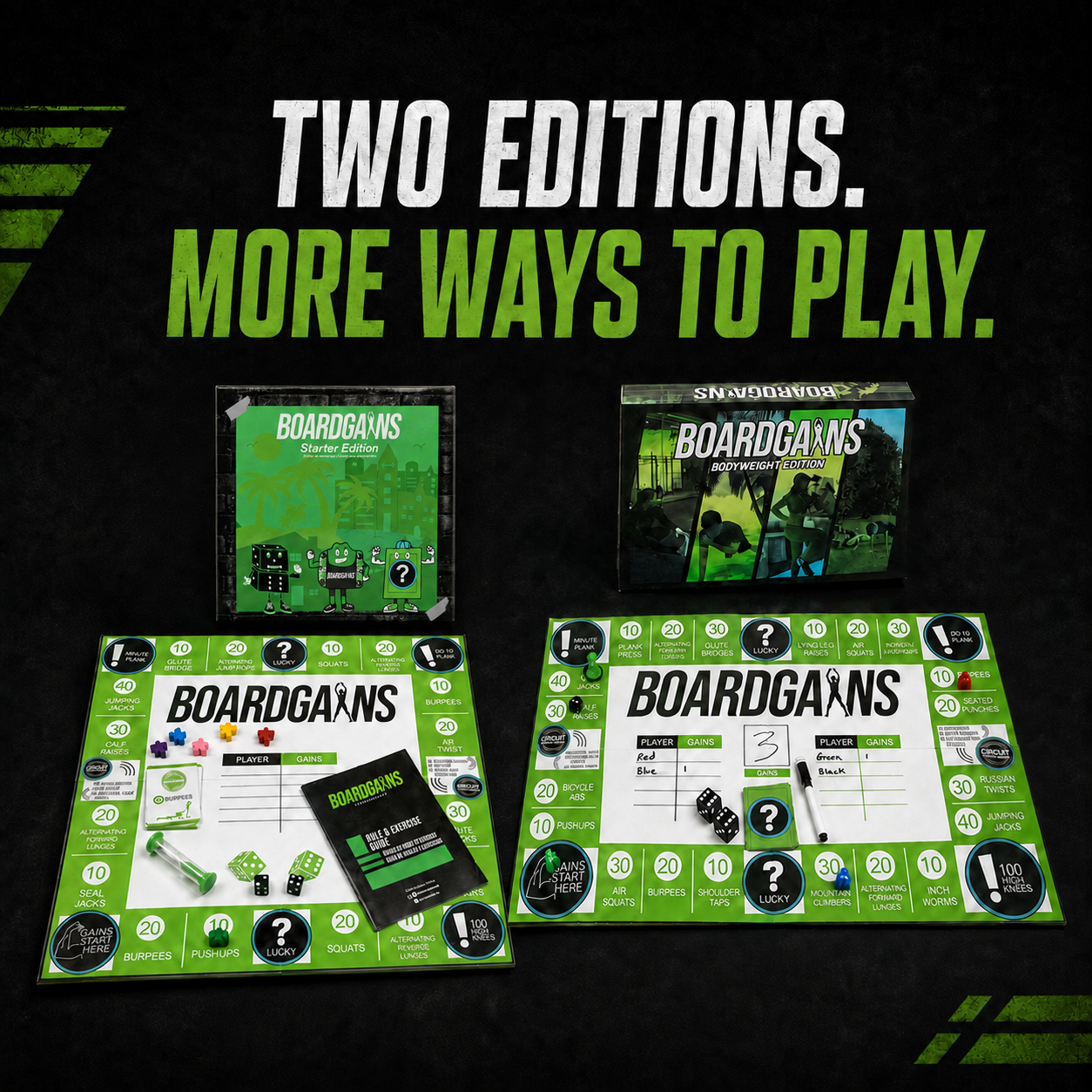
BoardGains turns a bodyweight workout into a race around a game board. The board gives the class a changing workout, while the Gains Goal gives every player or team a clear finish line.
How to Play
- Set a Gains Goal based on your class time. One lap around the board equals one Gain.
- Set up players or teams and give each one a game piece and workout space.
- Review any exercises that may be new to the class.
- Start everyone together. Players roll, move, complete the exercise they land on, and repeat.
- The first player or team to reach the Gains Goal wins.
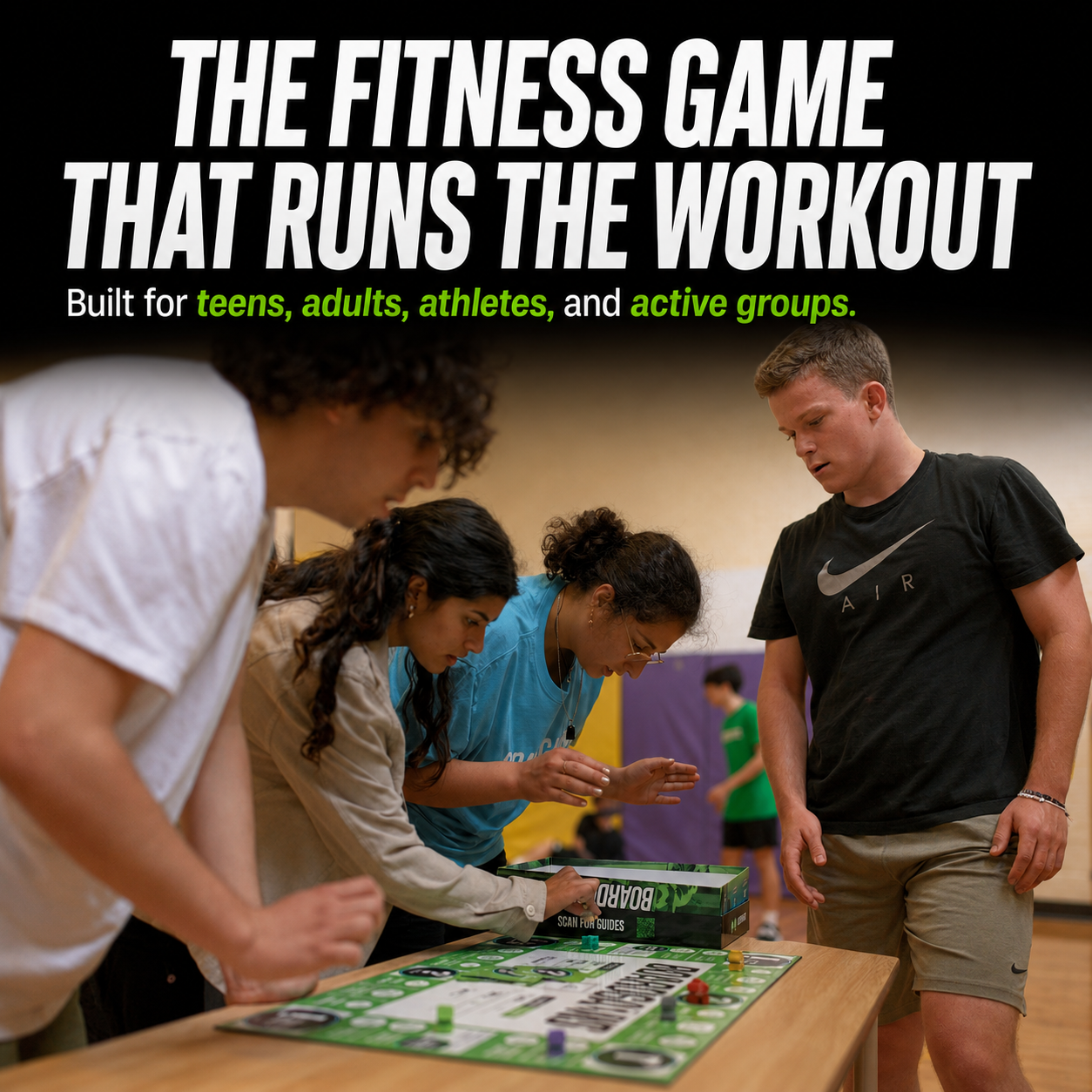
Instructor tip: Keep the board on a stable table and spread workout spaces around it. If you have a large class, use teams and assign one person to roll while the other members prepare in their workout zone.
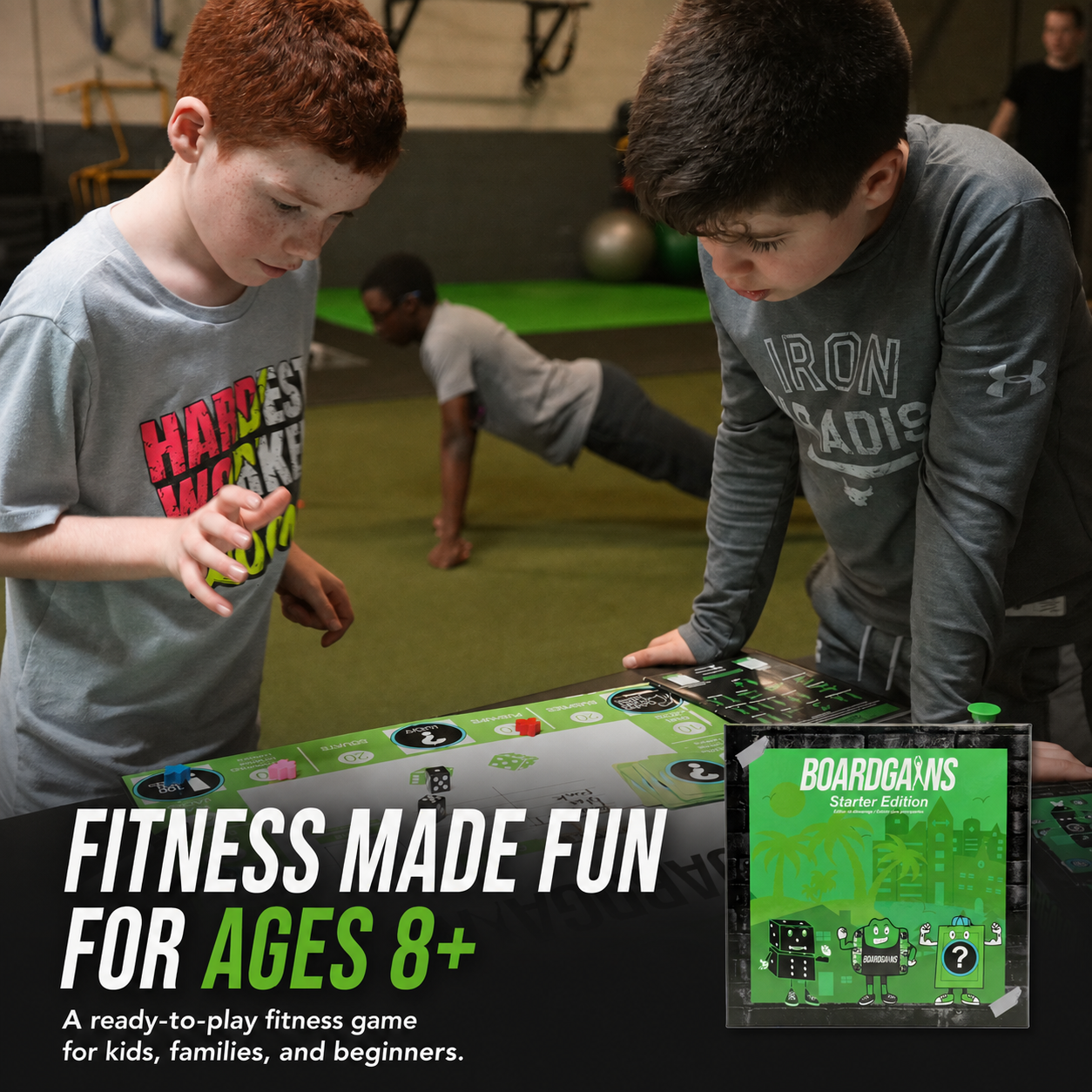
Modification: Use the BoardGains Starter Edition, seated options, or shorter work periods for beginners. Experienced groups can use the BoardGains Pro Edition or add a team challenge after each completed lap.
Learn How to Play BoardGains →
2. Fitness Bingo
Best for: Mixed fitness levels and community-building classes
Equipment: Printed or reusable bingo cards
Time: 10–20 minutes
Replace bingo numbers with exercises or movement challenges. The goal can be one line, four corners, an X, or a full card.
How to Play
- Give each person or team a bingo card.
- Call one square at a time or let participants choose their own path.
- Players complete the movement before marking the square.
- The first person or team to complete the chosen pattern calls “Bingo!”
- Check the completed movements before confirming the winner.
Movement ideas: 10 squats, 20 seated punches, 15 step jacks, a 20-second plank, five inchworms, or a one-minute walk.
Instructor tip: Put two options in each square, such as jumping jacks or step jacks. Participants can choose the version that works for them without leaving the game.
3. Team AMRAP Challenge
Best for: Strength and conditioning classes
Equipment: Whiteboard or exercise signs
Time: 12–25 minutes
AMRAP means “as many rounds as possible.” In this team version, participants share the work and try to complete quality rounds before time ends.
How to Play
- Create teams of two to four.
- Post a short circuit with three to five exercises.
- Give the team a total number of repetitions to complete for each movement.
- Team members divide the repetitions in any way they choose.
- After finishing all exercises, the team records one round and begins again.
Example round: 30 squats, 40 mountain climbers, 30 standing body crunches, and a 60-second team plank total.
Instructor tip: Score completed rounds plus extra repetitions. Remind teams that clean movement counts—rushed repetitions do not.
Modification: Let each person choose a standing, seated, or floor-based version. The team total stays the same while the movement fits the participant.
4. Roll-the-Dice Workout
Best for: Quick setup, small spaces, and unpredictable workouts
Equipment: One or two dice and an exercise list
Time: 8–20 minutes
A die selects the movement, the repetitions, or both. Every roll changes the next part of the workout.
Simple Six-Movement Setup
- Squats
- Push-ups or wall push-ups
- High knees or marching knees
- Glute bridges
- Shoulder taps
- Choice movement
How to Play
- Divide the class into small teams.
- One player rolls to choose the exercise.
- Roll again and multiply the number by two or five to set the repetitions.
- Everyone completes the movement together.
- Rotate the roller and continue until time ends.
Instructor tip: For timed exercises, multiply the roll by five seconds. A roll of four becomes a 20-second hold or work period.
5. Partner Rep Challenge
Best for: Accountability, communication, and mixed levels
Equipment: Optional mats
Time: 10–18 minutes
Partners work toward a shared repetition goal. One person exercises while the other completes an active recovery or coaching role.
How to Play
- Pair participants and assign one shared goal for each movement.
- Partner A completes controlled repetitions.
- Partner B marches, holds a comfortable position, counts, or coaches.
- Partners switch whenever they choose.
- The pair finishes when the shared total is complete.
Example: Complete 60 squats, 40 push-ups, 80 seated punches, and 50 glute bridges as a pair.
Instructor tip: Do not require partners to split the work evenly. The goal is to contribute as a team, not prove that both people have the same ability.
Coach Every Movement With Confidence
The BoardGains Exercise Guide gives instructors a simple resource for teaching bodyweight exercises and showing modifications for beginners and experienced participants.
6. Fitness Relay Race
Best for: High-energy warm-ups, camps, and outdoor classes
Equipment: Cones
Time: 6–15 minutes
This relay combines a short travel lane with a bodyweight exercise. Small teams and active waiting zones keep the whole group involved.
How to Play
- Set up one short cone lane for each team.
- The first player travels to the far cone and returns.
- After crossing the line, the player completes the assigned exercise.
- The next player begins after a clear hand tap or verbal signal.
- Continue until every player finishes or the time ends.
Travel options: Fast walk, run, side shuffle, skip, or controlled backward walk when the space is safe.
Instructor tip: Avoid long lines. Create more teams with fewer people and use a simple active recovery beside each starting cone.
7. Workout Scavenger Hunt
Best for: Parks, large studios, gyms, and team events
Equipment: Clue cards or exercise signs
Time: 15–30 minutes
Teams search for movement stations and complete the challenge at each location. The hunt adds choice and exploration to a regular circuit.
How to Play
- Place exercise cards around a clearly marked area.
- Give every team a different starting clue or station.
- Teams travel together and complete the listed challenge.
- After finishing, they record the station or collect the next clue.
- The first team to finish all stations—or the team with the most after time ends—wins.
Instructor tip: Number the cards but let teams visit them in any order. This reduces crowding and keeps participants moving.
Small-space option: Hide cards around the edge of the studio and require walking between stations.
8. Beat-the-Clock Circuit
Best for: Class finishers and progress challenges
Equipment: Timer and exercise signs
Time: 5–12 minutes
The class works together to finish a circuit before the clock ends. Everyone has a role, and the group wins by completing the challenge with good form.
How to Play
- Create four short exercise stations.
- Divide the class evenly across the stations.
- Set a class total at every station.
- Participants work together until their station total is complete.
- When all four stations finish, stop the clock.
Example class totals: 100 squats, 200 punches, 100 step jacks, and 60 total push-ups.
Instructor tip: Repeat the challenge near the end of the month and let the class try to beat its own time. Reduce the total if form begins to break down.
9. Reaction Cone Challenge
Best for: Agility, attention, and fast warm-ups
Equipment: Four colored or numbered cones per group
Time: 5–10 minutes
Participants react to a color, number, or movement call. The game trains listening and quick changes of direction without needing a large area.
How to Play
- Place four cones around each small group.
- Everyone starts in the middle in an athletic ready position.
- Call one cone color or number.
- Players move to that cone, touch beside it, and return to the middle.
- Add a bodyweight movement after each return.
Instructor tip: Call the next cone only after the group regains control. Speed matters less than safe stopping and awareness.
Low-impact option: Participants point, step, or reach toward the called cone instead of moving quickly.
10. Fitness Four Corners
Best for: Warm-ups, finishers, large groups, and limited equipment
Equipment: Four exercise signs
Time: 5–12 minutes
Each corner of the room represents a movement. Participants choose a corner, complete the exercise, and move again when the next round begins.
How to Play
- Post one movement in each corner.
- Participants choose any starting corner.
- Set a 20- to 40-second work period.
- After the interval, everyone chooses a new corner.
- Continue for four to eight rounds.
Game options: Roll a die to select the winning corner, ask participants to collect all four movements, or award one point each time someone visits a new corner.
Instructor tip: Do not eliminate people who choose the wrong corner. Use points, bonus movements, or team totals so everyone stays active.
How to Modify Group Fitness Games for Every Level
A strong game keeps the goal clear while allowing different ways to complete the work.
| Movement | Lower-Impact Option | Challenge Option |
|---|---|---|
| Jumping jacks | Step jacks | Faster controlled jacks |
| Push-ups | Wall or bench push-ups | Slow lowering phase |
| High knees | Marching knees | Faster arm drive |
| Plank | Wall or bench plank | Shoulder taps |
| Squats | Chair or shallow squats | Pause squats |
Participants can also change the work time, repetitions, travel distance, or role. Someone who cannot perform a movement may count, roll, coach, track points, or lead the next exercise.
Ready-to-Use 45-Minute Group Fitness Game Plan
| Time | Class Section | Example |
|---|---|---|
| 0–7 minutes | Warm-up game | Fitness Four Corners |
| 7–12 minutes | Movement review | Teach exercises and options |
| 12–32 minutes | Main workout game | BoardGains or Team AMRAP |
| 32–39 minutes | Team finisher | Beat-the-Clock Circuit |
| 39–45 minutes | Cooldown | Walking, mobility, and breathing |
Instructor Tips for Better Fitness Games
- Explain less and demonstrate more: Show one full round before starting.
- Use one main goal: Too many rules slow down the class.
- Keep everyone involved: Avoid elimination and long waiting lines.
- Reward more than speed: Give points for form, teamwork, and encouragement.
- Prepare a backup: Have an indoor version, a smaller-space version, and a lower-impact option.
- Finish while energy is high: A short exciting game is better than a long game that loses momentum.
Frequently Asked Questions
What are the best games for a group fitness class?
The best game depends on the class goal. BoardGains and team AMRAPs work well for full workouts. Fitness Bingo and partner challenges support mixed levels. Relays, reaction games, and Four Corners are useful for warm-ups and finishers.
How can I make a workout feel like a game?
Add a clear goal, simple rules, choice, surprise, points, teams, or a time challenge. Keep the exercises familiar so participants can focus on playing safely.
Can beginners and experienced participants play together?
Yes. Give each exercise different options and score the team goal instead of comparing individual repetitions. Participants can change impact, range of motion, speed, or work time.
What group fitness games require no equipment?
Partner rep challenges, team AMRAPs, Four Corners, and simple relays can use bodyweight exercises and floor lines. A whiteboard or spoken movement list is enough.
How long should a group fitness game last?
A warm-up or finisher may last 5 to 10 minutes. A main workout game can last 15 to 35 minutes. End the game before form, attention, or energy drops too far.
How do I keep a large class active?
Use small teams, multiple stations, active recovery areas, and simultaneous play. Avoid formats where one person moves while everyone else watches.
Can these games be used outdoors?
Yes. Mark clear boundaries, check the surface, secure loose signs, provide water and shade when needed, and adjust the workout for the weather.
How often should I use games in my classes?
You can use a short game in any class or plan a full game-based workout once a week. Reuse successful formats with new exercises so members understand the rules but still get variety.
Turn Your Next Class Into Play
A great group fitness game does more than make people sweat. It gives the class a shared moment, helps new members connect, and makes the workout easier to remember.
Start with one game, keep the rules simple, and give everyone a way to join. Once your class understands the format, you can change the exercises, teams, or goal to create a completely new experience.
Your Bootcamp in a Box
BoardGains turns bodyweight exercise into an engaging fitness game for bootcamps, gyms, teams, schools, and outdoor workouts. No workout planning. No equipment stations. Just roll, move, and sweat.
Explore BoardGains for Group Fitness
Want help teaching the exercises and offering modifications?
Source
About the Author: Eric Mathura holds a B.Sc. in Kinesiology and has more than 10 years of experience as a personal trainer and group fitness instructor. He created BoardGains to make fitness more fun, social, and engaging for every group.
Updated September 2026.

Leave a comment
This site is protected by hCaptcha and the hCaptcha Privacy Policy and Terms of Service apply.