
PHYSICAL EDUCATION FITNESS GAME
Run a PE Workout Your Class Can Play
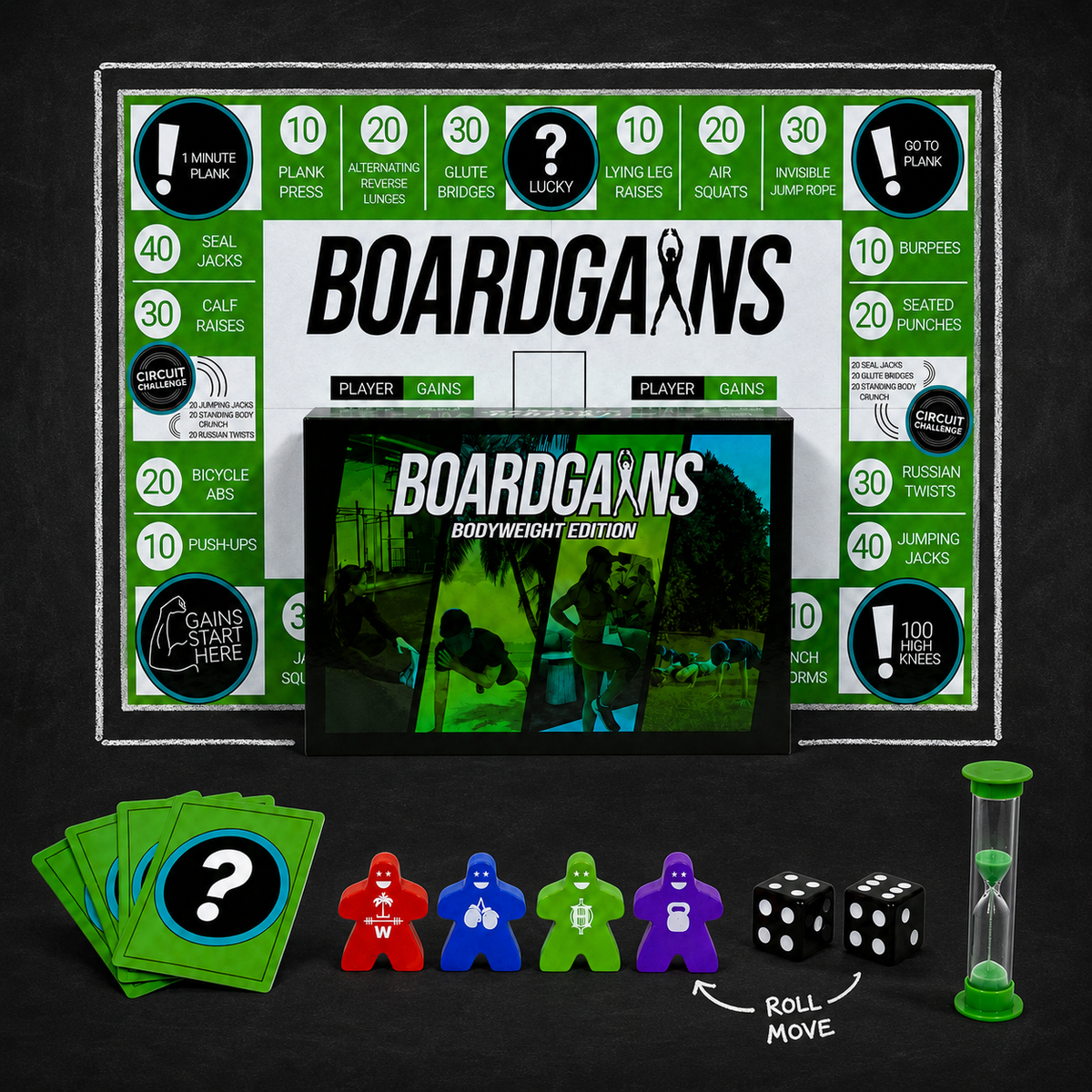
BoardGains turns bodyweight exercises into a team game. Set up your class, review the movements, and let the board guide the next exercise while you coach.
SHOP FOR YOUR SCHOOL



REAL TEACHERS. REAL PE CLASSES.
WHY EDUCATORS USE BOARDGAINS
Josh O (PE TEACHER)
5 stars. 10/10
I bought BoardGains for rainy-day indoor track practices, and it has been a huge hit with my middle school athletes, coaches, and Athletic Director. I split the group into teams, choose a captain to roll and move the piece, and the game runs from there. It adds competition, teamwork, and tons of fun to training. 5 stars. 10/10. Highly recommend for workouts and team training!
Mechelle B - Clover Middle School
Middle School PE classes loved it!
Middle school students can't get enough of BoardGains! It gets everyone involved and moving. Challenging, yet incredibly fun.
Niki
Great Highschool pe game
I played this game with my varsity field hockey team and it gave them quite the workout. The instructions are pretty simple to explain and the exercises are good as well. Great competitive game.
Lauren M - High School Wellness Teacher
Worth The Investment
My high school wellness class loved BoardGains! It brought out a healthy competitive spirit and made fitness enjoyable. Definitely worth the investment, especially when coming out of my own budget."
M.
Great for our C&C class (homeroom)
I bought this game as a way to get students active in our homeroom class as well as a way for them to have fun with their classmates. The students worked incredibly hard and encouraged each other to complete the different challenges. It was a great experience!

WHY THIS TEACHER BROUGHT BOARDGAINS TO HER STUDENTS
Hear how BoardGains helped create an active, competitive, and encouraging class experience.
Shop for Your School
YOU COACH THE CLASS.
The Workout Is Ready. You Lead the Class.
Traditional group workouts can lead to long explanations, students waiting, and the same activities being repeated.
BoardGains supplies the exercise sequence and a shared goal. You organize the space, teach the movements, and help students work together.
- Run small groups or full PE classes
- Use individual, partner, or team play
- Choose options for different ability levels
- Play in gyms, classrooms, fields, or blacktops
Fun like a game. Active like a workout.
Shop for Your SchoolSIMPLE TO SET UP. EASY TO LEAD.
RUN YOUR CLASS IN FOUR EASY STEPS
STEP 1: SET UP YOUR CLASS
Choose a Gains Goal—3, 5, or 7 laps. Divide students into teams, give each team a game piece and workout zone, and choose a Captain and Co-Captain.
STEP 2: REVIEW AND PRACTISE
Warm up, demonstrate the exercises, and let students practise suitable movement options. Explain the board’s special spaces and how teammates share their exercise total.
STEP 3: START TOGETHER
Each team rolls once and moves to its starting exercise. Students head to their workout zones and wait. Count down 3–2–1—GAINS! All teams begin exercising at the same time.
STEP 4: KEEP PLAYING AND TRACK GAINS
Complete the team’s exercise total, then roll, move, and repeat. Mark one Gain after each lap past GAINS START HERE. The first team to reach the Gains Goal wins.

SEE HOW TO SET UP A PE GAME
Learn how to organize teams, workout spaces, starting positions, and the Gains Goal before class begins.
View the Full Setup GuideWatch the Workout Unfold
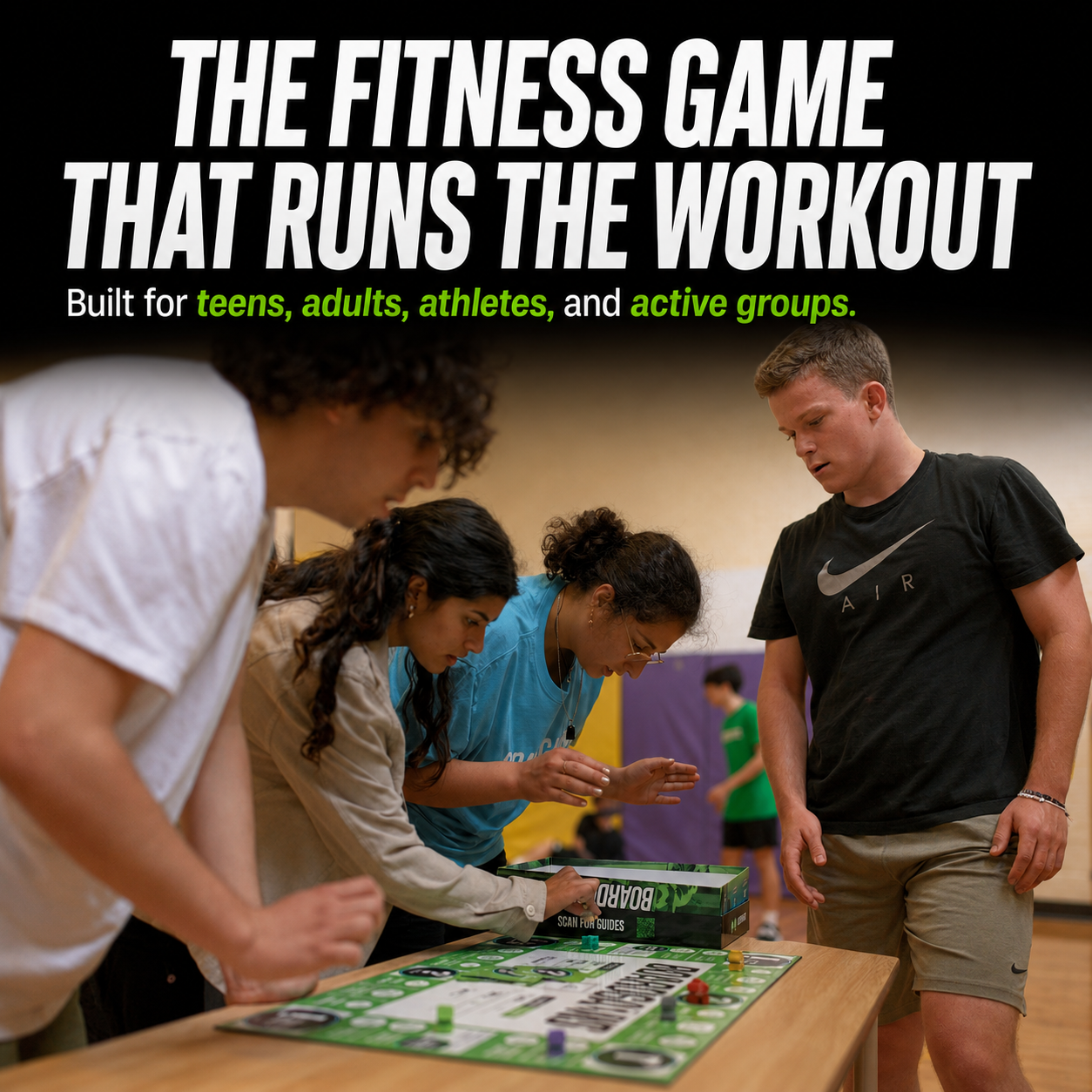
See the flow from board to workout zone: roll, move, complete the exercise, and return. Teams play at the same time while the coach guides the session.
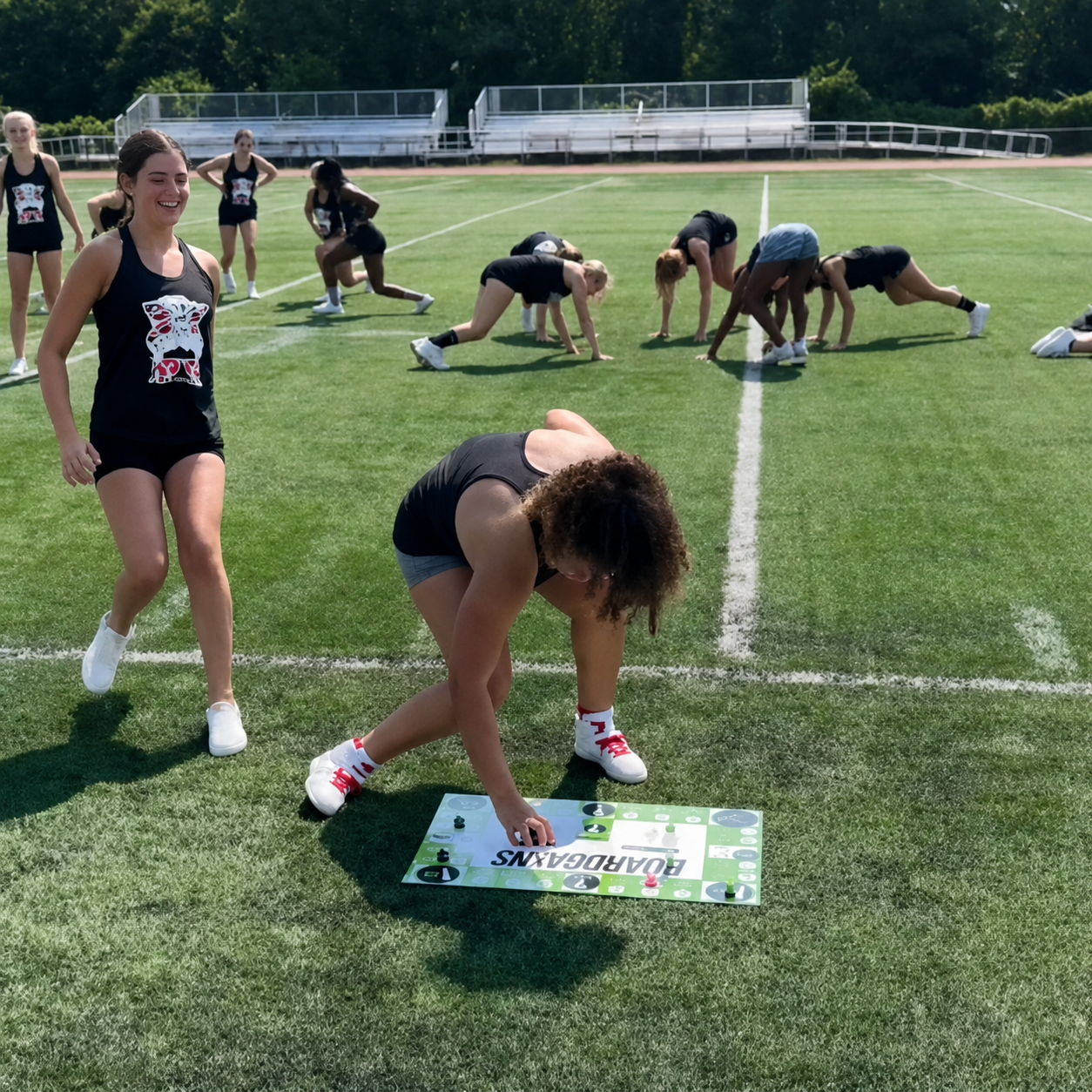
TEAM PLAY IN ACTION
20 Players. Four Teams. One Board.
Make four teams of five. Give each team one game piece, a workout zone, and a Captain and Co-Captain.
Teammates share their team’s exercise total. Once it’s complete, both leaders return to the board:
- Captain: Rolls the dice and moves the team’s piece.
- Co-Captain: Checks the move and helps announce the next exercise.
Both leaders rejoin their team for the next exercise. You coach movement, pacing, and teamwork across the group.
Want to share leadership? Rotate these roles after each Gain.
View Team SetupView the Class Setup.
20 students
1 board · 4 teams · 5 students per team
Give each team a game piece and its own workout zone. Choose a Captain and Co-Captain for each team to handle moves at the board.
All four teams play at the same time while you coach movement, effort, and teamwork.
These are starting examples. Adjust your setup to suit your space, exercises, supervision, and how independently students can play. Each game piece represents a team—not just one student.
30 Students · 2 Boards
2 boards · 3 teams per board · 5 students per team
Split your class into two groups of 15, with three teams playing at each board. Give every team its own workout zone.
This optional setup keeps teams smaller and reduces the number of leaders using each board. Two boards are not required for 30 students.
These are starting examples. Adjust your setup to suit your space, exercises, supervision, and how independently students can play. Each game piece represents a team—not just one student.
30 Students · 1 Board
1 board · 4 teams · 7–8 students per team
Make two teams of seven and two teams of eight. Give each team a game piece, a workout zone, and a Captain and Co-Captain.
Try a short practice round first to check that students have room to move and team leaders can reach the board without crowding.
These are starting examples. Adjust your setup to suit your space, exercises, supervision, and how independently students can play. Each game piece represents a team—not just one student.
60 Students · 2 Boards
2 boards · 6 teams per board · 5 students per team
Split your class into two groups of 30, with six teams playing at each board. Give each team a game piece, a workout zone, and a Captain and Co-Captain.
All teams play at the same time. Start with a short practice round to check spacing, board access, and supervision across both play areas.
These are starting examples. Adjust your setup to suit your space, exercises, supervision, and how independently students can play. Each game piece represents a team—not just one student.
1 board · 4 teams · 5 students per team
Give each team a game piece and its own workout zone. Choose a Captain and Co-Captain for each team to handle moves at the board.
All four teams play at the same time while you coach movement, effort, and teamwork.
These are starting examples. Adjust your setup to suit your space, exercises, supervision, and how independently students can play. Each game piece represents a team—not just one student.
2 boards · 3 teams per board · 5 students per team
Split your class into two groups of 15, with three teams playing at each board. Give every team its own workout zone.
This optional setup keeps teams smaller and reduces the number of leaders using each board. Two boards are not required for 30 students.
These are starting examples. Adjust your setup to suit your space, exercises, supervision, and how independently students can play. Each game piece represents a team—not just one student.
1 board · 4 teams · 7–8 students per team
Make two teams of seven and two teams of eight. Give each team a game piece, a workout zone, and a Captain and Co-Captain.
Try a short practice round first to check that students have room to move and team leaders can reach the board without crowding.
These are starting examples. Adjust your setup to suit your space, exercises, supervision, and how independently students can play. Each game piece represents a team—not just one student.
2 boards · 6 teams per board · 5 students per team
Split your class into two groups of 30, with six teams playing at each board. Give each team a game piece, a workout zone, and a Captain and Co-Captain.
All teams play at the same time. Start with a short practice round to check spacing, board access, and supervision across both play areas.
These are starting examples. Adjust your setup to suit your space, exercises, supervision, and how independently students can play. Each game piece represents a team—not just one student.
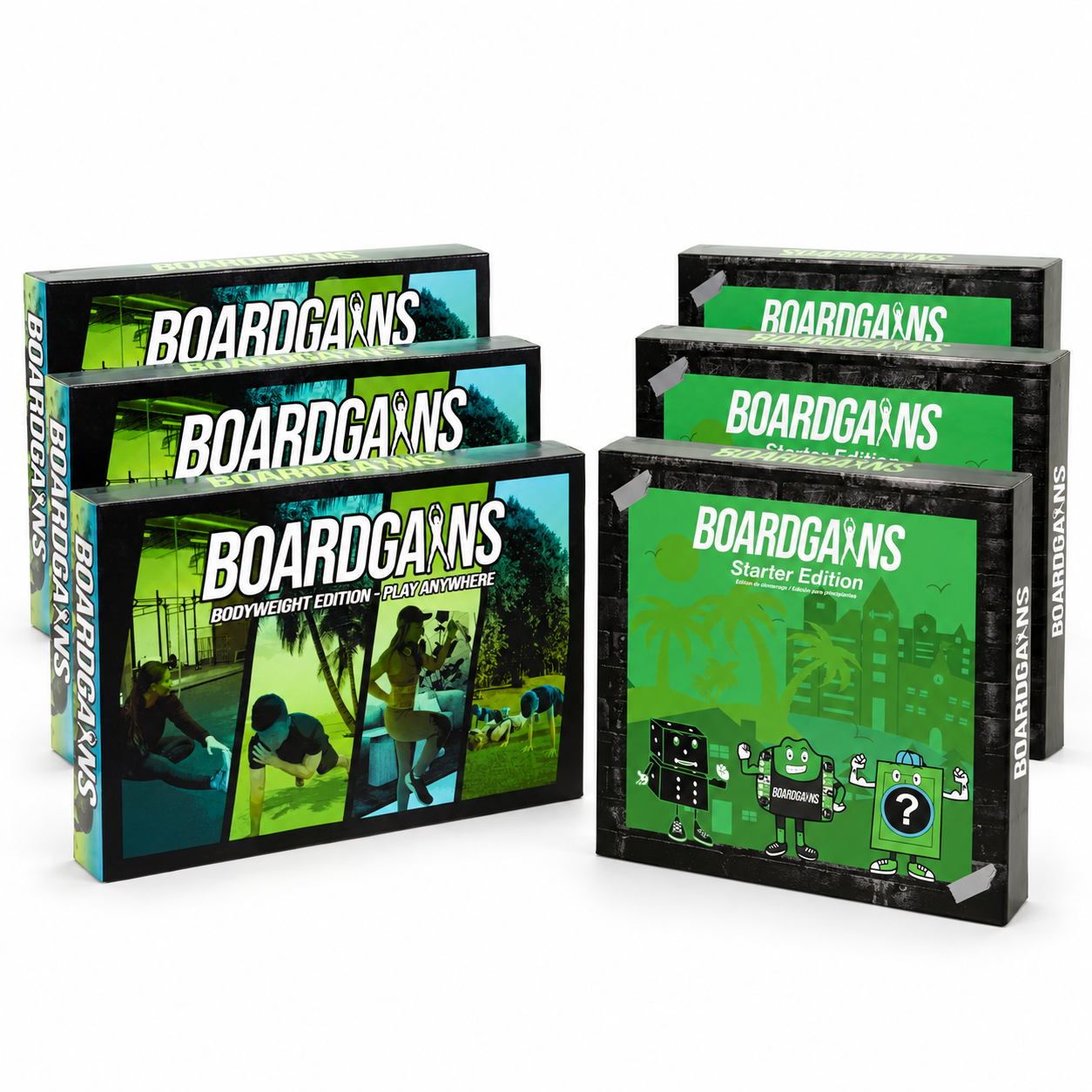
CHOOSE THE RIGHT EDITION
Choose the Games for Your PE Classes
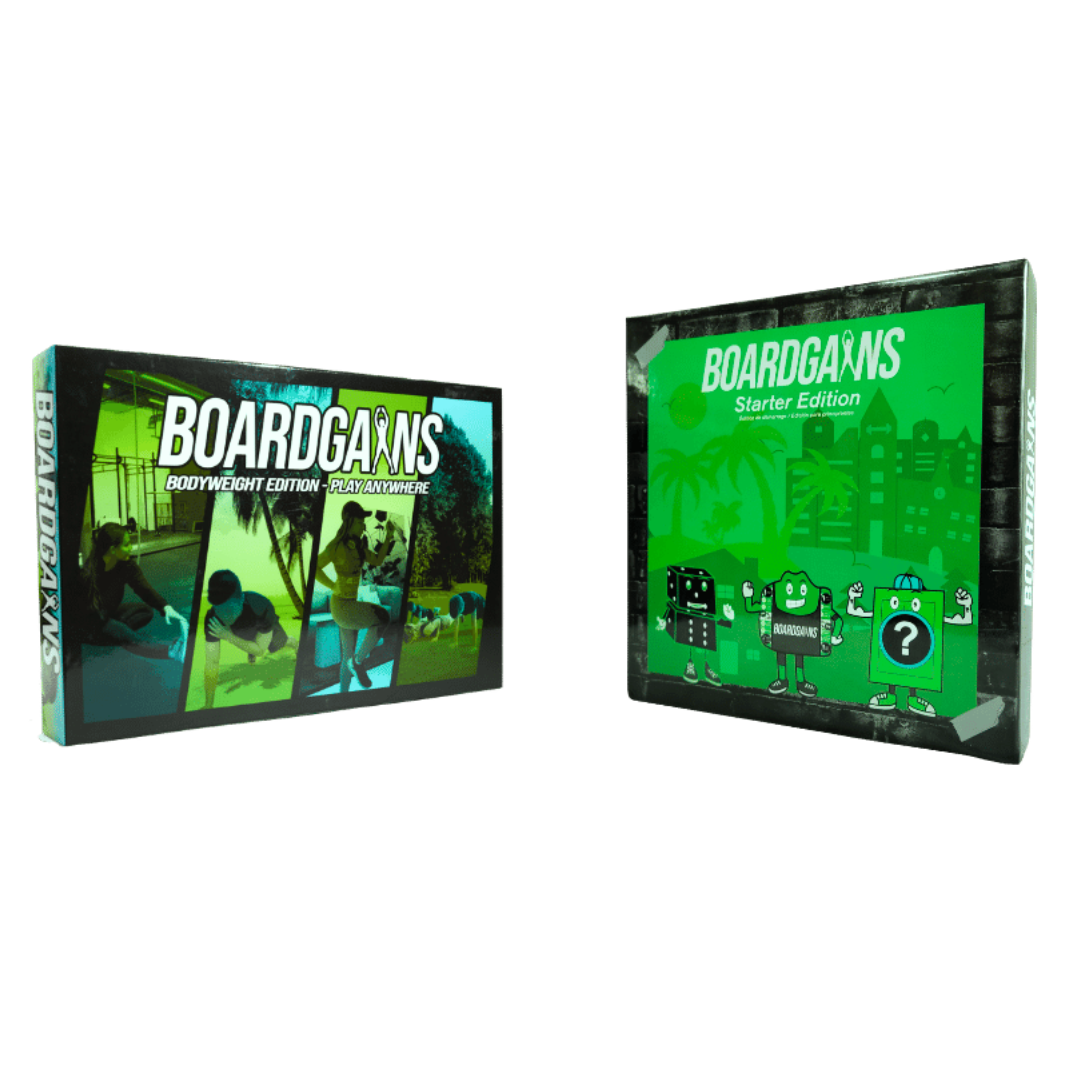
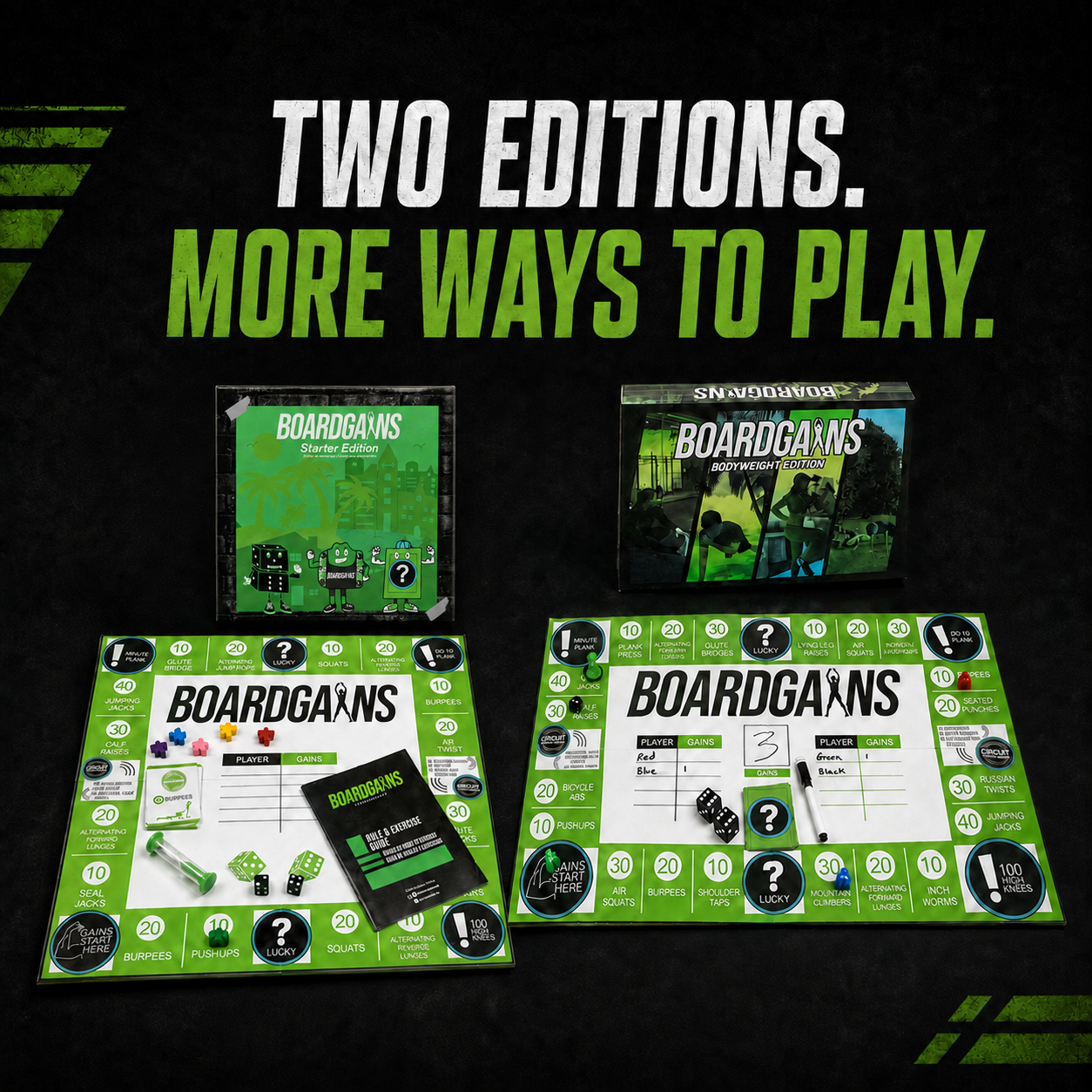
Each edition uses the same rules. Choose the exercise variety that fits your students and program.
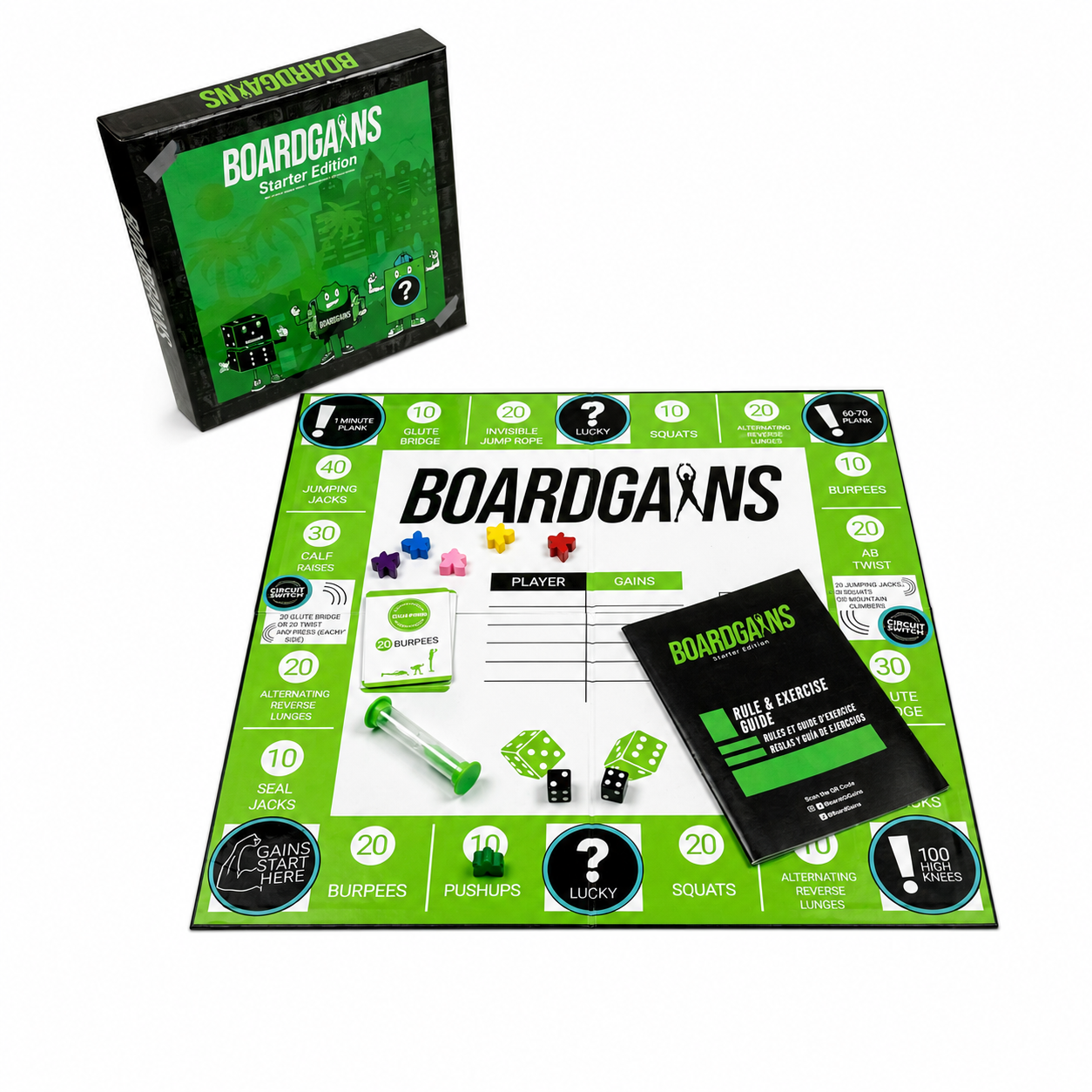
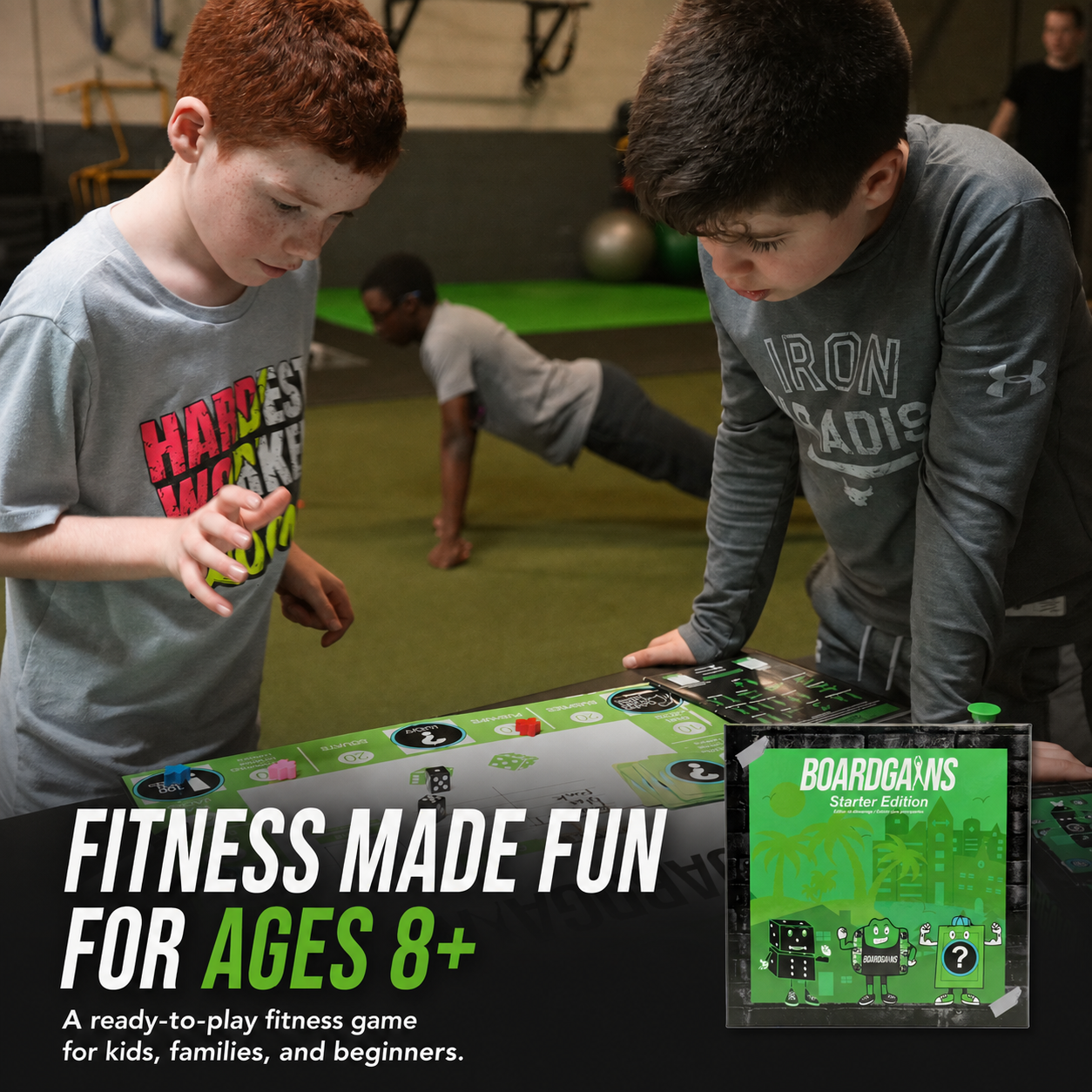
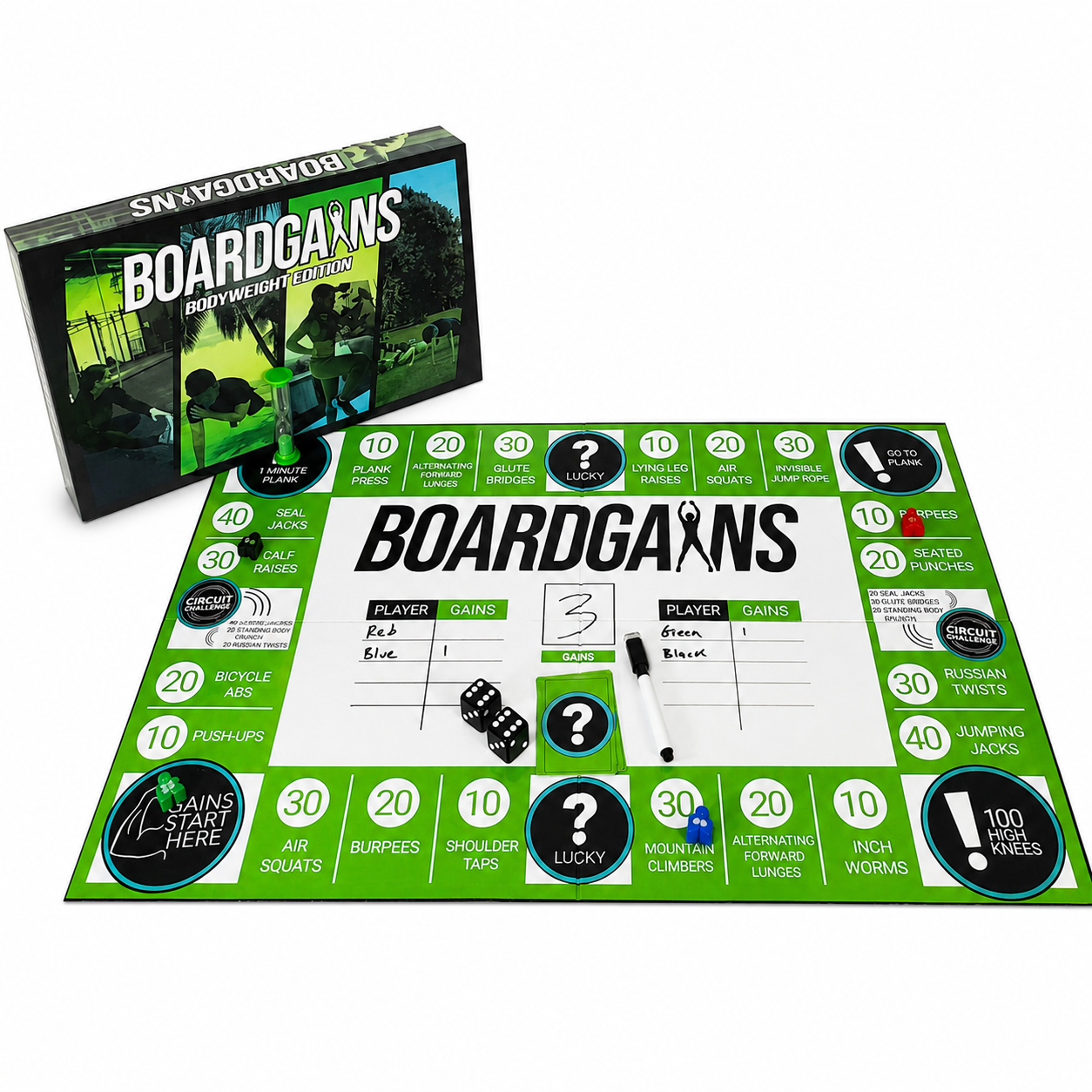
Starter Edition — Ages 8+ · 13 exercises
A smaller exercise selection for younger students and beginner groups. Up to 6 players or teams per board.
Pro Edition — Ages 10+ · 20 exercises
More exercise variety for PE workouts and sports teams. Up to 10 players or teams per board.
Starter + Pro Bundle — Both editions
Get both games for mixed ages, fitness levels, and lesson needs.
More Time to Coach. More Reasons to Join In.

FIT IT INTO YOUR PE SCHEDULE
CHOOSE YOUR SESSION LENGTH
Choose a session based on your lesson time and how well students know the game. Introduce the movements, practise together, or jump into a familiar class workout.
20-MINUTE WARM-UP OR FINISHER
For students who already know the exercises and rules. Jump into a short BoardGains game to start your lesson with movement or finish with a fun team challenge.
60-MINUTE INTRODUCTORY LESSON
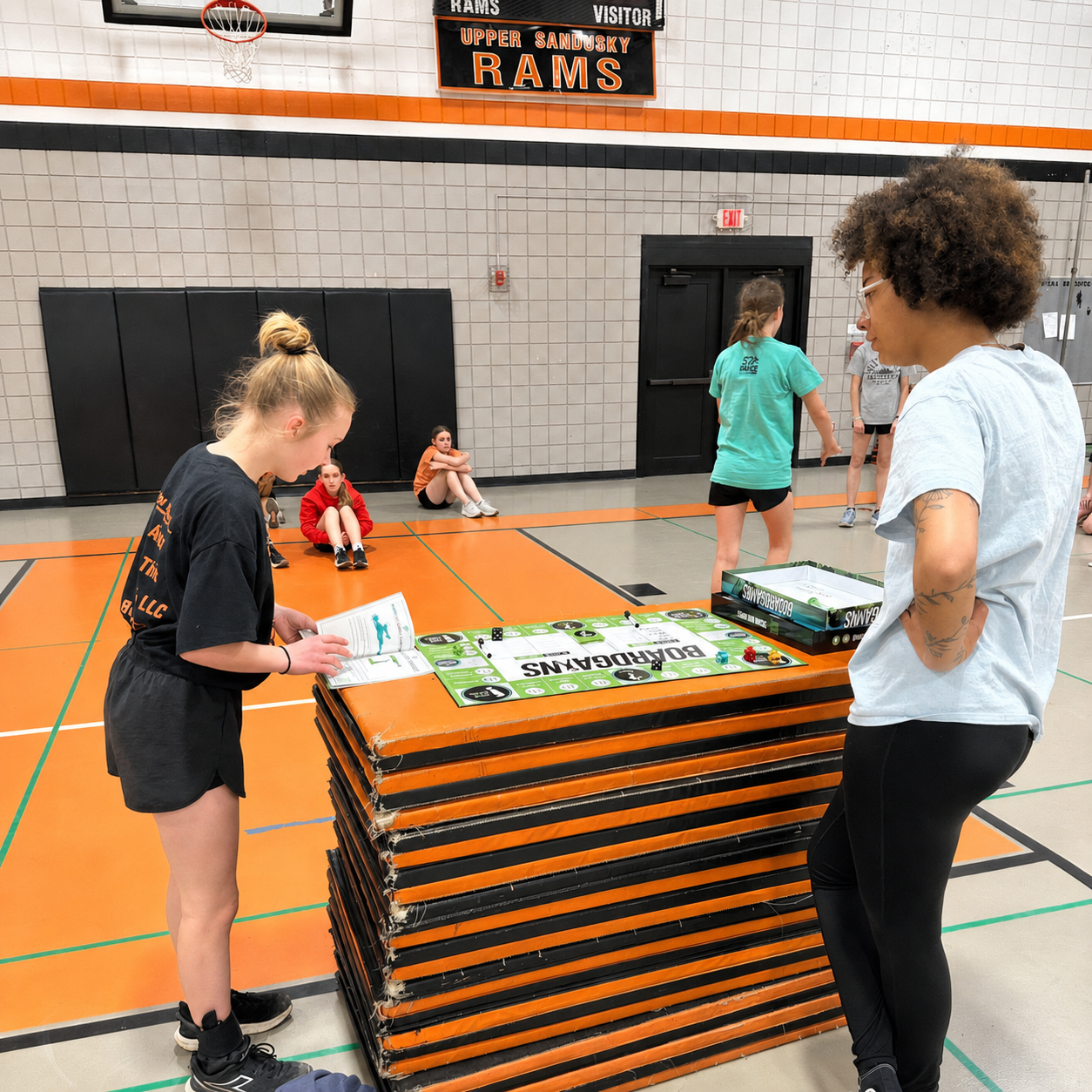
Take time to teach and practise the exercises, explore movement options, and explain the rules and team roles. Lead a practice round, then play a match before cooling down and reflecting together.
60-MINUTE WORKOUT CLASS
For students who already know the exercises and rules. Start with a short warm-up, then play one 7-Gain match or several shorter 3-Gain matches. Finish with a cooldown and team reflection.
CURRICULUM-CONNECTED PHYSICAL EDUCATION
Connect the Game to Your PE Goals
Use gameplay to practise movement technique, pacing, communication, leadership, and reflection. Choose the activities and assessment that fit your local curriculum.
1. DEVELOP MOTOR SKILLS
Students practise bodyweight movements while improving form, control, strength, and endurance.
2. APPLY FITNESS KNOWLEDGE
Students explore exercise technique, pacing, effort, strategy, and personal fitness goals.

3. BUILD SOCIAL SKILLS
Team play gives students opportunities to practise communication, leadership, encouragement, and respectful competition.

4. GROW THROUGH MOVEMENT
Choice, challenge, and active play help students find success and build a positive connection with physical activity.
FREE RESOURCE FOR PE TEACHERS
RUN BOARDGAINS WITH CONFIDENCE
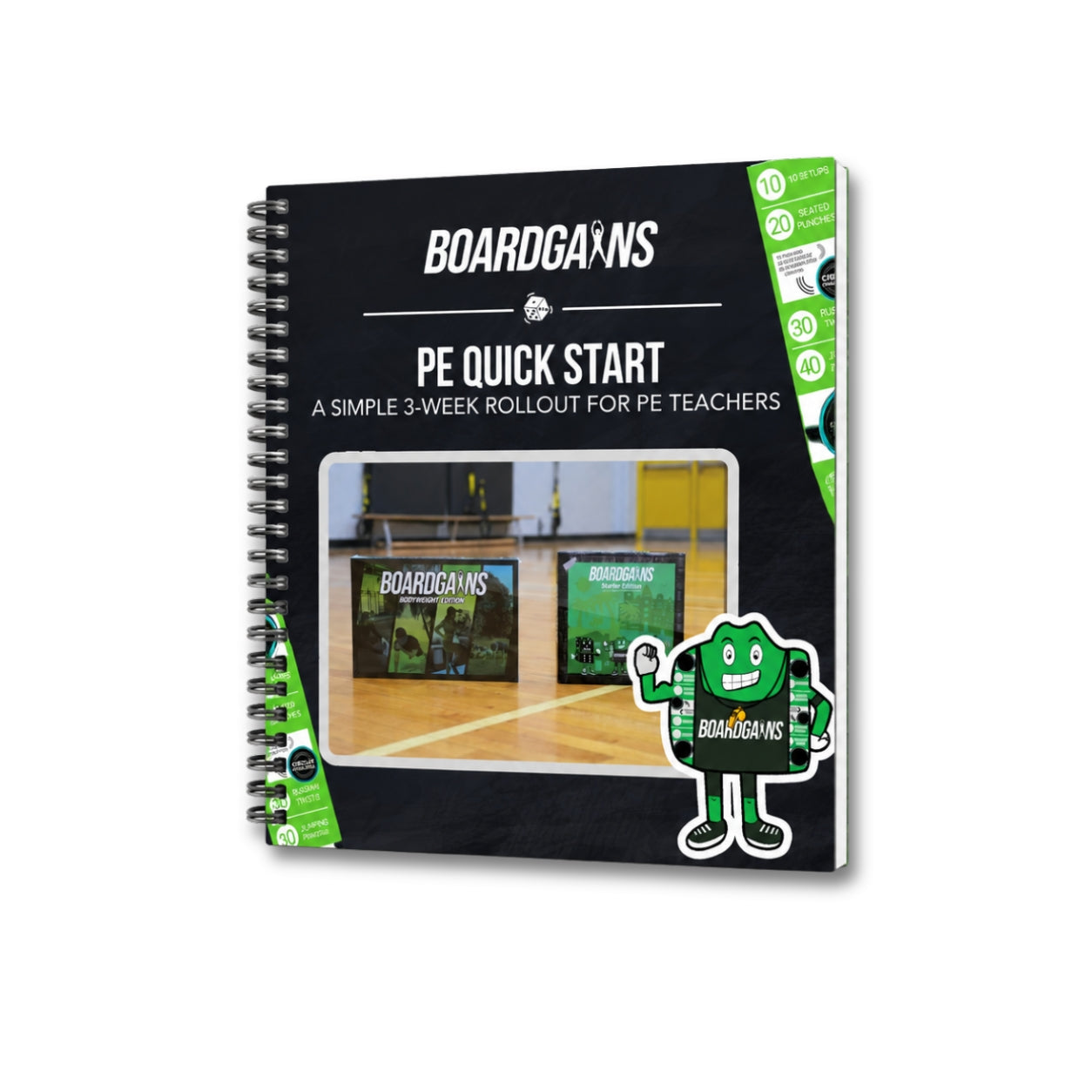
The BoardGains PE Quick Start Guide shows you how to introduce the exercises and build toward full gameplay.
The three-week rollout
- Week 1: Cardio movements
- Week 2: Strength movements
- Week 3: Full BoardGains gameplay
Inside the guide
- Exercise teaching tips and modifications
- Cardio and strength lesson formats
- Team setup for small and large classes
- Game rules and class flow
- Tips to keep everyone moving
IS BOARDGAINS RIGHT FOR MY PE PROGRAM?
Can I pay by purchase order?
Contact us with your school's purchasing requirements. We can help with a quote, invoice, and purchase-order support. We'll confirm the process and terms for your order.
How many students can play at once?
BoardGains works for small groups or full classes.
- Small groups: 1–10 students
- Medium groups: 10–30 students (use teams)
- Large classes: 30–60+ students using teams
As long as you have the space, everyone stays moving at the same time.
How long does a game take in class?
BoardGains fits easily inside a PE period. You control the length by setting the Gains Goal:
- 3 Gains → 10–15 minutes of activity
- 5 Gains → 15–25 minutes of activity
- 7 Gains → 25–35 minutes of activity
Run one round or multiple rounds in the same class.
Match times are estimates. Allow time for teaching, setup, and cooldown.
Which edition is best for schools?
Starter is best for younger students and beginners. Pro offers more exercises, larger pieces, and more variety. The Bundle gives schools both options. The School Pack is best when you need several games.
Does it require fitness equipment?
No. BoardGains uses stationary bodyweight exercises, so you do not need weights, machines, or extra fitness equipment.
Can BoardGains be used indoors or outdoors?
Yes. BoardGains works anywhere:
- Indoors or outdoors
- Gyms, fields, blacktops, or classrooms
Set it up wherever you run your class.
What grades can use BoardGains?
Starter is recommended for ages 8 and older. Pro is recommended for ages 10 and older. Teachers can adjust the exercises, repetitions, and game length for their students.
Can students with different abilities play together?
Yes. The exercise guide includes movement demonstrations and easier options. Teachers can also choose an appropriate exercise option.
Does BoardGains support PE standards and curricula?
Yes. BoardGains supports common PE learning outcomes used in the United States, Canada, and international schools. Through active gameplay, students practise movement skills, apply fitness knowledge, develop personal and social skills, and build confidence through movement.
These outcomes connect with the 2024 SHAPE America National PE Standards, Canadian provincial and territorial curricula, UNESCO Quality Physical Education principles, and other national PE frameworks. Educators can connect each game to their specific grade-level and local curriculum requirements.

BOARDGAINS PROFESSIONAL DEVELOPMENT
TURN YOUR NEXT PE TRAINING DAY INTO A GAME
The BoardGains PD Experience gives teachers a hands-on way to learn game-based fitness, class setup, exercise modifications, and strategies for keeping everyone active.
Your PE team becomes the players—learning through movement, teamwork, and friendly competition.
Book a School Call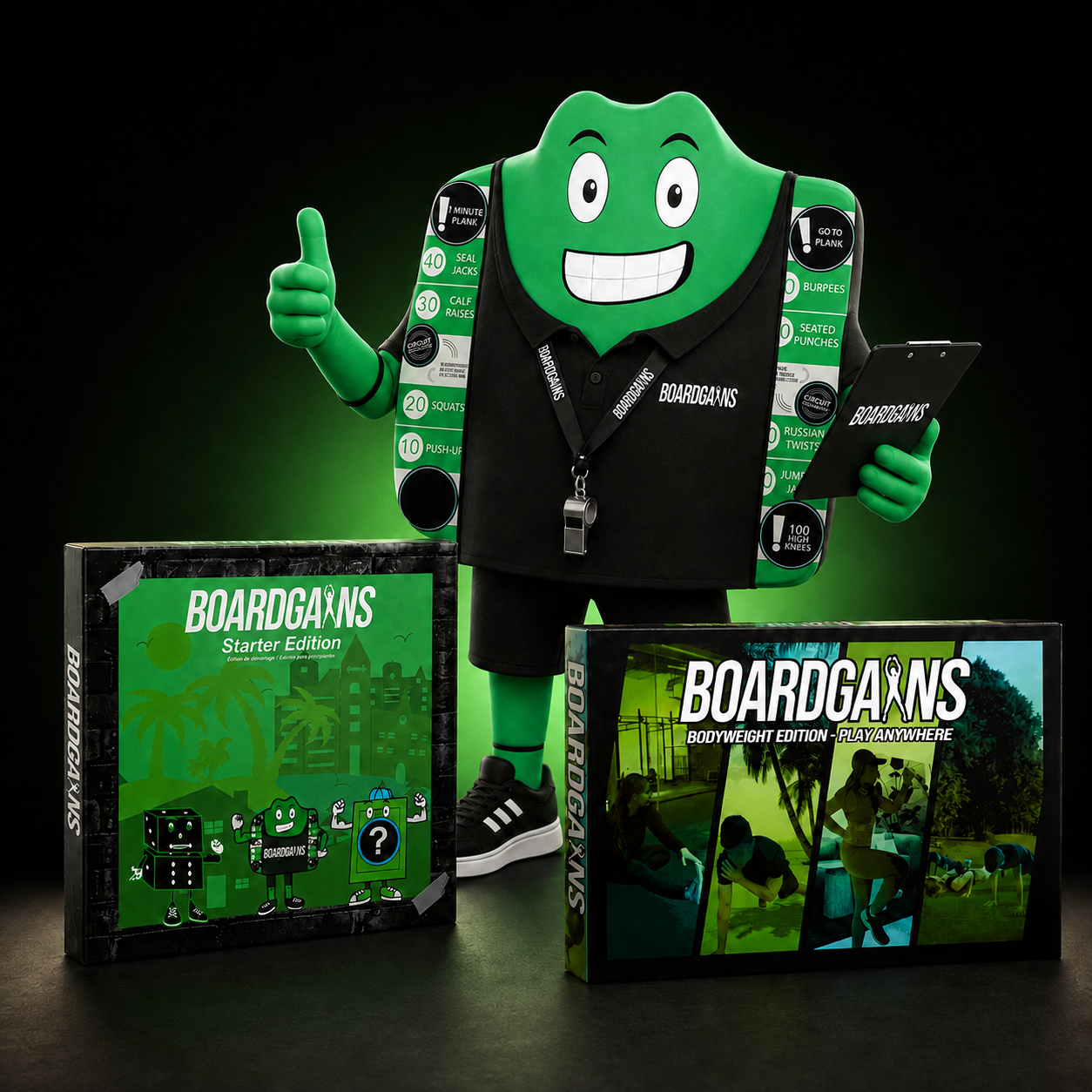
Bring the Game to Your Next PE Class!
Bring BoardGains to your PE class and give students a workout they will want to play again.
No equipment. Less planning. Everyone moving.
Need a quote, invoice, purchase-order support, or help with a larger school order? We’re here to help. Email: info@boardgains.com
Shop for Your School