
Updated August 2026
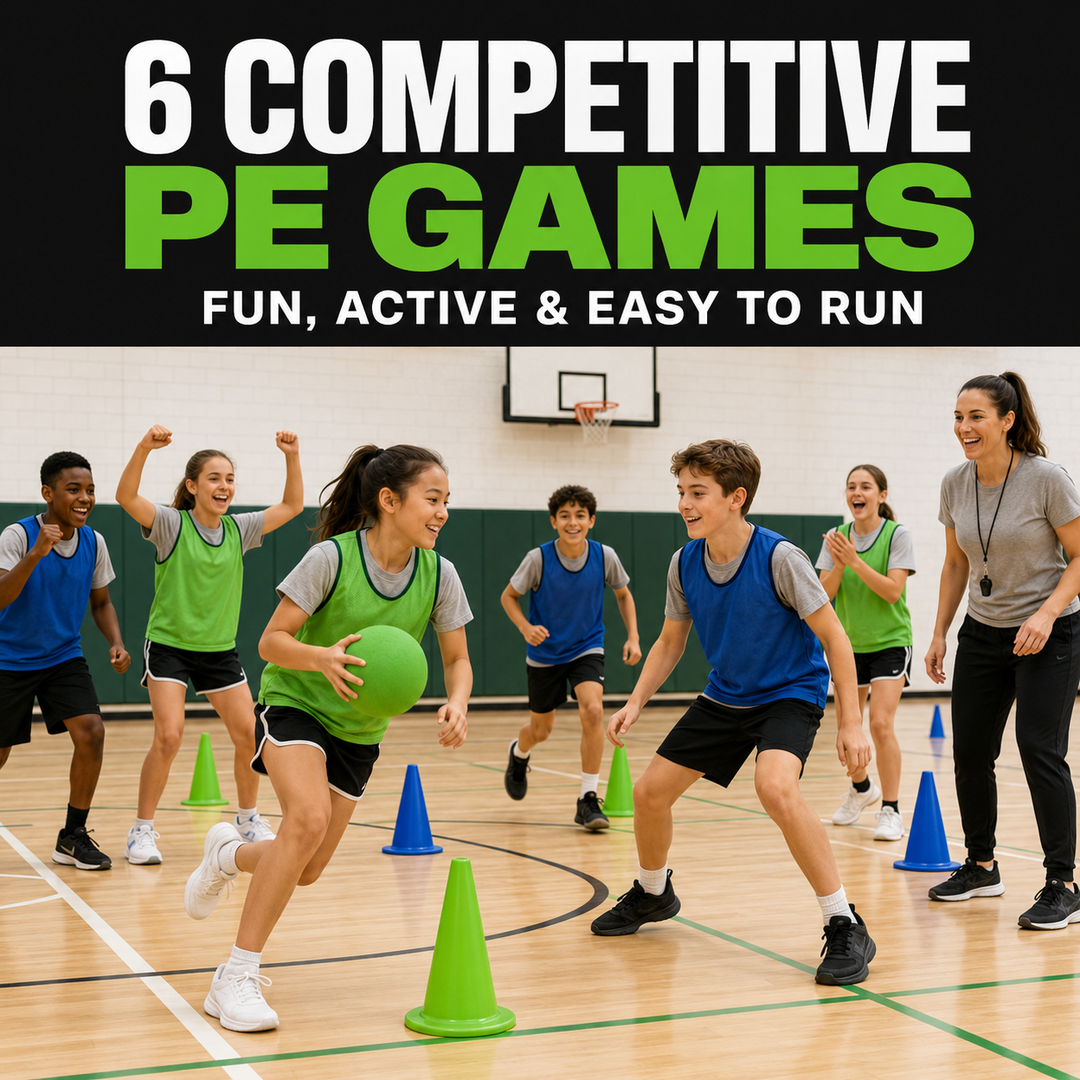
Competitive PE games can bring energy, teamwork, and excitement into physical education—as long as every student gets a meaningful role. The best games do more than name one winner. They keep students moving, reward smart teamwork, and give children different ways to succeed.
Below are six ready-to-run PE games for elementary and middle school students. Each game includes equipment, setup, rules, timing, grade-level ideas, and inclusion options. Use the versions that fit your students, space, school policies, and learning goals.
Quick answer: What are fun competitive PE games for kids?
Try Cone Capture, Team Four Square, Hula Hoop Pass, Crab Soccer, Fitness Tic-Tac-Toe, and BoardGains. Keep teams small, use short rounds, teach the rules before adding speed, and offer different movement options so every student can contribute.
Table of contents
- What healthy competition looks like in PE
- Choose the right PE game
- Six fun and competitive PE games
- Grade-level modifications
- Ready-to-use 45-minute PE lesson
- Safety and inclusion checklist
- Frequently asked questions
What healthy competition looks like in PE
Competition can motivate students, but the rules shape the experience. If only the fastest student can score, many children may stop trying. Healthy competition gives students repeated chances to play and rewards effort, movement skills, problem-solving, communication, and respect.
Use these five principles when planning competitive PE activities:
- Keep rounds short. Reset every two to five minutes so students get a fresh chance to improve.
- Avoid elimination. Use quick re-entry tasks, rotating roles, or team points instead of making students sit out.
- Create more than one way to score. Award points for completing a challenge, helping a teammate, accurate passing, or safe strategy.
- Balance the teams quietly. Use teacher-made groups or random cards, then adjust when needed without publicly ranking students.
- Celebrate the process. Recognize fair play, honest scoring, safe movement, encouragement, and improvement.
Before class, decide what you want students to learn. The winner should not be the only learning goal. A game can also build spatial awareness, throwing and catching, balance, cooperation, fitness, or decision-making.
Choose the right competitive PE game
| Game | Time | Group size | Equipment | Main skills |
|---|---|---|---|---|
| 1. Cone Capture | 12–20 min | 10–30 | Cones, pinnies | Agility, strategy, teamwork |
| 2. Team Four Square | 10–18 min | 8–24 | Playground balls, court lines | Striking, tracking, control |
| 3. Hula Hoop Pass | 8–15 min | 8–30 | Hoops | Cooperation, coordination |
| 4. Crab Soccer | 10–16 min | 8–24 | Large foam balls, cones | Coordination, space awareness |
| 5. Fitness Tic-Tac-Toe | 12–20 min | 6–30 | Hoops, beanbags | Fitness, speed, strategy |
| 6. BoardGains | 10–35 min | Small groups to full classes | BoardGains game | Full-body fitness, teamwork |
Six fun and competitive PE games for kids
1. Cone Capture
Best for: grades 3–8
Equipment: 20–40 small cones, pinnies, and boundary markers
Time: 12–20 minutes
Setup: Divide the playing area into two equal zones. Scatter the same number of cones at the back of each zone. Create two to four teams depending on the class size. For a large class, run two smaller games instead of one crowded game.
How to play: On the signal, students enter the other team’s zone and try to bring one cone at a time back to their side. A student tagged in the other team’s zone returns to a marked re-entry line, completes a quick task such as five marches or three squats, and returns immediately. No student is eliminated. After a three-minute round, count the cones and reset.
PE teacher tip: Make the boundary lines clear and require controlled tagging with one hand between the shoulders and waist. Students cannot guard directly beside the cones or re-entry line.
Inclusive options: Use walking-only rounds, assign protected passing zones, or let students transport cones using different movement choices. Students with limited mobility can be team strategists, cone passers, or active defenders in a smaller zone while still completing an appropriate movement role.
2. Team Four Square Challenge
Best for: grades 3–8
Equipment: one soft playground ball for each court, chalk or floor tape
Time: 10–18 minutes
Setup: Mark several four-square courts so students are not waiting in one long line. Put two students in each square when space allows. Give every court one soft, easy-to-track ball.
How to play: A player serves by bouncing the ball into another square. The receiving team strikes it with an open hand after no more than one bounce. When a team makes an error, every pair rotates one square instead of removing anyone from play. Teams earn one point for completing five controlled passes across the court.
PE teacher tip: Start with cooperative rallies before adding points. Teach students to aim for open space without hitting the ball hard at another person.
Inclusive options: Allow two bounces, catches followed by an underhand toss, or a larger ball. Reduce the court size for younger students and increase it only when control improves.
3. Hula Hoop Pass Relay
Best for: grades 1–6
Equipment: one or two hula hoops per team
Time: 8–15 minutes
Setup: Create teams of five to eight. Each team forms a circle or line and holds hands. Place one hoop between two students before they connect hands.
How to play: Teams move the hoop around the full circle without releasing hands. Students step through, duck, turn, and help the next person guide the hoop. Complete a practice round, then play two timed rounds. Teams try to improve their own time rather than only beat another group.
PE teacher tip: A dropped hand or hoop is not a penalty. Pause, reconnect, and continue. Add a second hoop travelling in the opposite direction for older or more experienced classes.
Inclusive options: Students can pass the hoop along a rope instead of holding hands, or work in a seated circle and guide the hoop over arms and around bodies. Use a larger hoop when students need more space.
4. Crab Soccer
Best for: grades 3–7
Equipment: one large foam ball per small game, cones for goals and boundaries
Time: 10–16 minutes
Setup: Create small fields with wide cone goals. Use teams of three to five so the space stays open. Students begin in a crab position with hands and feet on the floor and hips at a comfortable height.
How to play: Students move in crab position and gently kick the foam ball toward the other team’s goal. Use 60–90 second shifts, then rotate or rest because the position can tire wrists and shoulders quickly. The team with the most goals at the end of each short round earns a point.
PE teacher tip: Demonstrate safe hand position, keep the ball on the floor, and do not allow sliding, kicking near another student, or contact. Stop the round if students lose safe spacing.
Inclusive options: Offer bear-walk, seated scooter, standing walk-and-kick, or sideline passer roles based on student needs and your equipment. A standing version may be the best choice for students with wrist or shoulder concerns.
5. Fitness Tic-Tac-Toe Relay
Best for: grades 2–8
Equipment: nine hoops or a taped grid, two colours of beanbags, cones
Time: 12–20 minutes
Setup: Arrange nine hoops in a three-by-three grid. Place two teams behind separate start lines, with three beanbags of one colour per team. For large classes, build several grids and use teams of three to five.
How to play: The first student from each team travels to the grid, places one beanbag, returns, and tags the next player. After all three beanbags are placed, students move one of their team’s existing beanbags on each turn. The first team to make a row of three wins the round.
Add fitness: Before travelling, the active student completes 10 seconds of a movement chosen by the teacher: squats, step jacks, standing punches, or high-knee marching. Start a new round every two to three minutes.
Inclusive options: Offer walking, wheeling, side stepping, or another safe travel choice. Place the start line closer when needed. All movement choices earn the same turn.
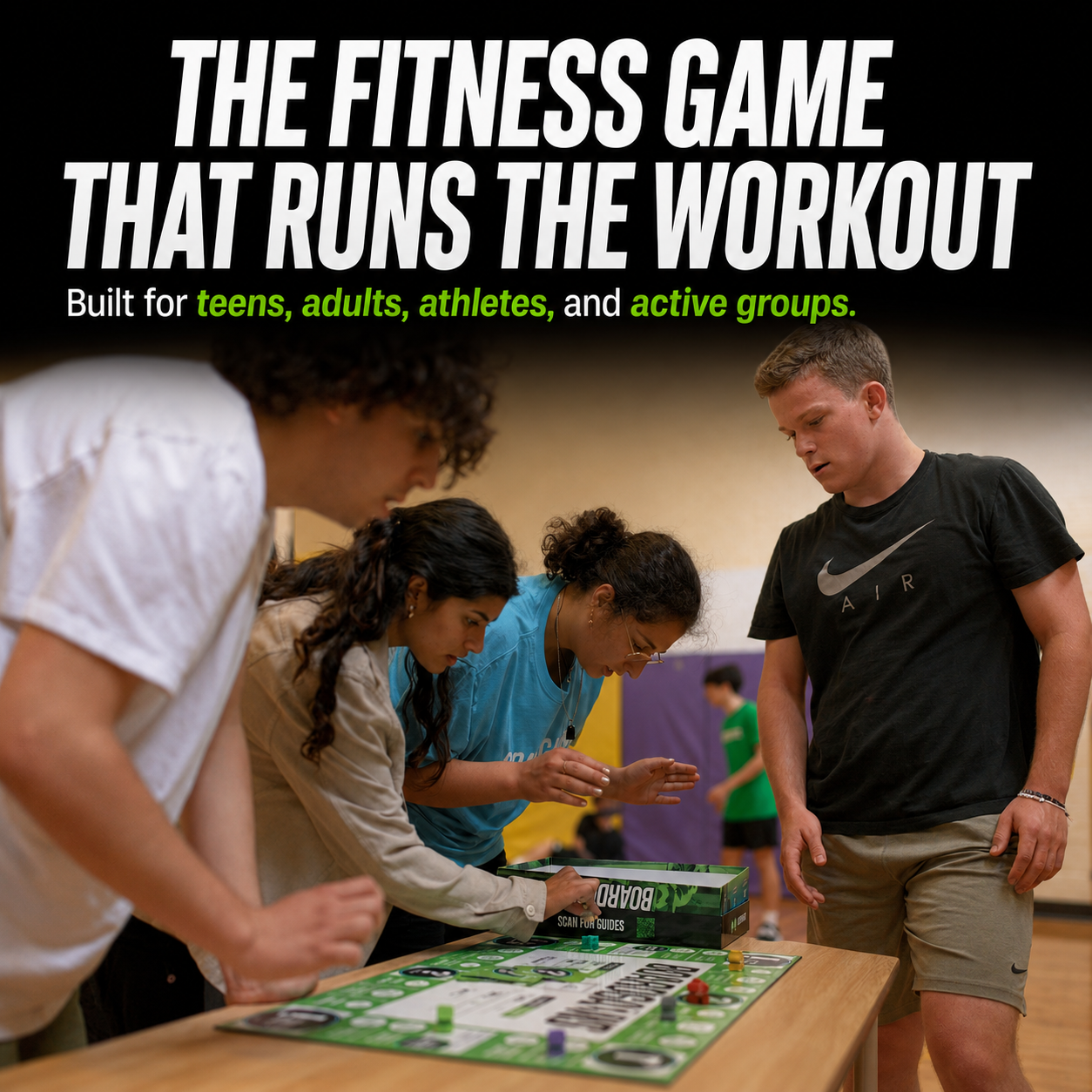
6. BoardGains Fitness Game
Best for: grades 3–12, fitness units, team challenges, indoor or outdoor PE
Equipment: BoardGains Starter or Pro Edition
Time: 10–35 minutes
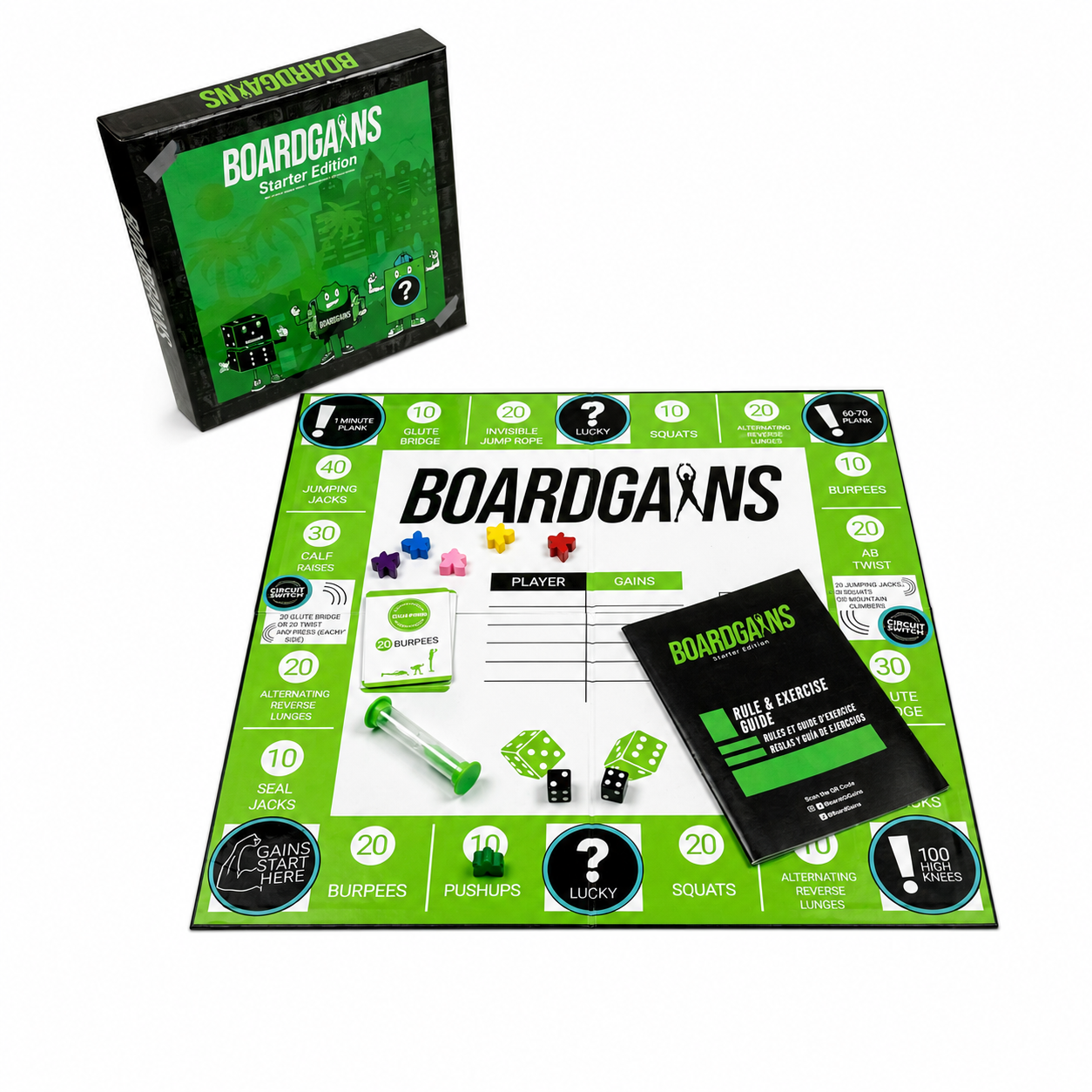
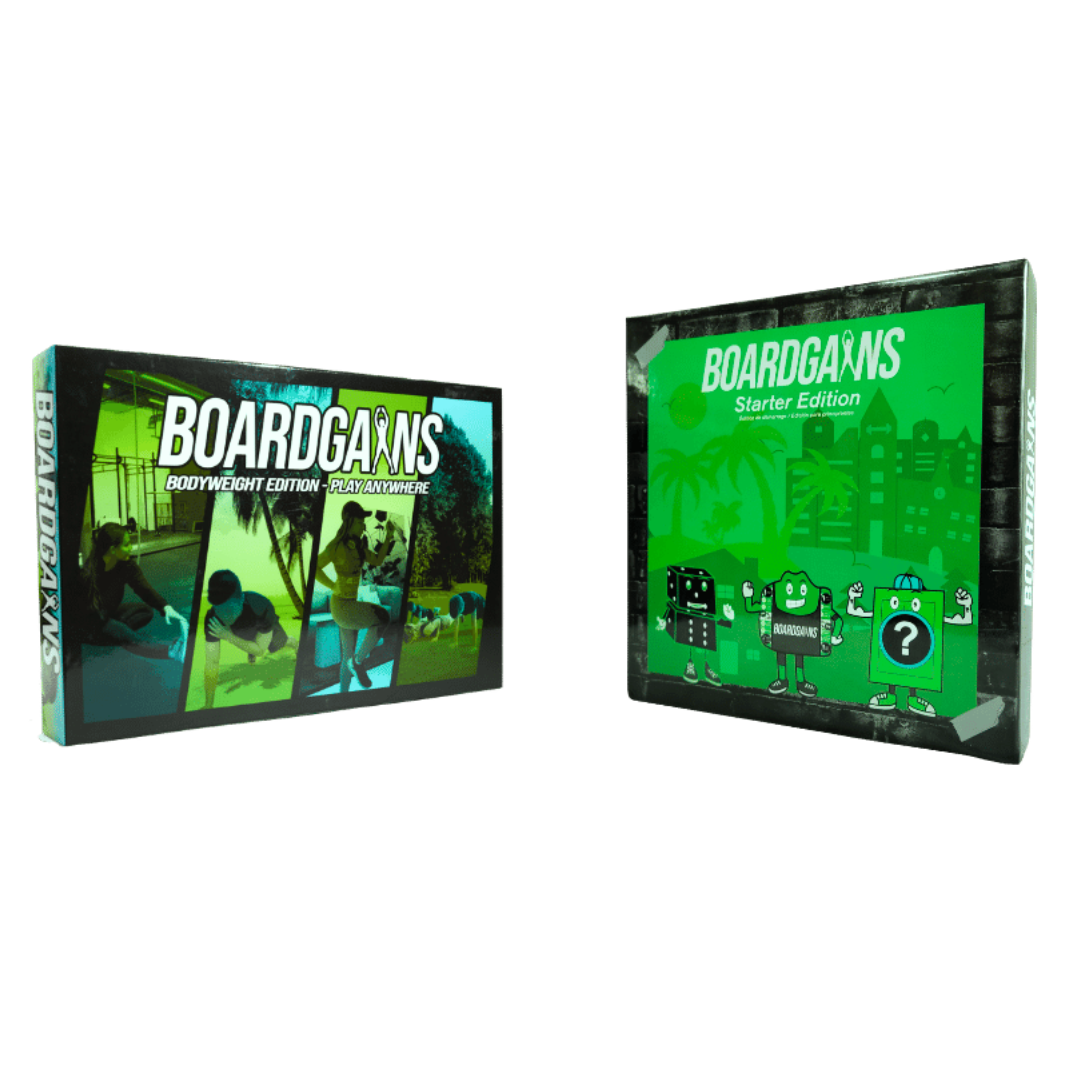
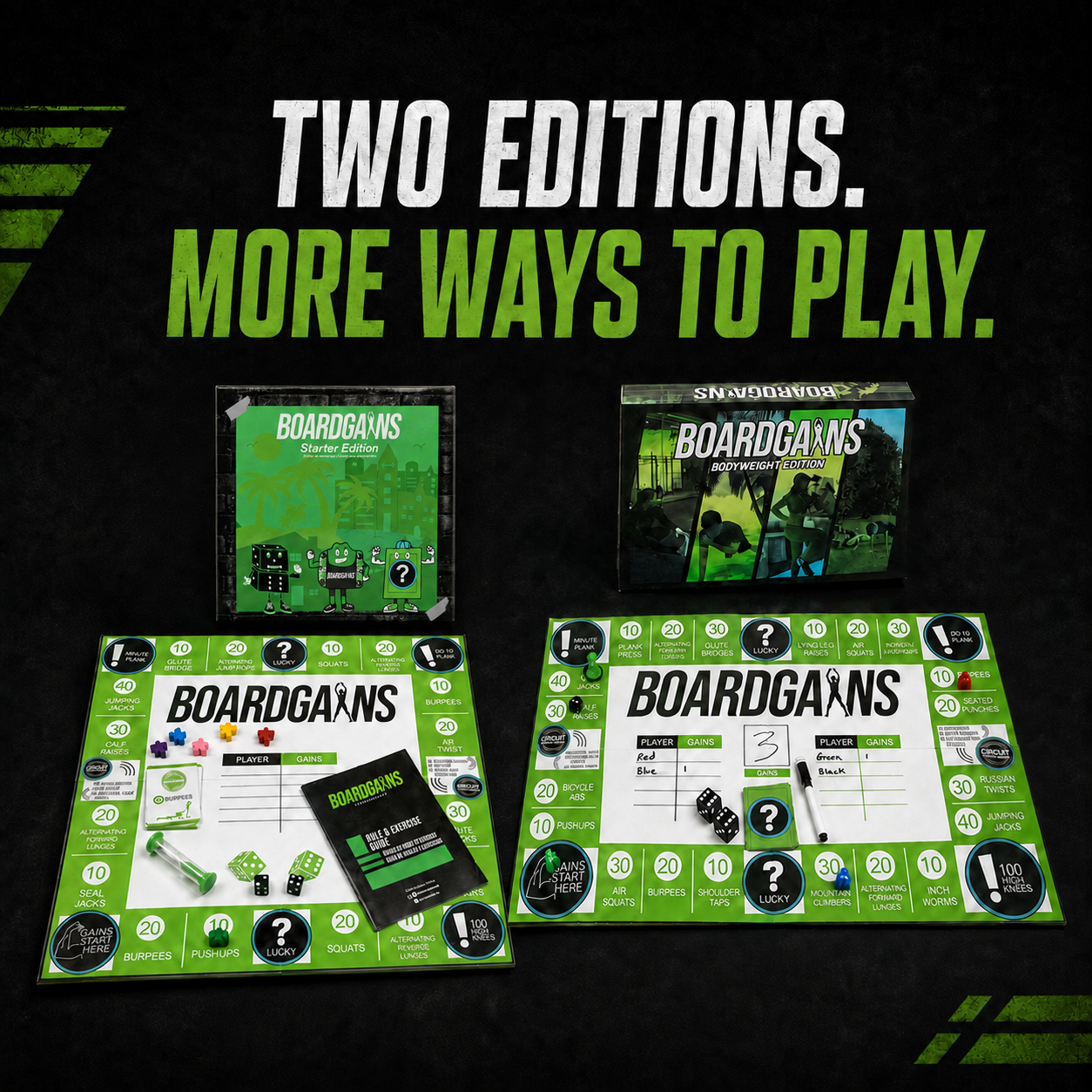
Setup: Divide the class into players or small teams. Give each player or team a game piece and a clear workout area. Review unfamiliar exercises before play. The Starter Edition has 13 exercises and is best for kids and beginners; the Pro Edition has 20 exercises and adds more variety for older or more experienced groups.
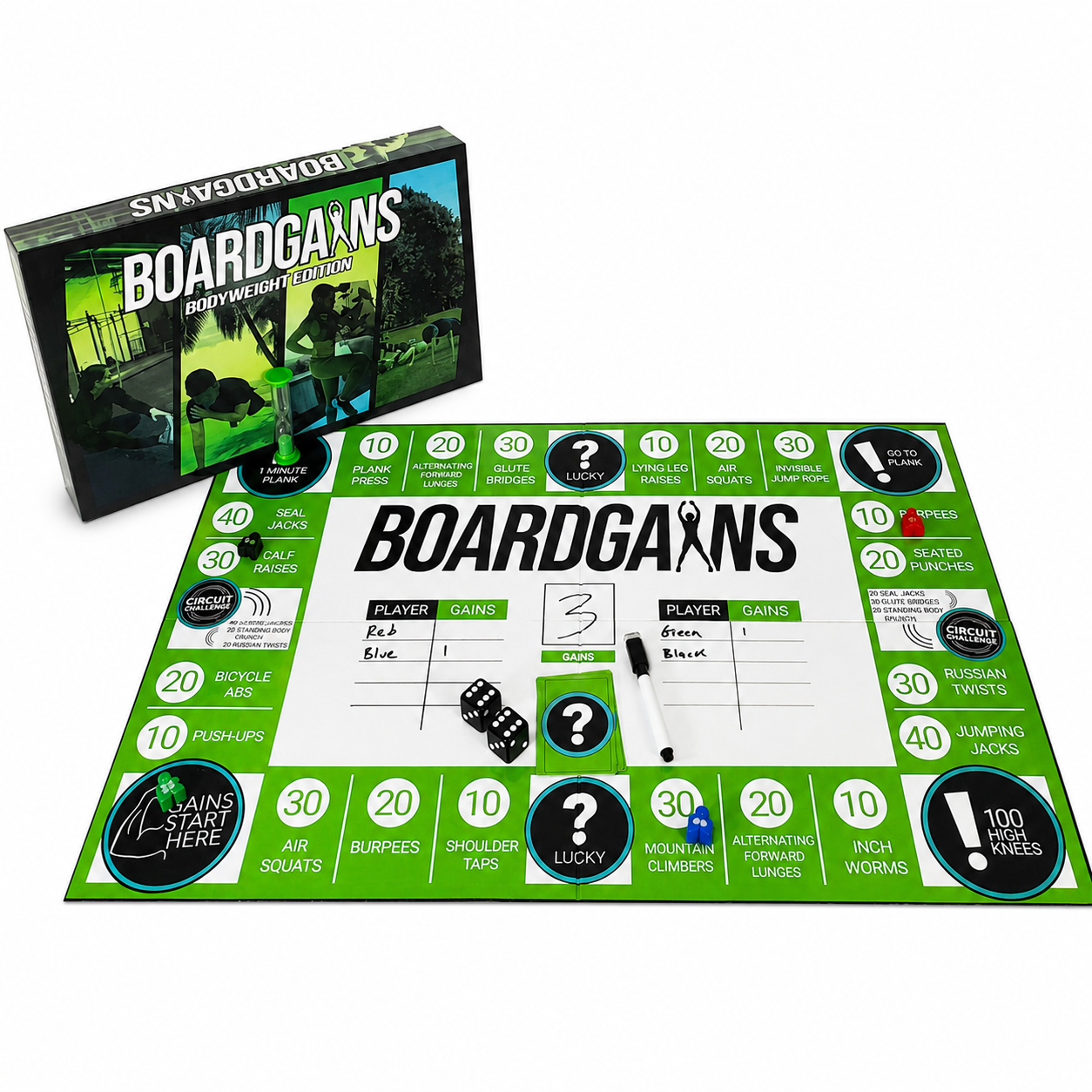
How to play: First, choose a Gains Goal. Each lap around the board equals one Gain. Everyone rolls once to find a starting exercise, moves to their workout area, and waits for the countdown. On “3, 2, 1, Gains!” all players or teams roll, move, complete the exercise they land on, and repeat. The first player or team to reach the Gains Goal wins.
Choose a class length:
- 3 Gains: about 10–15 minutes for a quick game or finisher
- 5 Gains: about 15–25 minutes for the main activity
- 7 Gains: about 25–35 minutes for a longer fitness session
PE teacher tip: Everyone plays at the same time. The board guides the activity while the teacher circulates, coaches form, and helps students choose exercise options. See the complete BoardGains how-to-play guide or explore BoardGains for schools and PE.
Inclusive options: Review an easier, standard, and more challenging option for each exercise. A wall push-up, step jack, shallow squat, or seated movement can earn the same progress as another approved version.
How to modify these games by grade level
| Grade band | Rules | Round length | Competition focus |
|---|---|---|---|
| Grades 1–2 | Use one main rule and visual boundaries | 1–3 minutes | Exploration, sharing, safe movement |
| Grades 3–5 | Add simple team roles and scoring | 2–5 minutes | Teamwork, skills, personal improvement |
| Grades 6–8 | Let teams plan tactics and rotate leaders | 3–8 minutes | Strategy, fitness, fair play |
Increase challenge through decision-making, smaller targets, controlled non-dominant-hand skills, or longer cooperative rallies. Avoid adding challenge only through more running, more repetitions, or harder contact.
Ready-to-use 45-minute competitive PE lesson
- 0–5 minutes: Entry activity. Students move around marked pathways using walking, side steps, marching, and balance pauses.
- 5–10 minutes: Warm-up and skill review. Practice safe tagging, stopping under control, spatial awareness, and the movement choices used in the games.
- 10–14 minutes: Explain and practise. Demonstrate the first game, check understanding, and run one no-score practice round.
- 14–26 minutes: Game block one. Play Cone Capture, Hula Hoop Pass, or Fitness Tic-Tac-Toe in short rounds. Pause once for team strategy.
- 26–38 minutes: Game block two. Play BoardGains, Team Four Square, or a modified Crab Soccer game.
- 38–42 minutes: Cooperative class challenge. Set one shared target, such as 20 controlled passes, three team Gains, or every student completing one role.
- 42–45 minutes: Cool-down and reflection. Lower the pace and ask: What helped your team? How did you show fair play? What would you change next round?
PE game safety and inclusion checklist
- Inspect the floor, field, walls, goals, benches, and equipment before class.
- Mark clear boundaries, travel directions, waiting zones, and re-entry points.
- Use foam or age-appropriate equipment when students are throwing, kicking, or striking.
- Teach stopping, tagging, passing, and space awareness before increasing speed.
- Keep teams small enough to reduce waiting and collisions.
- Provide walking, seated, supported, lower-impact, and skill-based options when appropriate.
- Build water and recovery breaks into the lesson without taking away team points.
- Do not use exercise as punishment for losing, making an error, or needing a break.
- Stop play immediately for unsafe contact, damaged equipment, or unclear boundaries.
- End with a short reflection so students connect competition with respect and learning.
Frequently asked questions
What makes a good competitive PE game?
A strong game is easy to explain, keeps most students active, uses safe boundaries, and gives children several ways to help their team. Short rounds and quick resets also keep the score from feeling too important.
How can PE teachers prevent students from sitting out?
Avoid elimination. Use immediate re-entry tasks, team rotations, small-sided games, multiple courts, and active roles. If a student needs recovery, provide a meaningful helper or strategy role without treating rest as a penalty.
How long should a PE game last?
A single round may last two to five minutes. A complete game block can run for 10–25 minutes with teaching, practice, multiple rounds, feedback, and resets.
What competitive PE games require minimal equipment?
Hula Hoop Pass, Fitness Tic-Tac-Toe, Cone Capture, relay challenges, movement games, and many tag variations need only basic PE equipment. BoardGains provides a complete game structure using bodyweight exercises.
How can competitive games include students with different abilities?
Offer different movement and skill options, adjust distances, use larger or softer equipment, allow extra bounces, and create varied team roles. Score approved options equally so each student’s contribution matters.
How do I handle students who become too focused on winning?
Reset the purpose before the next round. Add points for safe play, communication, honesty, or including teammates. Use cooperative targets and ask students to name one thing their opponents did well.
Can these PE games be played indoors and outdoors?
Yes, but the setup may need to change. Indoors, reduce travel speed and use softer equipment. Outdoors, check the surface, weather, boundaries, and distance from roads or other hazards.
Which BoardGains edition is best for PE?
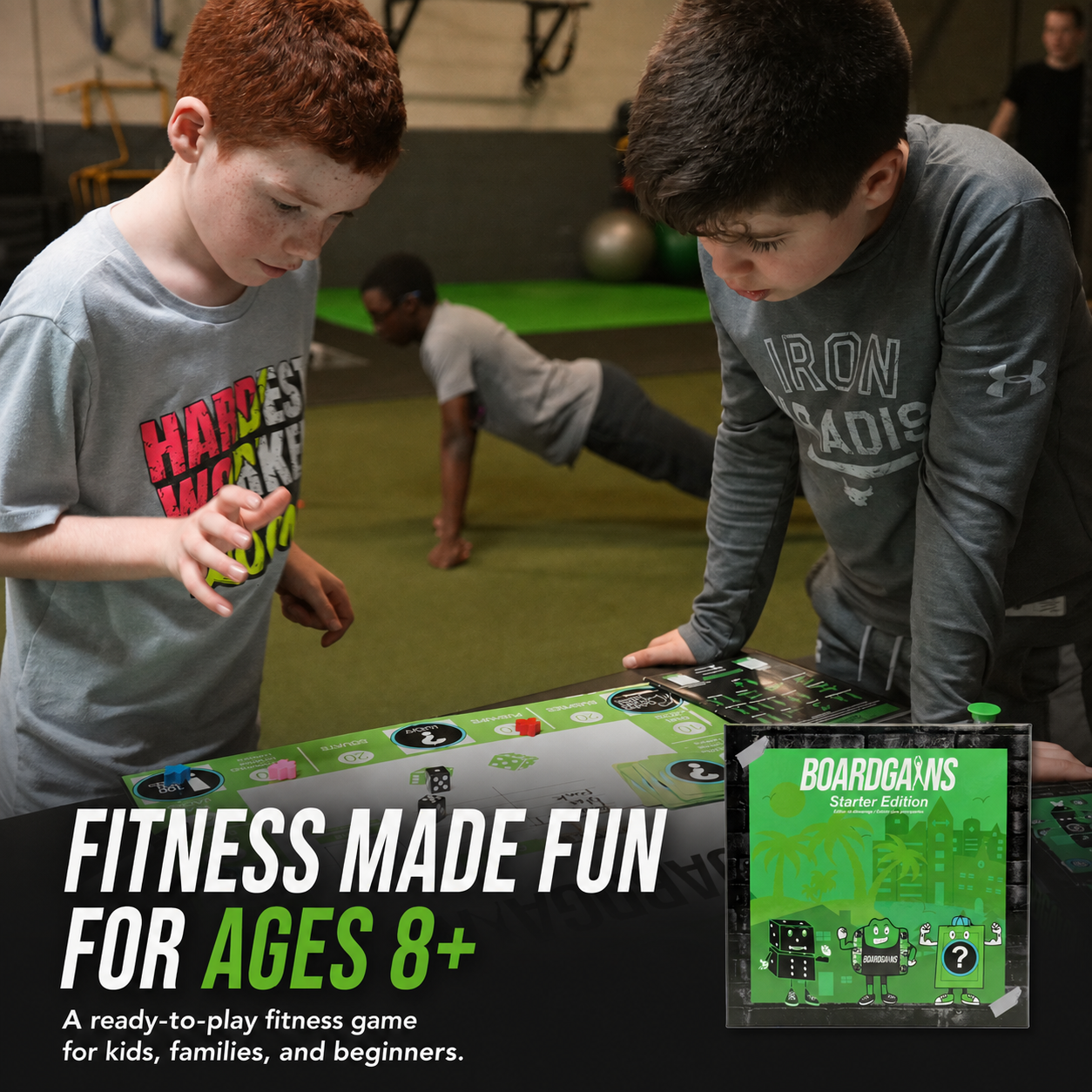
The Starter Edition is designed for kids, families, and beginners with 13 exercises and a smaller board. The Pro Edition has 20 exercises and a larger board for older students, more exercise variety, and team play. Schools that serve several grade levels may benefit from both editions.
Make competition fun for every student
Competition works best when it adds excitement without removing belonging. Keep the rules clear, the rounds short, and the path back into play immediate. When students can move, think, communicate, and contribute in different ways, the class becomes more active and more enjoyable.
Want a ready-to-run PE activity instead of planning another game from scratch? Explore BoardGains for physical education. Set your Gains Goal, set up players or teams, review the exercises, and start everyone together. The board runs the game while you coach the class.
About the author: Eric Mathura is the creator of BoardGains. He holds a BSc in Kinesiology and has more than 10 years of experience as a personal trainer and group fitness instructor. He created BoardGains to make movement more fun, social, and inclusive.

Leave a comment
This site is protected by hCaptcha and the hCaptcha Privacy Policy and Terms of Service apply.