
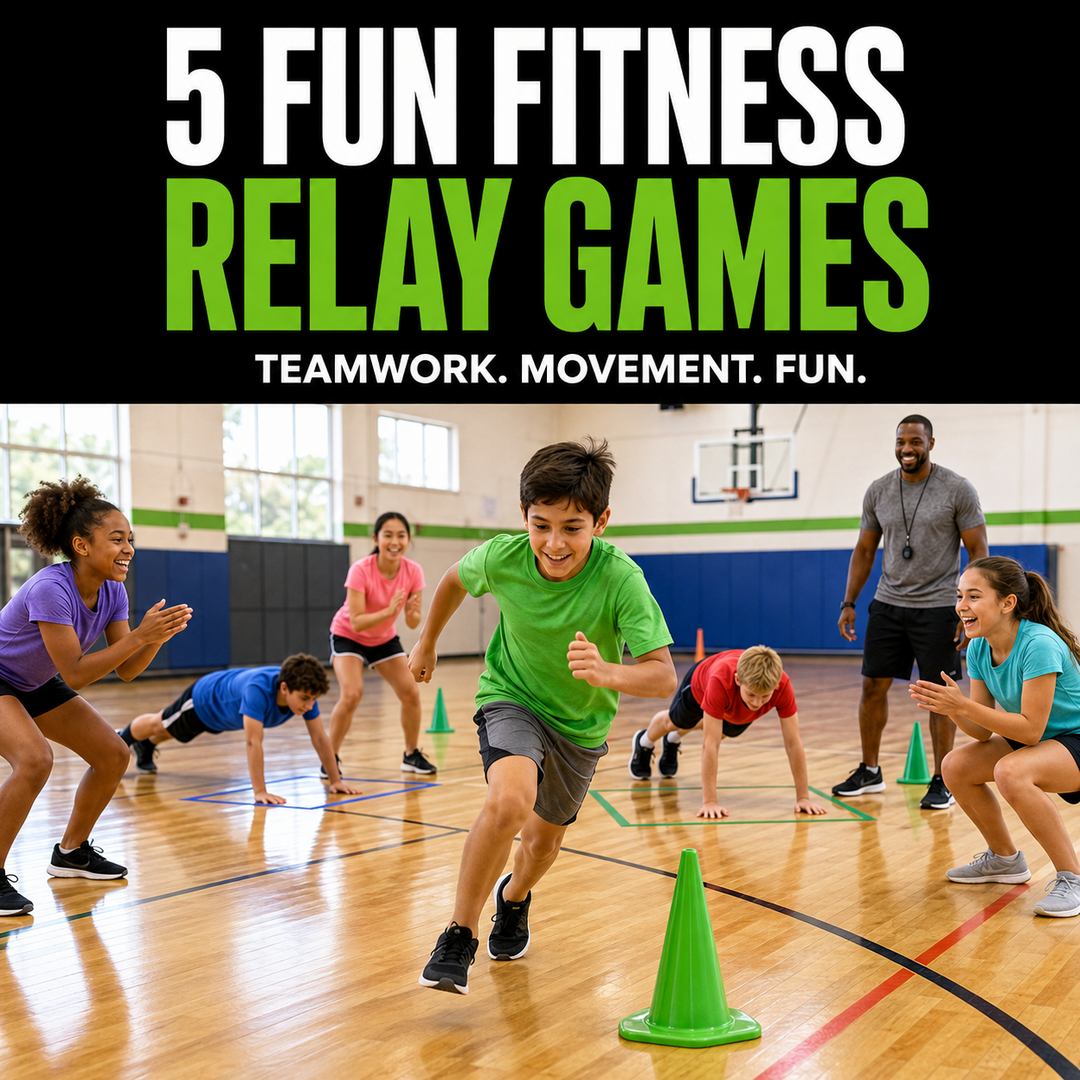
Fitness relay games are an easy way to bring energy, teamwork, and friendly competition into a PE class, bootcamp, camp, or team practice. With the right setup, they can also keep more people moving instead of leaving half the group in a long line.
Below are five fun fitness relay games that are simple to teach and easy to adjust for different ages and abilities. Each game includes the equipment, setup, rules, coaching tips, and modifications you need to run it with confidence.
Quick answer: The best fitness relay games use short lanes, small teams, clear movement rules, and active waiting stations. Try the Cone Shuttle Relay for speed, the Hula Hoop Pass for teamwork, the Movement Card Relay for variety, the Balance Carry Relay for control, or the BoardGains Team Relay for a complete game-based workout.
Table of Contents
- Why Use Fitness Relay Games?
- How to Set Up a Safe Relay
- 1. Cone Shuttle and Exercise Relay
- 2. Hula Hoop Team Pass Relay
- 3. Movement Card Relay
- 4. Balance Carry Relay
- 5. BoardGains Team Relay
- 20-Minute Relay Class Plan
- Modifications and Inclusion Ideas
- Frequently Asked Questions
Why Use Fitness Relay Games?
A good relay gives a group a shared goal. Players communicate, encourage teammates, practise movement skills, and work through a challenge together. The race adds excitement, but the activity should still reward effort, control, and teamwork.
Relay games can help instructors:
- Increase active time during PE or group fitness
- Practise running, balance, coordination, and bodyweight exercises
- Build communication and teamwork
- Add variety without planning a complicated workout
- Adjust one activity for beginners and experienced players
The CDC recommends that activities for children and teens be varied, age appropriate, and enjoyable. Fitness relays can support that goal when the challenge matches the group and everyone has a way to take part.
How to Set Up a Safe and Active Fitness Relay
Before starting, walk through the game and show every movement. Use clear boundaries and enough space between teams.
Use These Setup Guidelines
- Create short, clear lanes: Use cones or floor lines so players know where to travel.
- Keep teams small: Teams of three to six usually create more movement and less waiting.
- Leave space between lanes: Players should be able to turn without entering another team's path.
- Choose safe turns: Ask players to slow down, plant under control, and travel back in their own lane.
- Remove hazards: Check the floor for bags, loose equipment, wet spots, and other obstacles.
- Teach the movements first: Review form and offer an easier option before the race begins.
- Keep waiting players active: Add a low-intensity movement station beside each team.
| Relay Game | Main Skill | Equipment | Best For |
|---|---|---|---|
| Cone Shuttle and Exercise Relay | Speed and fitness | Cones | PE, camps, teams |
| Hula Hoop Team Pass | Cooperation | One hoop per team | All ages |
| Movement Card Relay | Movement variety | Movement cards and cones | PE and bootcamps |
| Balance Carry Relay | Balance and control | Beanbags or soft balls | Kids and beginners |
| BoardGains Team Relay | Full-body fitness | BoardGains game | Classes, teams, families |
1. Cone Shuttle and Exercise Relay
This fast-paced relay combines a short shuttle with a bodyweight exercise. It is easy to change for different ages, spaces, and fitness levels.
Equipment
- Two cones per team
- Optional exercise signs
Setup
Create one lane per team. Place a starting cone at one end and a turning cone about 15 to 30 feet away. Adjust the distance to fit your space and group.
How to Play
- Divide the group into small teams.
- The first player travels to the far cone and returns.
- After crossing the starting line, the player completes five controlled repetitions of the chosen exercise.
- The next teammate begins after a clear hand tap or verbal signal.
- Continue until everyone completes the relay or until time runs out.
Movement Ideas
- Squats
- Jumping jacks or step jacks
- High knees or marching knees
- Wall push-ups
- Seated punches
Coach's tip: Change the travel pattern instead of making the lane longer. Players can power walk, side shuffle, skip, or move around two cones in a figure eight.
2. Hula Hoop Team Pass Relay
This relay is less about running and more about communication. The team must work together to move a hoop from one end of the line to the other.
Equipment
- One hula hoop per team
Setup
Each team stands in a line or circle and holds hands. Place the hoop over the joined hands of the first two players before the group connects.
How to Play
- On the start signal, the first player steps through the hoop.
- Players guide the hoop over their bodies without letting go of their teammates' hands.
- The hoop continues down the line until it reaches the final player.
- For a second round, send it back to the beginning.
Coach's tip: Score one point for completing the pass and one point for positive communication. This keeps teamwork more important than speed.
Modification: If holding hands is not comfortable or possible, players can stand side by side and pass the hoop from person to person using both hands.
3. Movement Card Relay
The Movement Card Relay keeps every round fresh. Players travel to a card pile, select a movement, return to their team, and lead the exercise.
Equipment
- Cones
- Movement cards, index cards, or printed exercise signs
Setup
Place a face-down set of movement cards at the far end of each lane. Use exercises the group already knows and include easier options on the cards.
How to Play
- The first player travels to the card pile and selects one card.
- The player returns and shows the movement to the team.
- Everyone completes the listed exercise together.
- The next player goes after the group finishes the movement.
- Play until each teammate has collected a card or the set time ends.
Coach's tip: Use time instead of repetitions for movements such as planks or seated punches. A 10- to 20-second round is easy to manage and keeps the game moving.
No-card version: Write six movements on a whiteboard and let each player roll a die after returning. The number rolled selects the team exercise.
4. Balance Carry Relay
This relay rewards control instead of top speed. It works well for younger groups, warm-ups, or recovery days.
Equipment
- One beanbag, foam ball, or other soft object per team
- Two or three cones per lane
Setup
Create a short lane with one turning cone. Add a second cone if you want players to weave through the course.
How to Play
- The first player balances the object on an open hand or carries it on a small marker.
- The player walks around the cone and returns without holding the object in place.
- If it falls, the player stops, picks it up, and continues from that spot.
- The player passes the object safely to the next teammate.
- Continue until everyone finishes.
Coach's tip: Do not make players restart when the object drops. A quick reset keeps the activity positive and prevents frustration.
Challenge option: Ask experienced players to change levels at a cone, walk around two cones, or use their non-dominant hand. Keep the movement controlled—running is not needed.
5. BoardGains Team Relay
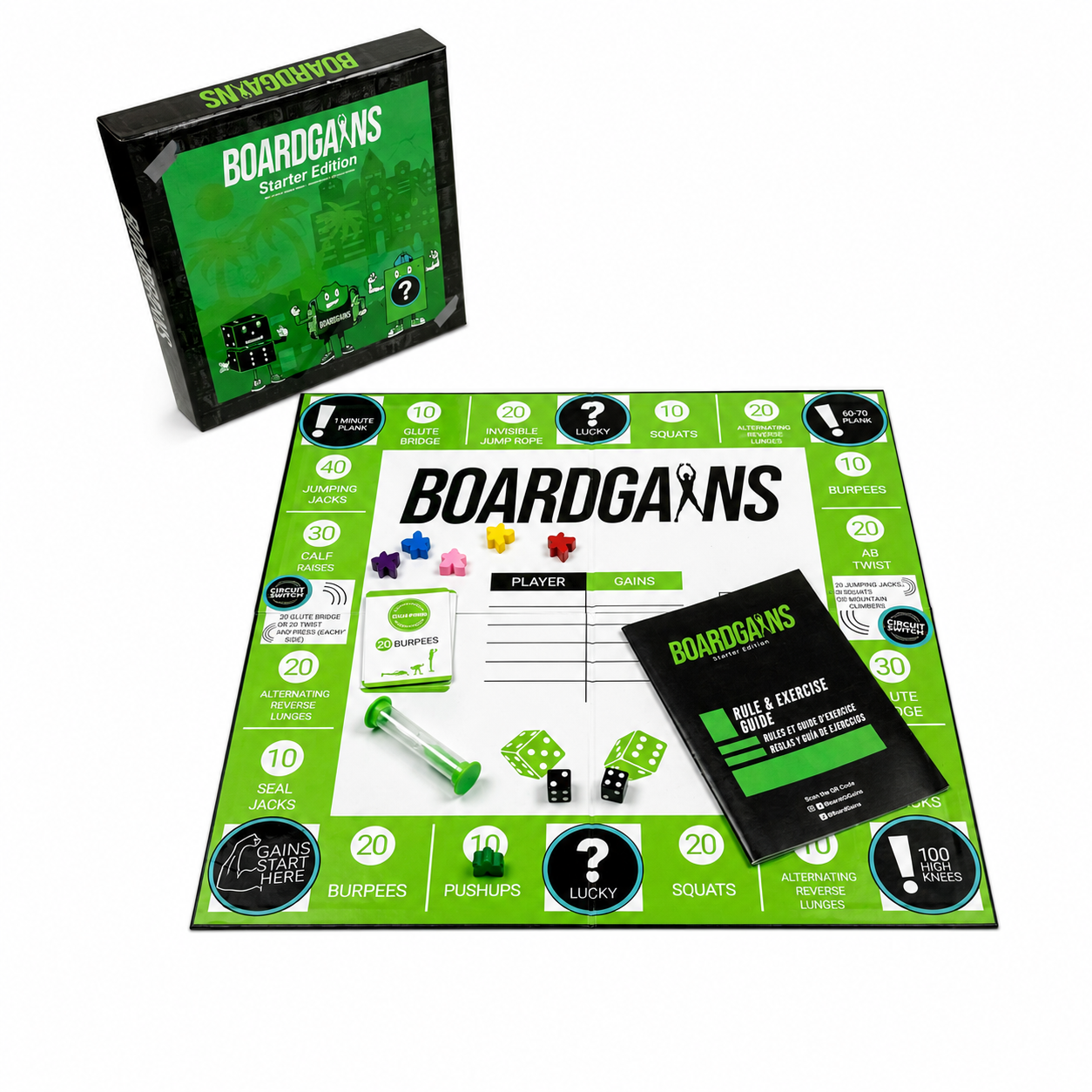
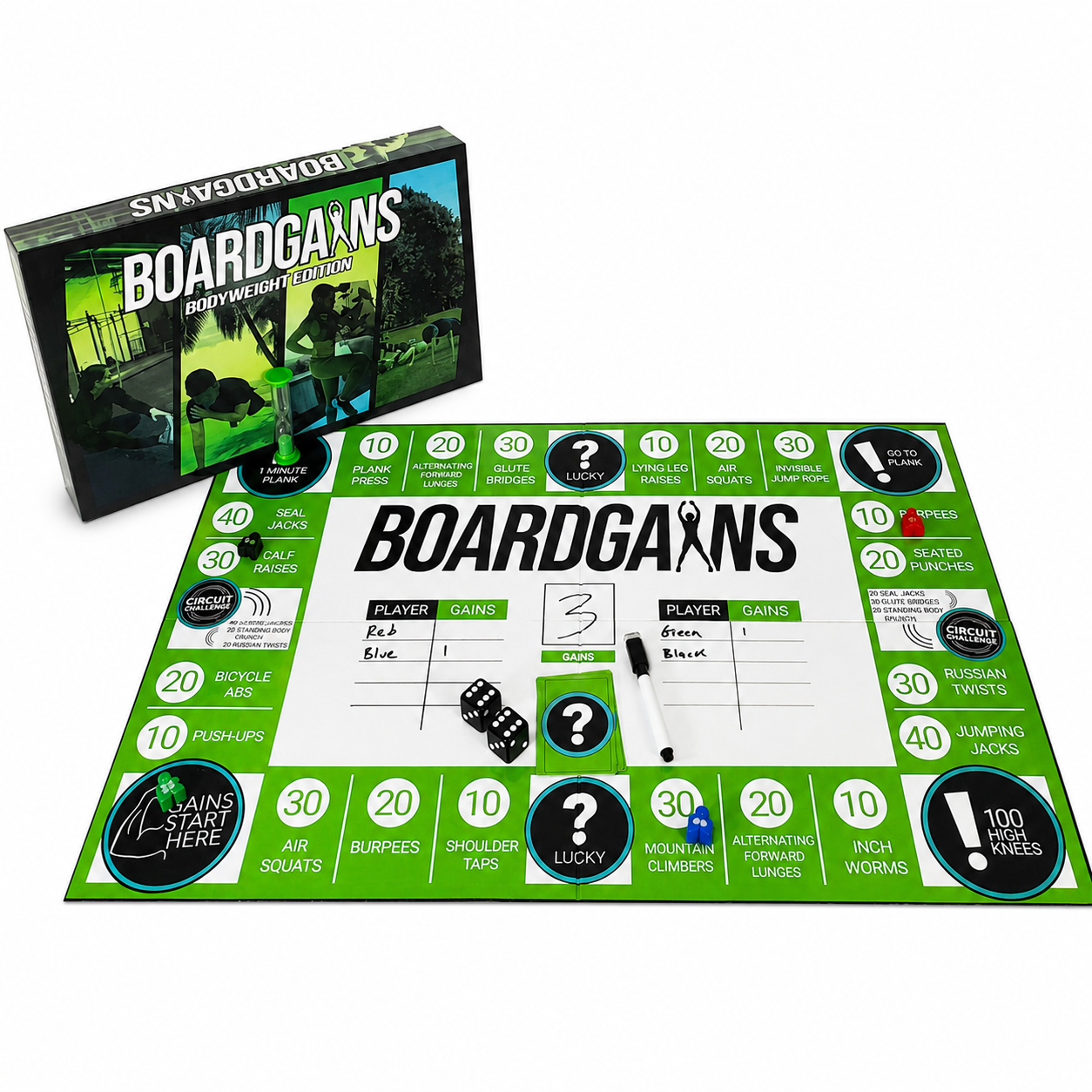
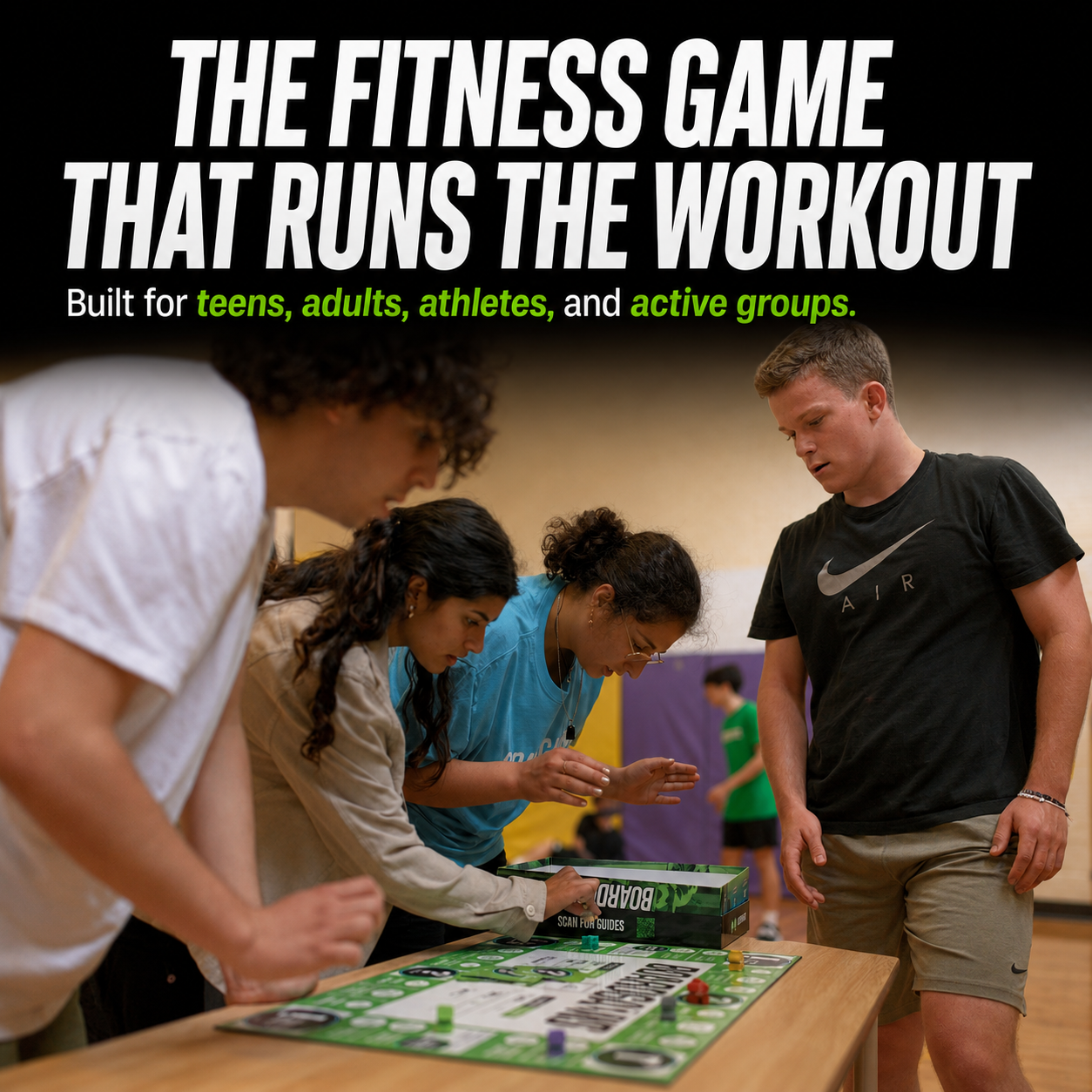
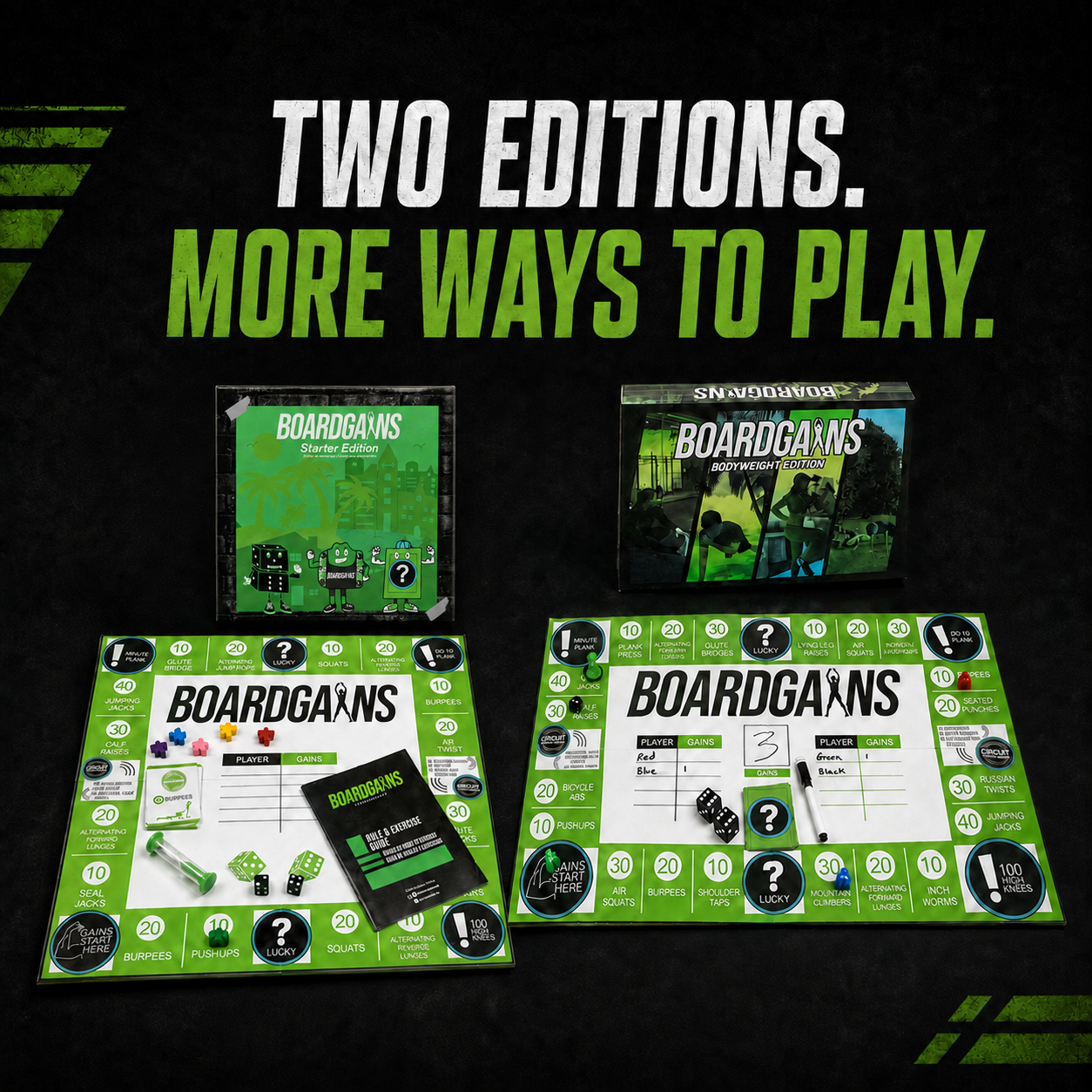
The BoardGains Team Relay turns the board into the workout plan. Each roll gives the team a new movement, while rotating roles gives every player a chance to lead.
Equipment
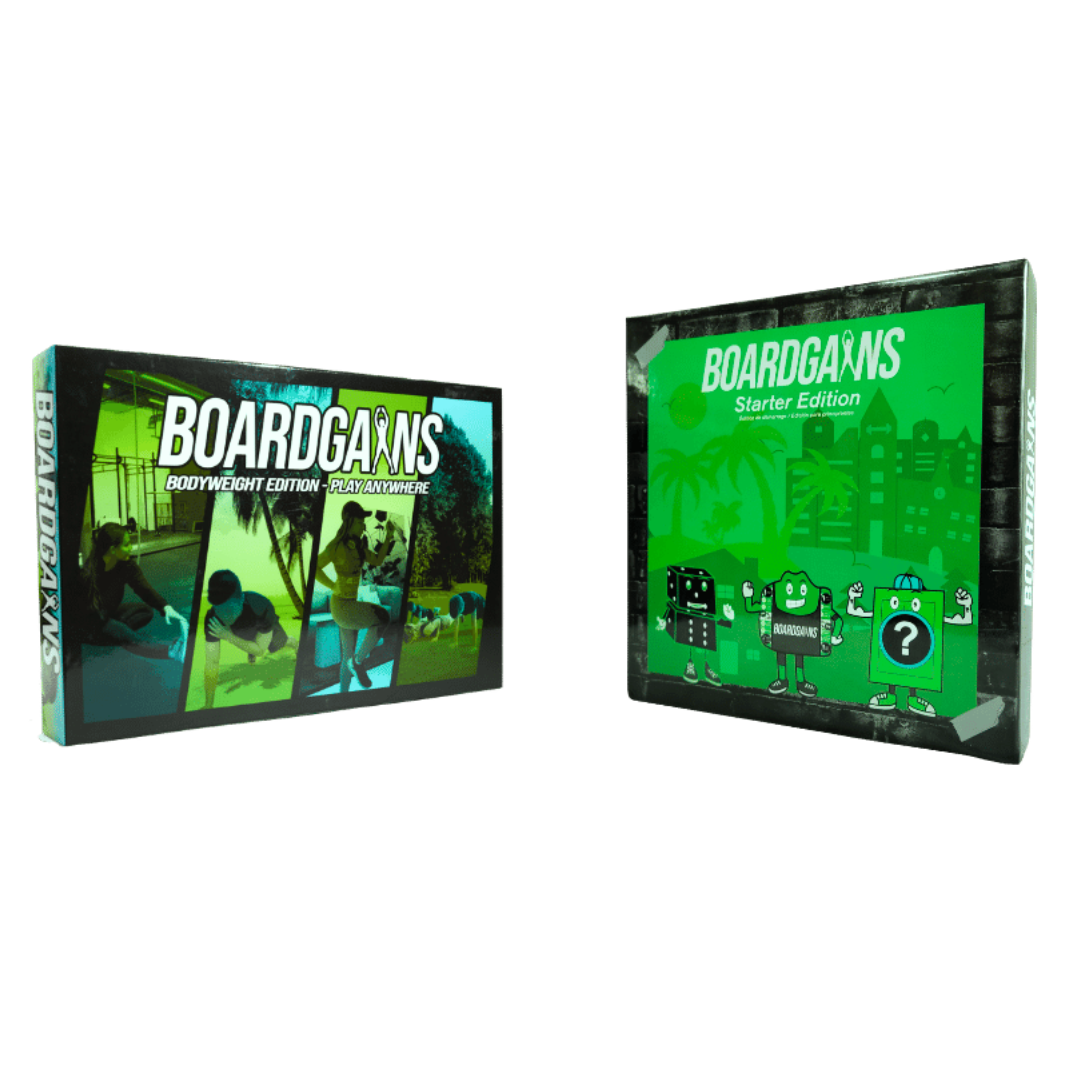
- One BoardGains game
- One game piece per team
- One workout space per team
Setup
Place the board on a table or stable surface. Set each team's game piece at GAINS START HERE and give every team a marked workout area a safe distance from the board.
How to Play
- Choose a short Gains Goal. One lap around the board equals one Gain.
- One player from each team goes to the board, rolls the dice, and moves the team's game piece.
- The player returns and tells the team which exercise they landed on.
- The whole team completes the exercise together in its workout area.
- A new teammate becomes the roller for the next turn.
- The first team to reach the Gains Goal wins.
Coach's tip: Start all teams together and keep only the current rollers near the board. This reduces crowding and keeps the rest of the group moving.
Short-class option: Set a timer for 8 to 12 minutes. When time ends, the team with the most Gains or the team closest to completing a lap wins.
A Ready-to-Use 20-Minute Relay Class Plan
| Time | Activity | Instructor Focus |
|---|---|---|
| 0–3 minutes | Dynamic warm-up | March, side step, squat, reach |
| 3–5 minutes | Explain and demonstrate | Show lanes, turns, signals, and modifications |
| 5–11 minutes | Relay Round 1 | Coach control and teamwork |
| 11–17 minutes | Relay Round 2 | Change movement or team role |
| 17–20 minutes | Cooldown and team reflection | Slow breathing and one teamwork win |
For a longer class, run three or four stations. Rotate teams every five to eight minutes so the group can practise different skills.
How to Keep Everyone Moving
Traditional relays often leave players standing while one teammate works. Use these changes to increase activity:
- Use more teams with fewer players instead of two very long lines.
- Create an active waiting zone beside each team.
- Ask the team to complete the exercise together when the runner returns.
- Play timed rounds so teams can focus on their own progress.
- Give each player a job, such as roller, mover, coach, counter, or encourager.
Simple active-waiting movements include marching, calf raises, step jacks, light shadow boxing, or slow bodyweight squats. Choose a movement the group can perform safely without getting too tired before their turn.
Relay Modifications and Inclusion Ideas
The same relay does not need to look identical for every player. Keep the team goal the same while adjusting how each person takes part.
- Replace running with walking, wheeling, marching, or another safe travel pattern.
- Shorten the lane or move the turning cone closer.
- Use step jacks instead of jumping jacks.
- Use wall push-ups or seated punches instead of floor exercises.
- Offer a larger or lighter object for the Balance Carry Relay.
- Let a player be the caller, counter, roller, or movement leader.
- Use personal-best or team-completion scoring instead of ranking every team.
- Allow extra time without adding a penalty.
Ask participants what support helps them move with confidence. A good modification keeps the purpose of the game while creating a fair way to contribute.
Ways to Score Without Making Speed the Only Goal
The fastest team does not always need to be the only winner. Try awarding points for:
- Safe and controlled movement
- Positive communication
- Every teammate taking a turn
- Completing the challenge without skipping repetitions
- Showing the best team spirit
- Improving the team's score in the next round
This scoring style makes the relay more welcoming and keeps players focused on skills they can control.
Frequently Asked Questions
What are the best relay games for PE class?
The best PE relay games are simple to explain, easy to modify, and active for the whole group. Cone shuttles, movement card relays, hoop passes, balance carries, and BoardGains team relays work well because teachers can change the distance, movement, time, and team size.
How many players should be on each relay team?
Teams of three to six are a useful starting point. Smaller teams usually mean shorter waits and more turns. Create extra lanes when space and equipment allow.
Can fitness relay games be played indoors?
Yes. Use shorter lanes, walking or controlled travel patterns, and clear boundaries. Choose movements that fit the floor, ceiling height, and available space.
What relay games need little or no equipment?
A cone shuttle relay only needs floor lines or simple markers. You can also run a movement relay with exercises called by the instructor instead of using printed cards.
How can I make relay games safer?
Check the play area, leave space between lanes, teach safe turns, use soft equipment, avoid blindfolded races, and match every movement to the group's age and ability. Stop the activity if the space becomes crowded or slippery.
How can I include players with different abilities?
Offer different travel options, shorter distances, seated or standing exercises, lighter objects, and non-running team roles. Score teamwork and completion instead of speed alone.
Can adults use these fitness relay games?
Yes. Trainers and bootcamp instructors can increase the challenge with longer work periods, more complex travel patterns, or higher exercise volume while keeping the same basic rules.
Turn Your Next Group Workout Into a Game
Fitness relay games work because they give people a reason to move together. Keep the setup clear, the teams small, and the challenge flexible. When everyone has a role and the focus stays on safe movement, effort, and teamwork, the relay becomes more than a race—it becomes a shared fitness experience.
Ready to Roll, Move, and Sweat?
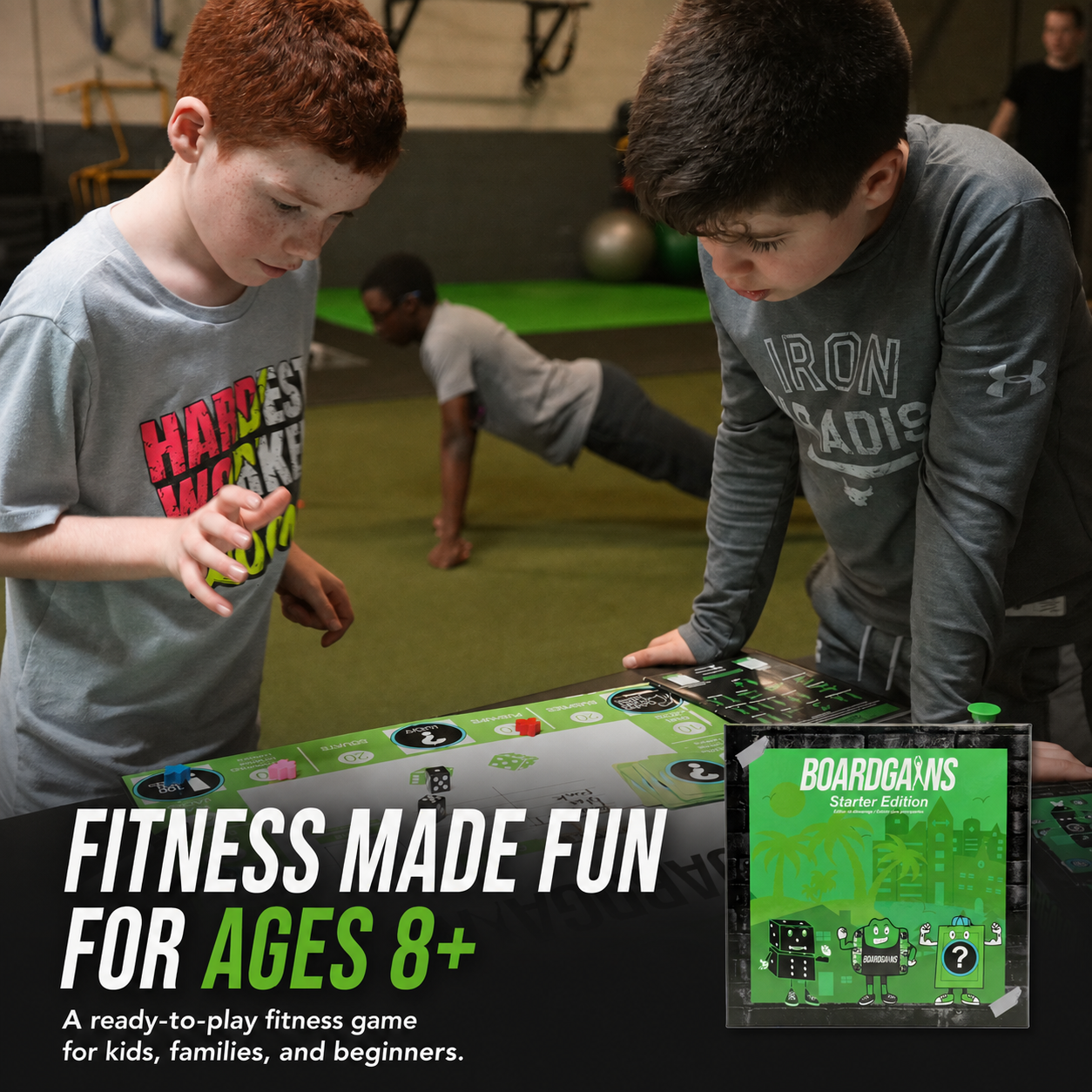
BoardGains turns bodyweight exercise into a fun team game for PE classes, bootcamps, camps, teams, and family workouts.
Source
About the Author: Eric Mathura holds a B.Sc. in Kinesiology and has more than 10 years of experience as a personal trainer and group fitness instructor. He created BoardGains to make fitness more fun, social, and engaging for every group.
Updated August 2026.

Leave a comment
This site is protected by hCaptcha and the hCaptcha Privacy Policy and Terms of Service apply.