
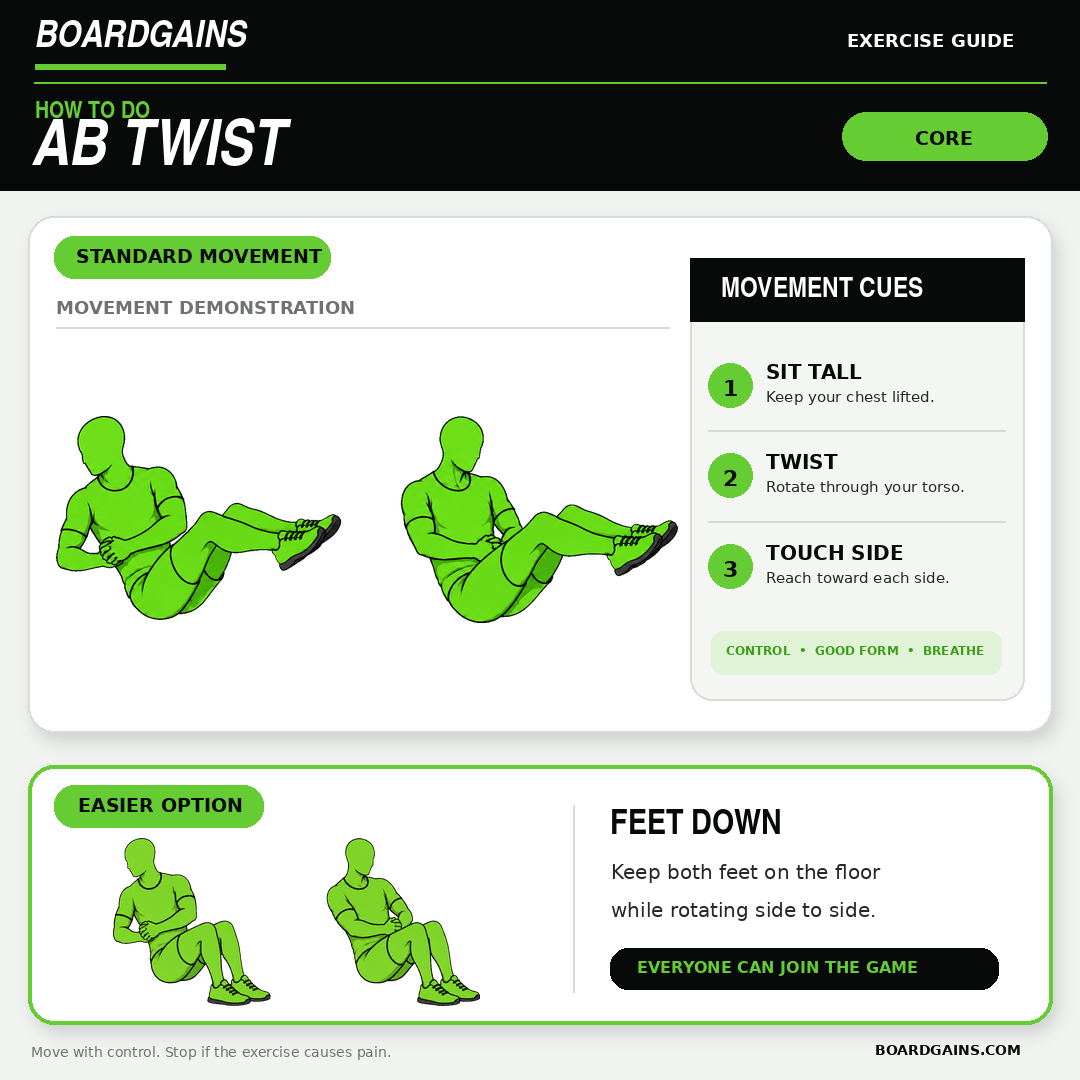
The ab twist, commonly called a Russian twist, is a seated core exercise that involves rotating your upper body from side to side. It mainly challenges your obliques, the muscles along the sides of your abdomen.
The exercise can be performed with your feet on the floor or lifted. Beginners should usually start with their feet down and no added weight. Once they can maintain a long spine and controlled rotation, they can try a harder version.
Written by Eric Mathura, B.Sc. Kinesiology and CSEP-CPT, with more than 10 years of experience as a personal trainer and group fitness instructor. Updated August 19, 2026.
Quick answer: Sit with your knees bent and feet flat. Keep your chest tall, lean back slightly and brace your core. Hold your hands near your chest. Rotate your chest and shoulders toward one side, return through the centre and turn to the other side. Keep your hips steady and use a range you can control.
Ab Twist Overview
- Also called: Russian twist
- Level: Beginner to advanced
- Equipment: None; optional light weight for progressions
- Main muscles: Internal and external obliques
- Supporting muscles: Other abdominals, hip flexors and upper-back muscles
- Movement type: Seated rotational core exercise
- BoardGains count: Each twist to one side equals one rep
What Is an Ab Twist?
An ab twist is a seated rotational core exercise. You sit with your knees bent, lean back slightly and rotate your chest from one side to the other. Your core works to maintain the seated position and control the turn.
The movement is widely known as a Russian twist. BoardGains uses the name Ab Twist because it is simple, easy to understand and clearly describes the exercise.
You do not need equipment. Holding a medicine ball, dumbbell or weight plate is an optional progression, not a requirement. Bodyweight reps should come first.
How to Do an Ab Twist With Proper Form
- Sit down. Use the floor or an exercise mat. Bend your knees and place both feet flat.
- Set your posture. Sit tall through your chest and lengthen your spine.
- Lean back slightly. Move your torso back only far enough to feel your core working while keeping your back long.
- Set your hands. Bring your hands together near the middle of your chest. Keeping them close makes the exercise easier to control.
- Brace your core. Gently tighten your abdominals and keep your ribs controlled over your pelvis.
- Rotate right. Turn your chest and shoulders toward the right. Let your hands travel because your torso is turning.
- Return through the centre. Pause briefly with your chest facing forward.
- Rotate left. Turn your chest and shoulders toward the left while keeping your hips steady.
- Continue with control. Alternate sides without swinging, bouncing or holding your breath.
A helpful cue is: “Sit tall, lean back and twist side to side.”
Key Ab Twist Form and Rotation Cues
Sit Tall Before You Lean Back
Begin by lengthening your spine and lifting your chest. Lean back from that tall position instead of collapsing. A small lean is enough for many participants. The farther you lean, the harder it becomes to maintain posture.
Rotate Your Chest, Not Only Your Hands
The hands should move because the chest and shoulders turn. If your arms swing but your shirt logo continues facing forward, the torso is not doing much rotation. Imagine showing the front of your chest toward one side of the room and then the other.
Keep Your Hips Steady
Your pelvis should remain mostly facing forward while the upper body rotates. The hips do not have to be frozen, but avoid letting your knees and feet swing in the opposite direction of your hands.
Use a Comfortable Range
Rotate only as far as you can keep a long spine and steady hips. You do not need to touch your hands or a weight to the floor. A smaller controlled twist is better than a large turn that causes rounding or loss of balance.
Control the Centre
Pass through the centre between sides instead of throwing your momentum directly from right to left. A brief pause helps you own each direction and makes rep counting easier.
Keep Breathing
Exhale gently as you rotate and inhale as you return through the centre, or use another steady pattern that feels natural. Avoid holding your breath while trying to brace.
Short coaching cues: “Sit tall.” “Lean back slightly.” “Make your shoulders turn.” “Keep your hips steady.” “Control the centre.” “Feet down to modify.”
Should Your Feet Be Up or Down?
Both positions are valid, but they create different levels of difficulty.
Feet on the Floor
Keeping both feet down gives you a larger, more stable base. It is usually the best choice for:
- Beginners
- Younger participants
- Large PE classes
- People learning the movement
- Anyone whose back rounds when the feet lift
- Participants who mainly feel the exercise in their hip flexors
Feet Lifted
Lifting the feet creates a less stable position and increases the balance challenge. The hip flexors work harder to hold the legs up. Only use this version if you can maintain a long spine, steady hips and controlled rotation.
Place your feet back down if your back rounds, your legs swing from side to side or you cannot rotate without losing balance. The feet-up version is not automatically better.
How to Count Ab Twist Repetitions
For BoardGains, each twist to one side counts as one repetition:
- Twist right = rep 1
- Twist left = rep 2
- Twist right = rep 3
- Twist left = rep 4
Some workout programs count one full right-and-left cycle as one rep. Both methods can work, but trainers should explain the counting method before the set begins.
BoardGains counting tip: Every side counts. Return through the centre before turning to the other side, and make sure the whole group uses the same counting method.
What Muscles Do Ab Twists Work?
- Internal obliques: Help rotate and control the trunk.
- External obliques: Work with the internal obliques to create and resist rotation.
- Rectus abdominis: Helps maintain the leaned-back torso position and control the relationship between the ribs and pelvis.
- Transverse abdominis: A deeper core muscle that assists with trunk bracing.
- Hip flexors: Help hold the seated position, especially when the feet are lifted.
- Spinal stabilizers: Help maintain a long, controlled torso.
- Upper-back muscles: Help keep the chest lifted as the shoulders rotate.
The amount of work changes with your torso angle, hand position, foot position, speed and resistance. A slow bodyweight twist with the feet down may challenge the core more effectively than a fast weighted version.
Benefits of Ab Twists
Train the Obliques
Ab twists directly challenge the muscles along the sides of your abdomen. These muscles help create and control trunk rotation.
Practise Controlled Rotation
The exercise teaches participants to turn the torso while keeping the hips more stable. Moving slowly helps separate a true torso rotation from an arm swing.
Build Core Endurance
Controlled reps or timed sets challenge the core to maintain the leaned-back seated position. End the set when posture begins to change.
Require Little or No Equipment
Bodyweight ab twists can be performed almost anywhere with enough floor space. An exercise mat may improve comfort but is not required.
Offer Simple Difficulty Changes
You can adjust the exercise by changing foot position, torso angle, arm length, speed, range or resistance. This makes the movement easy to scale in a group.
Fit Into Group Workouts
Ab twists are easy to demonstrate and can be included in PE classes, bootcamps, circuits and fitness games. Everyone can move at the same time without waiting for equipment.
Beginner Ab Twist Modifications
1. Feet-Down Ab Twist
Keep both feet flat, sit tall and lean back only slightly. Hold your hands close to your chest and rotate through a comfortable range. This is the main BoardGains modification.
2. More Upright Torso
Sit closer to upright instead of leaning far back. This reduces the demand on the abdominal muscles and hip flexors while you practise the rotation.
3. Hands at the Chest
Keep your hands close to your body rather than reaching forward. A shorter lever is easier to control and may help you keep your chest lifted.
4. Smaller Rotation
Turn only a short distance to each side. Increase the range gradually if your spine remains long and your hips stay steady.
5. Seated Chair Twist
Sit tall near the front of a stable chair with your feet flat. Cross your arms over your chest and rotate gently from side to side. Keep the chair on a level, non-slip surface.
Progression tip: Master the feet-down bodyweight twist before lifting your feet or holding weight. Add only one challenge at a time.
Ab Twist Variations and Progressions
- Arms-extended ab twist: Reach your arms farther in front of your chest. The longer lever increases the challenge without added weight.
- Feet-up ab twist: Lift your feet a few inches while keeping your knees bent. Keep the legs as steady as possible.
- Paused ab twist: Pause briefly at each side before returning through the centre.
- Slow-tempo ab twist: Take two or three seconds to rotate each way. This reduces momentum and increases time under tension.
- Weighted ab twist: Hold a light medicine ball, dumbbell or plate in both hands. Keep it close enough to control.
- Partner ab twist: Sit side by side or back to back and pass a light ball with control. Plan the passing pattern and provide enough space.
- Half-kneeling torso rotation: Use a kneeling stance and rotate the upper body without the balance demand of the seated position.
Start lighter than you think you need. Added weight does not improve the movement if it causes swinging, rounding or pain.
Common Ab Twist Mistakes and How to Fix Them
Mistake 1: Rounding the Back
What it looks like: The chest drops and the spine curves as the set continues.
Try this: Sit taller, reduce the backward lean and place your feet on the floor.
Mistake 2: Moving Only the Arms
What it looks like: The hands swing while the shoulders continue facing forward.
Try this: Let your chest and shoulders travel with your hands. Imagine turning your shirt logo toward each side.
Mistake 3: Moving Too Quickly
What it looks like: Momentum throws the body from right to left.
Try this: Slow down and briefly return through the centre before each new twist.
Mistake 4: Rotating Too Far
What it looks like: The participant forces the hands or weight toward the floor and loses posture.
Try this: Use a smaller range. The hands do not need to touch down.
Mistake 5: Using Too Much Weight
What it looks like: A heavy object creates swinging, rounding or loss of balance.
Try this: Remove the weight and master the bodyweight version first.
Mistake 6: Leaning Too Far Back
What it looks like: The torso collapses toward the floor and the participant struggles to sit up.
Try this: Use a more upright position and keep your feet planted.
Mistake 7: Knees and Feet Swing Side to Side
What it looks like: The legs move opposite the hands and the hips rotate with every rep.
Try this: Place your feet down, shorten the range and focus on keeping your knees facing forward.
Mistake 8: Holding Your Breath
What it looks like: The face and neck tense while the torso becomes stiff.
Try this: Exhale gently during the turn and inhale as you return through the centre.
Mistake 9: Pulling on the Neck
What it looks like: The hands are placed behind the head and pull the neck forward.
Try this: Keep your hands together near your chest and your neck relaxed.
Are Russian Twists Bad for Your Back?
Russian twists are not automatically harmful, but they are not the right exercise for every person. Fast movement, a rounded back, heavy weight or forced range can make the exercise uncomfortable.
For more control, keep your feet down, remove added weight, sit more upright, use a smaller range and move slowly. Stop if you feel sharp or increasing pain. People with an existing back injury or medical condition should ask an appropriate healthcare professional whether repeated or loaded twisting is suitable.
How Many Ab Twists Should You Do?
- Beginner: 2 sets of 6 to 10 reps per side
- General fitness: 2 to 3 sets of 10 to 15 reps per side
- Timed circuit: 20 to 40 seconds
- BoardGains game: Complete the number shown, counting every side as one rep
End the set when your back begins to round, your feet swing uncontrollably or your shoulders stop rotating. Controlled reps are more important than reaching a large number.
Simple Core Circuit
- 10 ab twists per side
- 20- to 30-second plank
- 10 bicycle abs per side
- 12 glute bridges
- Rest for 45 to 90 seconds and repeat for 2 or 3 rounds
Use bodyweight reps and feet-down options when fatigue makes it difficult to maintain posture.
How to Teach Ab Twists in PE or Group Fitness
- Have everyone sit with both feet flat.
- Ask the group to sit tall.
- Practise leaning back slightly without rounding.
- Keep the hands together near chest height.
- Rotate slowly toward one side.
- Return through the centre.
- Rotate toward the other side.
- Explain that every side counts as one BoardGains rep.
Show the feet-up option only after demonstrating the feet-down version. Give each participant enough space so arms do not contact another person. For younger groups, use the cue: “Show your chest to one wall, then the other wall.”
Use ability-based options instead of asking everyone to lift their feet or touch the floor. The goal is controlled torso rotation.
Ab Twists in BoardGains
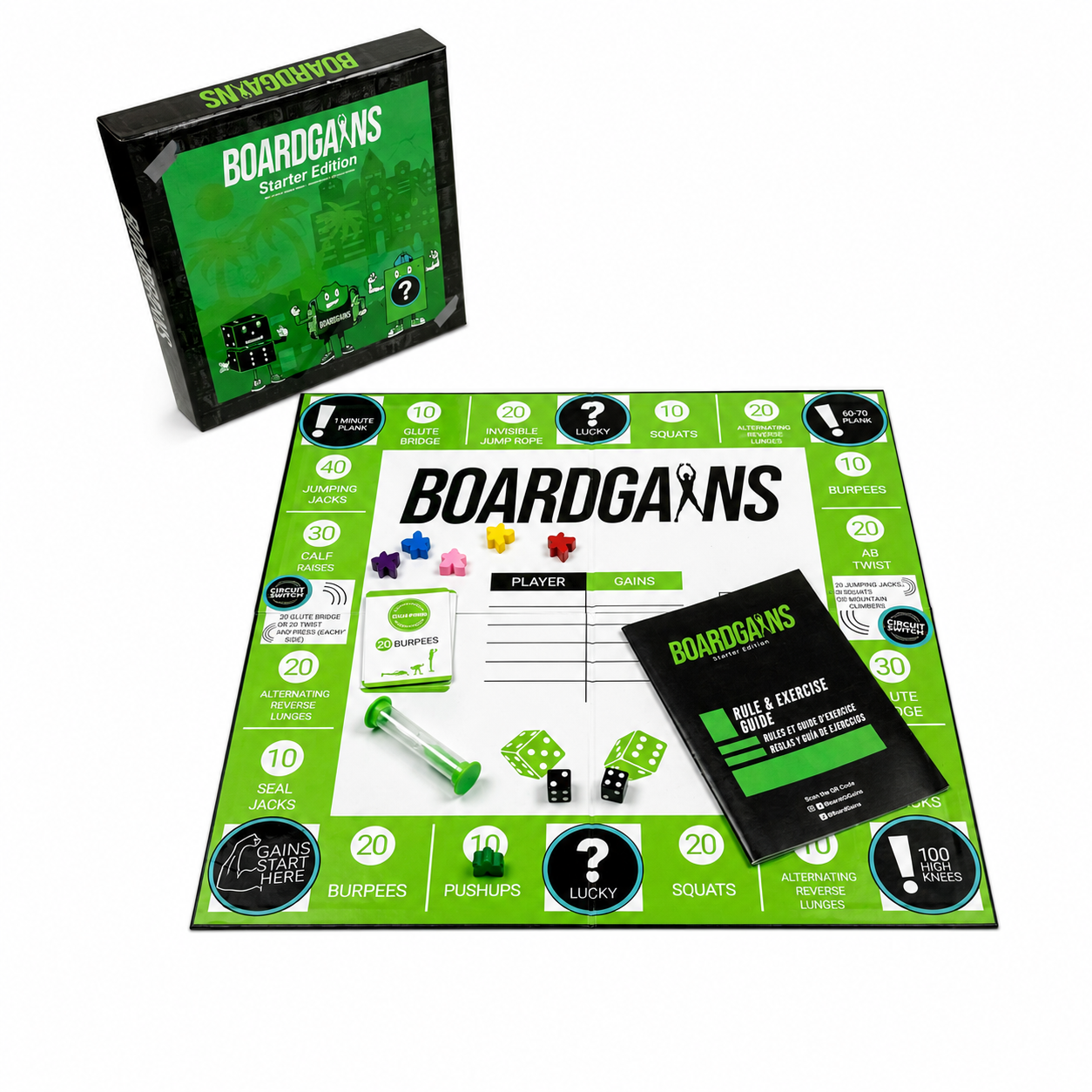
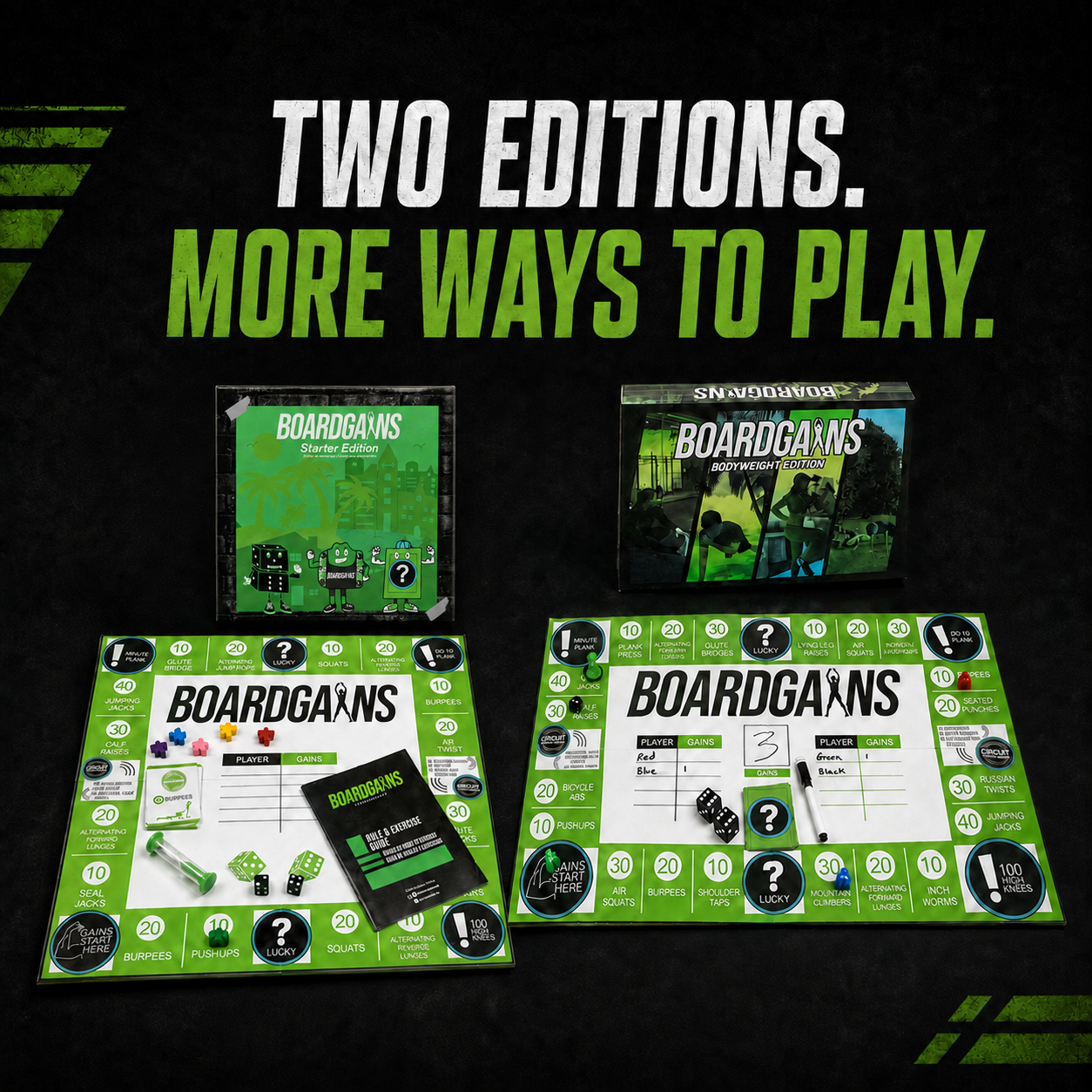
Ab Twist is one of the core exercises included in the BoardGains Pro Edition. When players land on the Ab Twist space, they complete the required repetitions before continuing around the board.
For BoardGains, each twist to one side counts as one rep. Players can keep their feet on the floor or lift them based on their ability. The feet-down option keeps the exercise inclusive while stronger participants can choose an extra balance challenge.
Before the game starts, explain the counting method and show the feet-down option. During play, remind participants to turn their chest instead of swinging only their hands.
Turn Core Training Into a Game
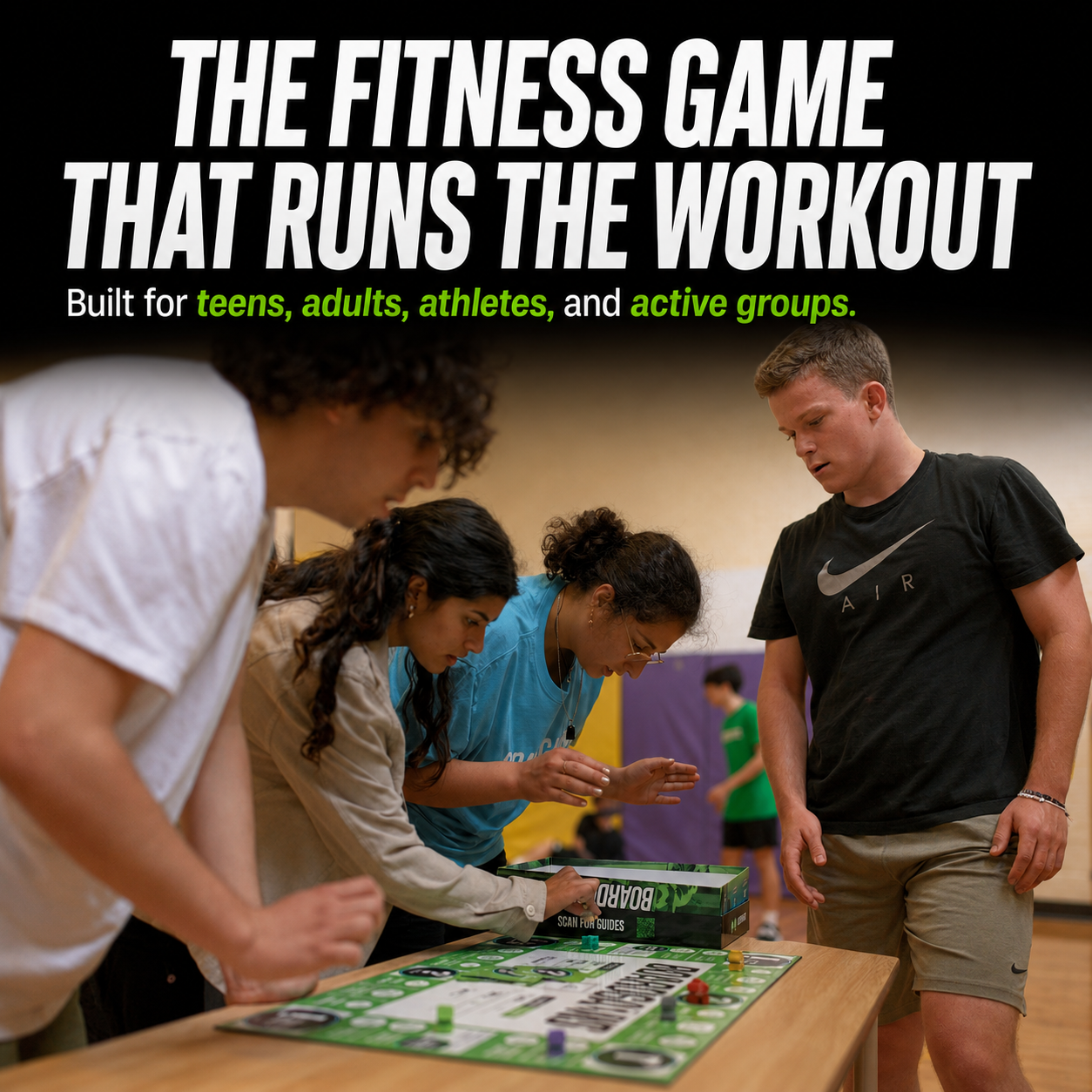
Bring movement, teamwork and friendly competition to your PE class, group workout, team practice or family fitness session.
Ab Twist and Russian Twist FAQs
Is an ab twist the same as a Russian twist?
Yes. BoardGains uses the name Ab Twist for the seated exercise commonly called a Russian twist.
Should beginners keep their feet on the floor?
Yes. Keeping the feet down provides more stability and makes it easier to maintain a tall chest and controlled rotation.
Is lifting your feet better?
Not always. Lifting the feet increases balance and hip-flexor demand, but it can make torso control harder. Choose the version that lets you maintain better form.
Do I need to touch the floor?
No. The goal is controlled torso rotation. Your hands or weight do not need to touch the floor.
Should I use a weight?
Begin without weight. Add light resistance only after you can maintain a long spine, steady hips and controlled rotation. Remove the weight if it causes swinging.
How do you count ab twists?
For BoardGains, each twist to one side counts as one rep. Right is one, left is two and so on. Some programs count a right-and-left pair, so confirm the method before starting.
Why do I feel ab twists in my hip flexors?
The hip flexors help hold the seated position, especially when your feet are lifted. Place your feet down, sit more upright or shorten the set.
Can ab twists reduce belly fat?
Ab twists train the core muscles, but they cannot remove fat from one specific area. Body composition is affected by total activity, nutrition, sleep, recovery and other personal factors.
What if I feel lower-back pain?
Stop the exercise. Try placing your feet down, sitting more upright and removing any weight. Seek guidance from a qualified healthcare professional if pain continues, worsens or feels sharp.
Can children perform ab twists?
Children can perform a controlled bodyweight version when they can follow the instructions and maintain comfortable posture. Begin with the feet down and do not add weight.
Should my hips rotate during an ab twist?
The hips should stay mostly facing forward while the chest and shoulders turn. Some natural movement may happen, but avoid letting the knees and feet swing from side to side.
Can I do ab twists every day?
Light technique practice may fit into frequent activity, but harder sets, long intervals and loaded twists require recovery. Adjust the frequency based on your total training and how your body responds.
Final Ab Twist Form Checklist
- Sit with your knees bent and feet flat to begin
- Lift your chest and lengthen your spine
- Lean back only as far as you can control
- Keep your hands close to your chest for an easier version
- Brace your core without holding your breath
- Turn your chest and shoulders with your hands
- Keep your hips and knees mostly steady
- Use a comfortable rotation range
- Return through the centre between sides
- Stop when your back rounds or control is lost
The goal is controlled rotation, not touching the floor or completing the most reps. Sit tall, brace your core and turn your chest from side to side.


Leave a comment
This site is protected by hCaptcha and the hCaptcha Privacy Policy and Terms of Service apply.