
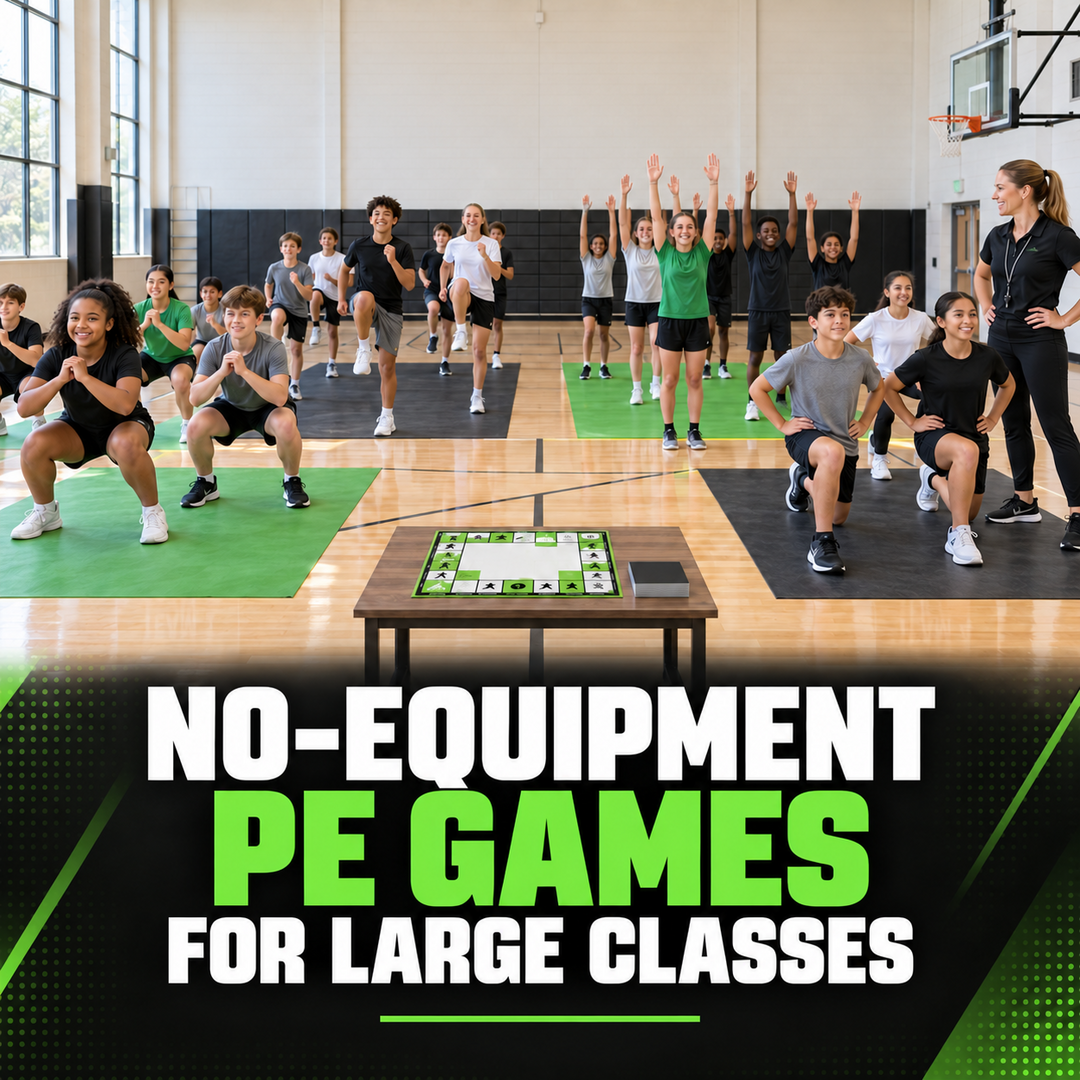
Teaching a large PE class can feel like a workout before the lesson even begins. You need an activity that fits your space, keeps 25–60 students moving, and does not require a cart full of equipment.
These no-equipment PE games are designed for large classes. Each one uses bodyweight movements, simple boundaries, and team formats that reduce waiting. You can run them in a gym, on a field, or in a cleared multipurpose room.
Teacher tip: Before starting, check the floor, mark clear boundaries, teach each movement, and give students a lower-impact option. Stop any activity if the space becomes crowded or movement quality drops.
Want a ready-to-use plan for introducing BoardGains in PE?
Get team setup ideas, exercise teaching cues, lesson plans, modifications, reflection prompts, and assessment tools in the free BoardGains PE Implementation Guide.
In This Guide
- Quick game comparison
- BoardGains Team Play
- Fitness Relay Races
- Bodyweight Exercise Stations
- Follow-the-Leader Circuit
- Team Fitness Challenge
- Indoor Cardio Corners
- Large-class management tips
- 45-minute lesson plan
- Frequently asked questions
Quick Guide: Fitness Games for Large PE Classes
| Game | Best for | Students | Space | Time |
|---|---|---|---|---|
| BoardGains Team Play | Ages 8+ | 20–60+ | Gym, field, blacktop | 10–35 min |
| Fitness Relay Races | Ages 7+ | 24–60 | Long gym or field | 10–15 min |
| Bodyweight Exercise Stations | Ages 8+ | 25–60 | Gym or field | 12–24 min |
| Follow-the-Leader Circuit | Ages 6+ | 25–60 | Any open area | 8–15 min |
| Team Fitness Challenge | Ages 9+ | 24–60 | Gym, field, classroom | 12–20 min |
| Indoor Cardio Corners | Ages 7+ | 25–60 | Gym or multipurpose room | 10–15 min |
1. BoardGains Team Play
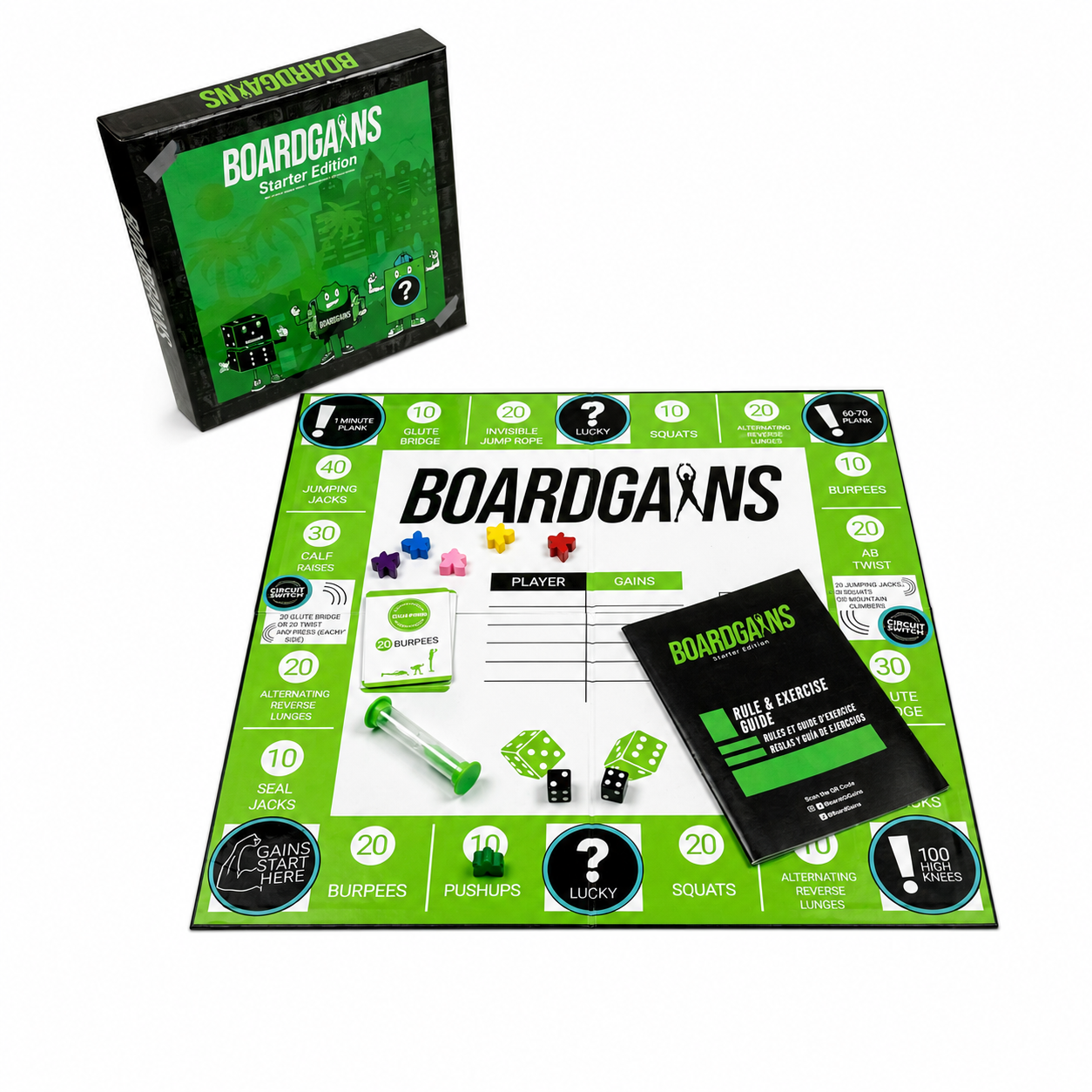
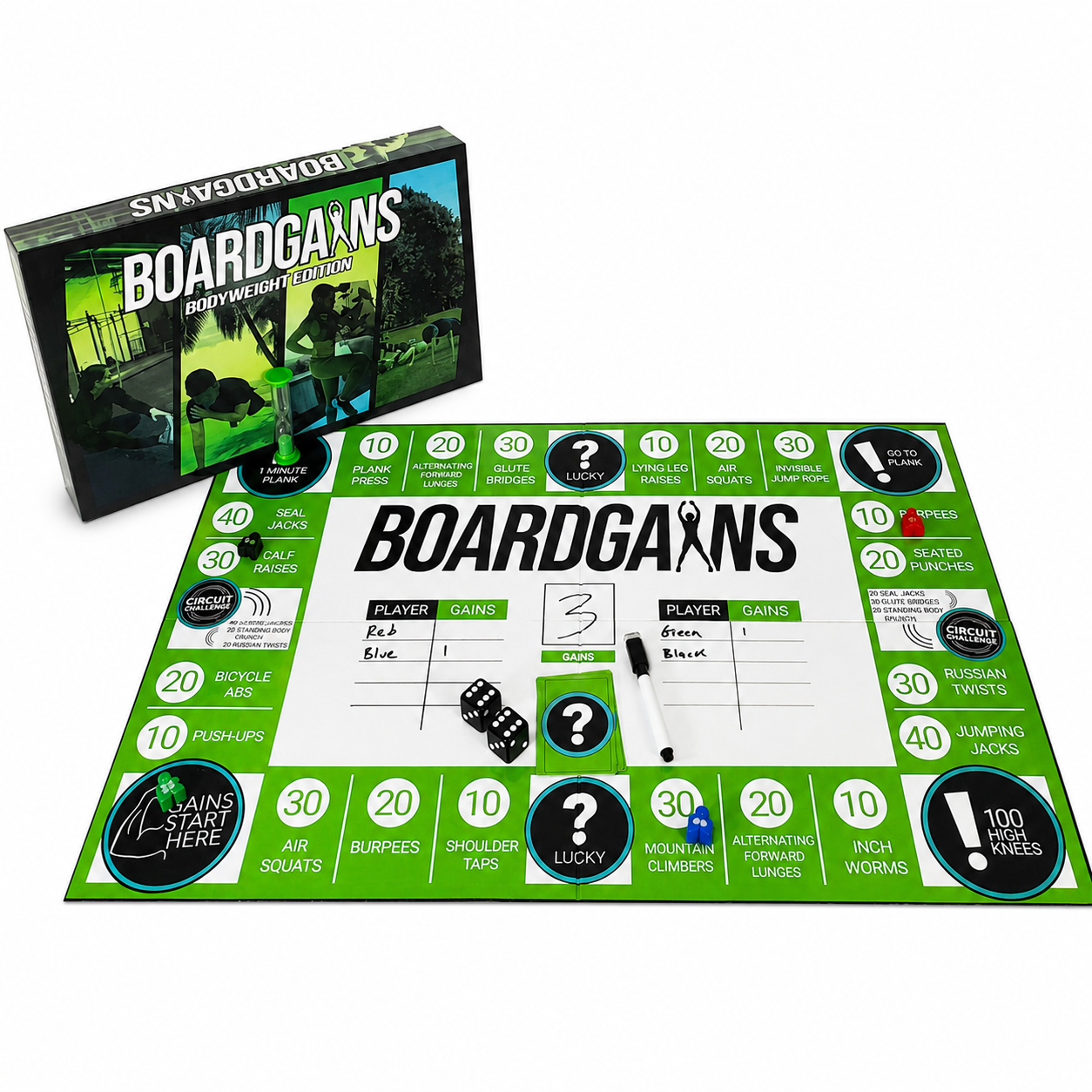
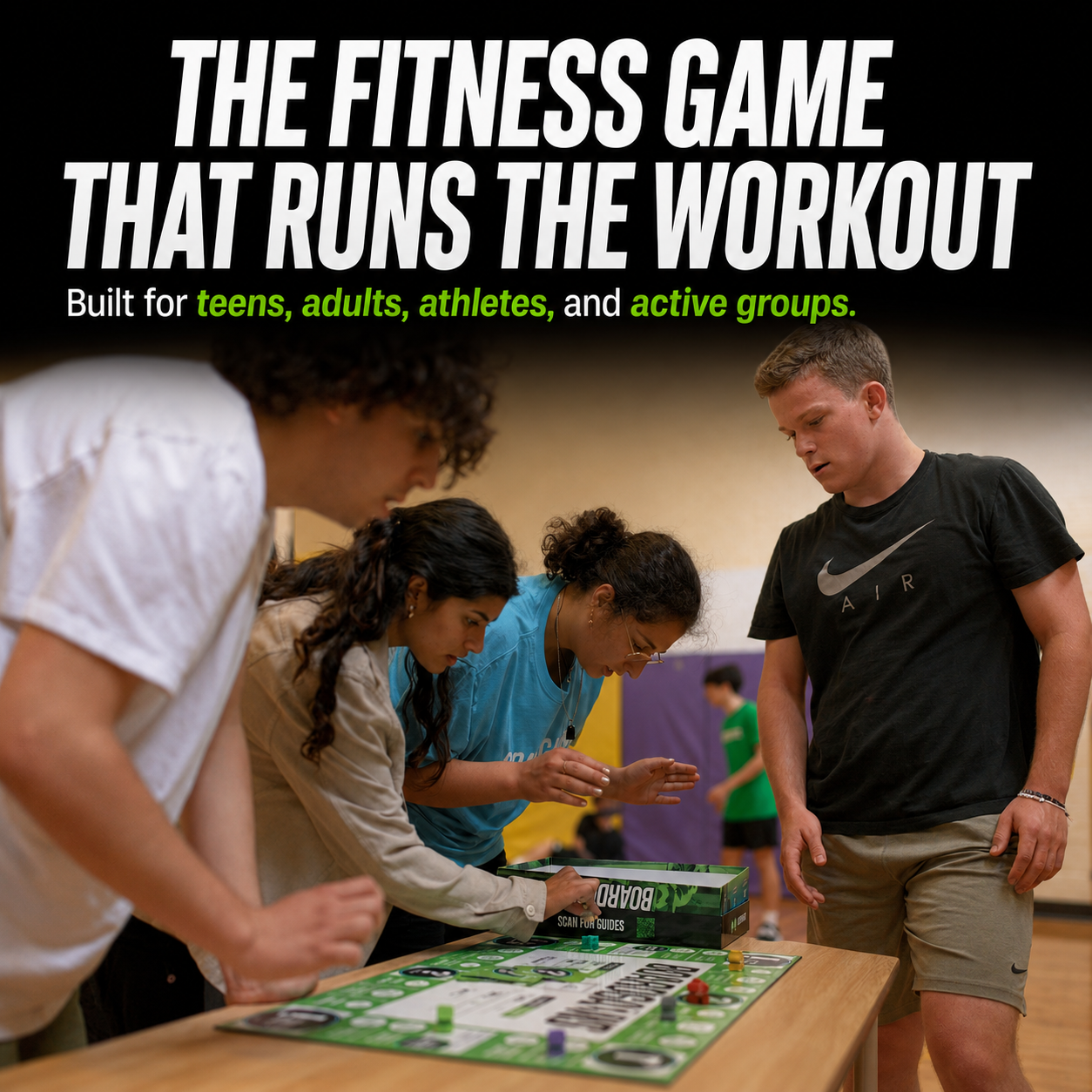
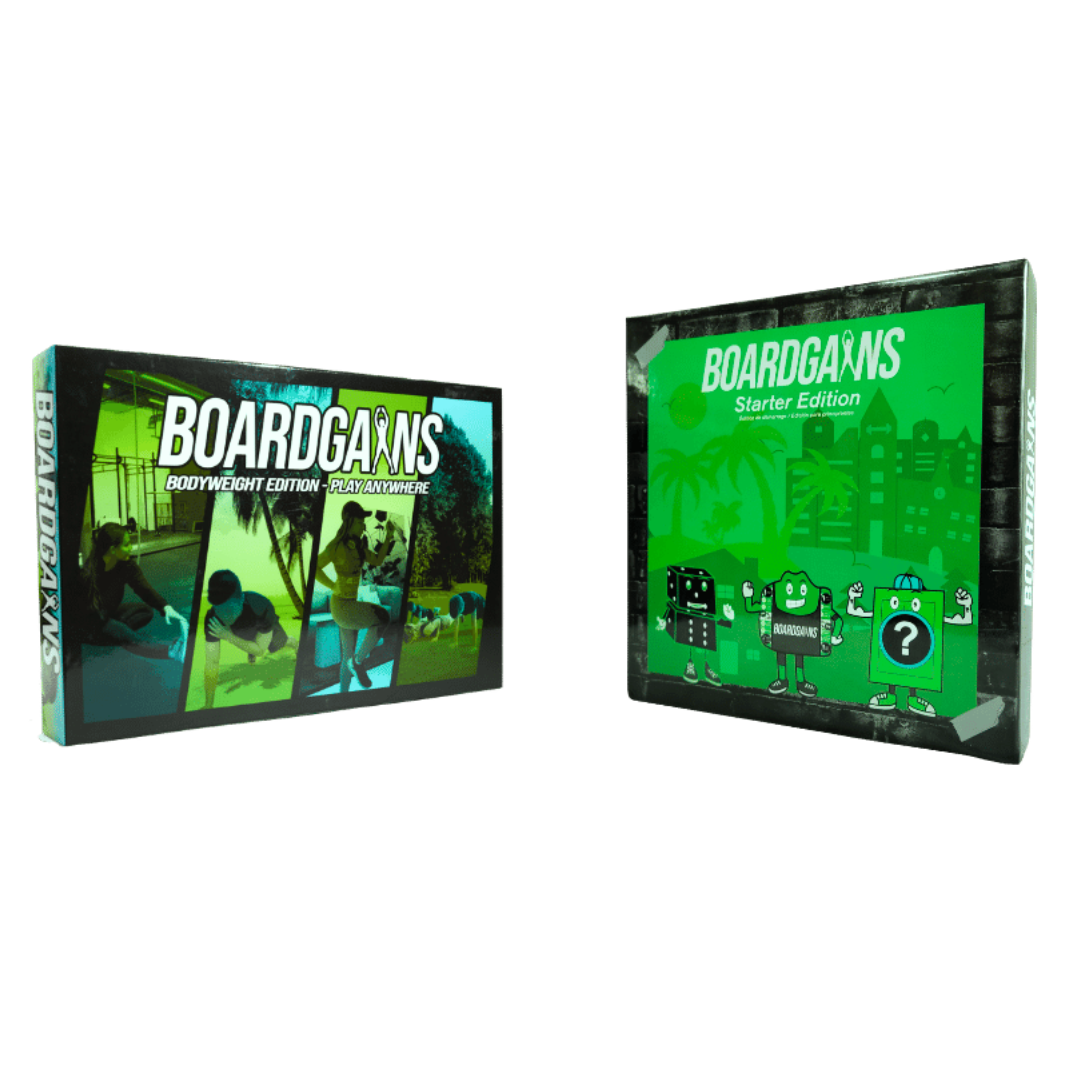
BoardGains Pro Edition turns a bodyweight workout into a team game. One game piece represents a whole team, so students can exercise together instead of waiting for individual turns. The Pro Edition is designed for ages 10+ and includes 20 bodyweight exercises for middle and high school groups.
- Best age group: Ages 8+ for the Starter Edition and ages 10+ for the Pro Edition
- Number of students: 20–60+
- Space needed: A gym, field, blacktop, or large cleared room with one workout zone per team
- Equipment: One or more BoardGains games; no separate fitness equipment
Setup instructions
- Choose a Gains Goal: 3 Gains for about 10–15 minutes, 5 Gains for about 15–25 minutes, or 7 Gains for about 25–35 minutes of gameplay.
- Divide the class into teams and give each team a game piece.
- Create a workout zone for every team with enough space for all teammates to move safely.
- Choose a Captain to roll and move the piece and a Co-Captain to check the move and announce the exercise.
- Review the exercises and movement options before play begins.
For 30 students, use four teams of seven or eight with one board, or split the class between two boards. For 60 students, two boards with six teams of five per board can help reduce crowding.
How to play
Each team rolls, moves, and finds its first exercise. After a 3–2–1 start, all teams complete their exercises at the same time. Teammates share the exercise total, then the Captain and Co-Captain return to the board for the next roll. Each lap past GAINS START HERE earns one Gain. The first team to reach the class Gains Goal wins.
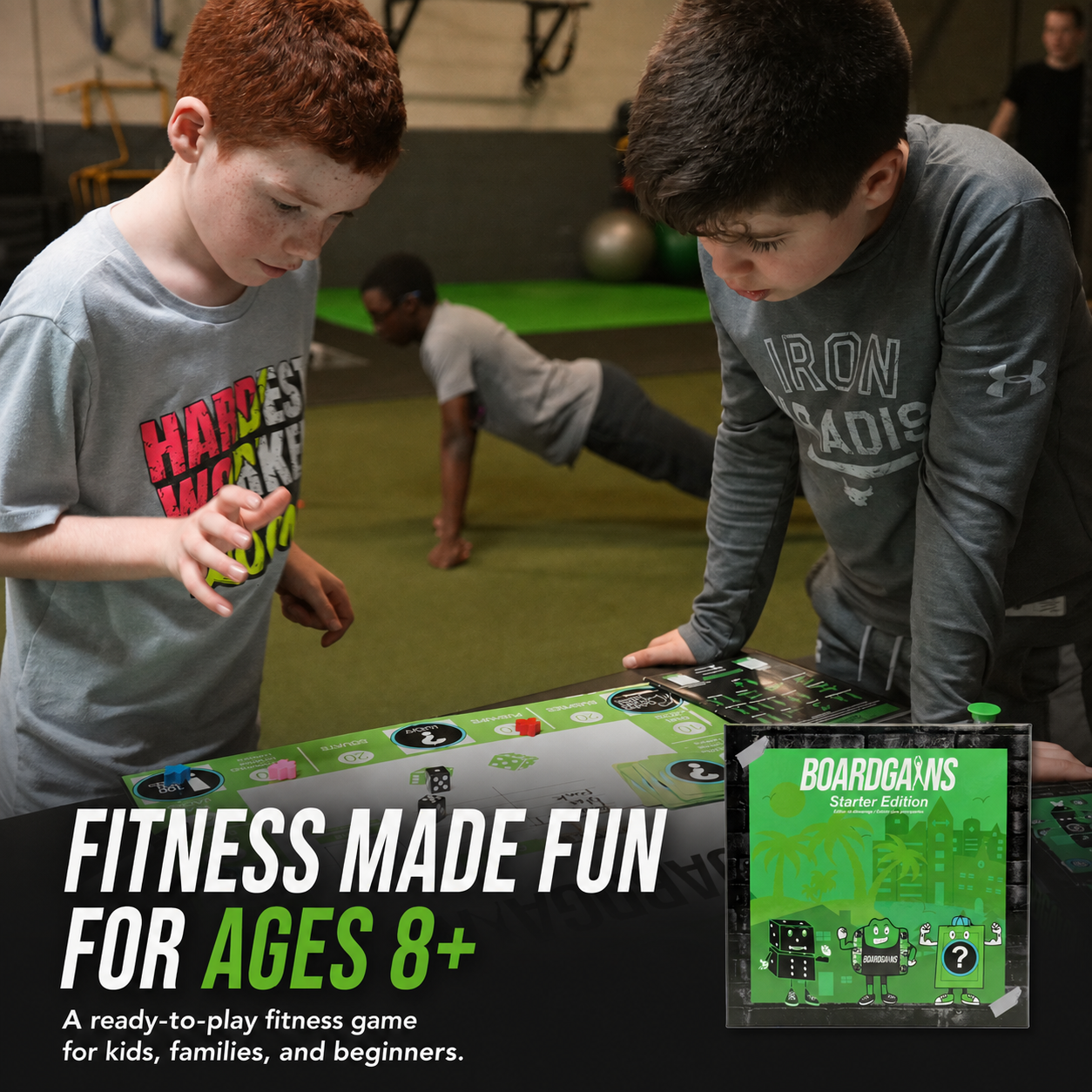
Easier option: Use the Starter Edition, play to 3 Gains, lower repetition totals, and offer marching, chair-supported, or reduced-range movements.
Harder option: Use the Pro Edition, play to 5 or 7 Gains, add controlled tempo, or ask teams to complete a short form check before their next roll. Do not reward rushed repetitions.
See the complete BoardGains setup and team-play rules → | View the Pro Edition →
2. Fitness Relay Races
This no-equipment relay keeps the racing simple. Students travel to a line, complete a movement, and return to tag the next teammate. The rest of the team stays active with a low-intensity movement.
- Best age group: Ages 7+
- Number of students: 24–60
- Space needed: A long gym, blacktop, or field with clearly separated lanes
Setup instructions
- Create four to eight teams of four to eight students.
- Use existing court lines as the start and turnaround points.
- Leave a wide safety gap between lanes.
- Choose one travel pattern and one exercise for each round.
- Show students how to slow down before the turnaround line and use a gentle hand tag.
How to play
The first student travels to the turnaround line, completes five controlled repetitions, returns, and tags the next teammate. Waiting teammates march in place, step side to side, or hold a balanced athletic stance. Run short rounds of two to three minutes, then change the travel pattern or exercise.
Try fast walking with five squats, side shuffles with five standing knee drives, or a light jog with five jumping jacks. Avoid backwards running in crowded spaces.
Easier option: Shorten the lane, use fast walking, and replace jumping with marching or step jacks.
Harder option: Add a second controlled exercise or ask each team to complete a set number of clean rounds. Keep the focus on safe transitions and teamwork—not maximum speed.
3. Bodyweight Exercise Stations
Stations divide a large class into smaller groups. Every group works at the same time, which makes this format useful when you have limited equipment or no equipment at all.
- Best age group: Ages 8+
- Number of students: 25–60
- Space needed: A gym or field divided into six to ten zones
Setup instructions
- Choose six to ten familiar movements, such as squats, wall push-ups, calf raises, marching high knees, standing cross-body crunches, lunges, shoulder taps, and invisible jump rope.
- Assign each movement to a wall number, court marking, or area of the room.
- Place four to seven students in each station.
- Choose a work and transition time. A simple start is 30 seconds of movement and 20 seconds to rotate.
- Practise the rotation once before starting the timer.
How to play
Students complete the movement at their own pace until the signal. On the transition signal, everyone stops, walks to the next station, and waits for the next start. Complete one or two full rounds. Teachers can stand near the most technical station and scan the rest of the class.
Easier option: Use 20-second work periods, include more standing exercises, and allow students to choose from two movements at each station.
Harder option: Use 40 seconds of work and 20 seconds of rest, add slower three-count lowering phases, or let students set a personal repetition goal. Technique still comes before speed.
Build Your Large-Class PE Plan
The free PE Implementation Guide shows you how to teach the movements, organize teams and workout zones, assign Captains and Co-Captains, and build complete BoardGains lessons.
4. Follow-the-Leader Circuit
This circuit needs almost no setup. The class copies a leader through a sequence of movements. It works well as a warm-up, a quick indoor lesson, or a reset when plans change.
- Best age group: Ages 6+
- Number of students: 25–60
- Space needed: Any open space where students can see the leader
Setup instructions
- Arrange students in staggered rows or a wide semicircle.
- Ask everyone to stretch both arms out. Students should not touch another person.
- Choose six to eight movements and place the easiest movements first.
- Explain one stop signal and one freeze position.
How to play
Lead each movement for 20–40 seconds, then switch without eliminating anyone. A sample sequence is marching, step jacks, squats, standing punches, alternating knee drives, calf raises, side steps, and a slow breathing reset. After students understand the pattern, invite a student leader to choose the next safe movement.
Easier option: Keep every movement standing, slow the pace, reduce range of motion, and repeat a short four-movement pattern.
Harder option: Add direction changes, longer work periods, or a memory challenge in which students repeat the full sequence. Keep enough time between changes for students to stay in control.
5. Team Fitness Challenge
In this cooperative challenge, teams work toward a shared target. The goal is to collect quality repetitions, steady movement time, or completed rounds—not to embarrass the slowest student.
- Best age group: Ages 9+
- Number of students: 24–60
- Space needed: A gym, field, or classroom with desks moved safely aside
Setup instructions
- Create teams of four to eight.
- Choose four challenges, such as 60 total squats, 90 seconds of team marching, 40 total wall push-ups, and 30 controlled alternating lunges.
- Give every movement an easier option before starting.
- Choose a recorder or use the teacher to call out completed challenges.
How to play
Teams have 10–15 minutes to complete as many challenges as possible. Students divide the work in a fair way. For example, a team may split 60 squats among six students, complete them together, or combine both methods. A challenge counts when the team uses control and honest tracking.
Score one point for completing a challenge, one point for strong teamwork, and one point for showing safe technique. This prevents the fastest group from winning only because it rushed.
Easier option: Lower the shared targets, extend the time, and let students choose a standing or supported movement.
Harder option: Add a fifth challenge, require a short team strategy meeting, or ask students to estimate and then compare their effort using a simple 1–10 scale.
6. Indoor Cardio Corners
Indoor Cardio Corners turns four areas of the gym into four movement choices. Students travel safely, listen for a call, and complete the exercise in their selected zone.
- Best age group: Ages 7+
- Number of students: 25–60
- Space needed: A gym or multipurpose room with four clear corners and an open centre
Setup instructions
- Assign one movement to each corner: march or jog, step jacks, skater steps, and standing knee drives.
- Use wall colors, court markings, or corner numbers so students know each zone.
- Set a one-way travel direction around the outside of the room.
- Limit the number of students in each corner. If a zone is full, students choose another one.
How to play
Students travel around the outside boundary using a teacher-selected pattern. When the teacher calls “Corners,” everyone walks to an available zone. Students complete that corner’s movement for 20–30 seconds. On the signal, they return to the travel path. No one is eliminated, and students may choose a different corner each round.
Easier option: Use walking only, offer low-impact movements, and let students stay in the same corner for two rounds.
Harder option: Increase the movement time, call a direction change when the class is under control, or add a memory round in which students must remember the movement assigned to each corner.
How to Manage 25–60 Students Without Extra Equipment
- Teach the stop signal first. Students should know exactly what to do when they hear it.
- Use small teams. Four to eight students per group gives more students a role and reduces waiting.
- Create visible zones. Use court lines, walls, or natural field markings instead of equipment.
- Start everyone together. Demonstrate first, then use one countdown so groups begin at the same time.
- Keep choices simple. Give one standard movement and one easier option.
- Pause one team when needed. If one group needs a form correction, help that team while the others continue safely.
- Avoid elimination. Use points, rounds, team targets, or role changes so every student stays involved.
A Ready-to-Use 45-Minute Large-Class PE Plan
| Time | Activity | Teacher focus |
|---|---|---|
| 0–5 min | Entry, boundaries, stop signal | Spacing and expectations |
| 5–12 min | Follow-the-Leader warm-up | Movement options and readiness |
| 12–17 min | Teach the main game | Demonstration and practice round |
| 17–37 min | BoardGains, stations, or team challenge | Technique, effort, teamwork |
| 37–42 min | Low-intensity movement and mobility | Controlled breathing and recovery |
| 42–45 min | Reflection and exit | What helped the team succeed? |
Frequently Asked Questions
What are good no-equipment PE games for a large class?
Team BoardGains, fitness relays, bodyweight stations, follow-the-leader circuits, team fitness challenges, and cardio-corner games all work well. Choose formats that divide the class into smaller groups and keep every group active at the same time.
How can I keep 40 students active in PE?
Use four to eight teams, give each team a clear zone, demonstrate before starting, and choose games without elimination. Stations and team-based BoardGains reduce long lines because several groups move at once.
What if my gym is small?
Use standing movements, shorten travel distances, reduce team size, and avoid running. A follow-the-leader circuit or controlled bodyweight station lesson is usually easier to manage than a relay in a small room.
How do I include students with different abilities?
Offer choices that work toward the same goal. Students might march instead of jump, use a wall for support, reduce their range of motion, work from a seated position, or complete a different number of repetitions. Follow each student’s support plan and your school’s safety procedures.
Can no-equipment games still teach fitness concepts?
Yes. Students can learn about pacing, muscular endurance, cardiovascular effort, movement technique, teamwork, and personal goal setting. Add a quick reflection or effort rating after the activity to connect movement with learning.
Plan Your First BoardGains PE Lesson
Want a complete plan for introducing BoardGains to your students? Download the free BoardGains PE Implementation Guide.
The guide helps PE teachers teach the exercises, organize teams, introduce gameplay, and keep a large class moving with a simple three-lesson rollout.
Ready to bring game-based fitness to your school? Shop the BoardGains Pro Edition or explore BoardGains for PE classes and school programs.
About the author: Eric Mathura is the creator of BoardGains, a CSEP-Certified Personal Trainer with a B.Sc. in Kinesiology and more than 10 years of experience leading personal training and group fitness sessions. He created BoardGains to make fitness more social, active, and fun for schools, coaches, trainers, and families.


Leave a comment
This site is protected by hCaptcha and the hCaptcha Privacy Policy and Terms of Service apply.