
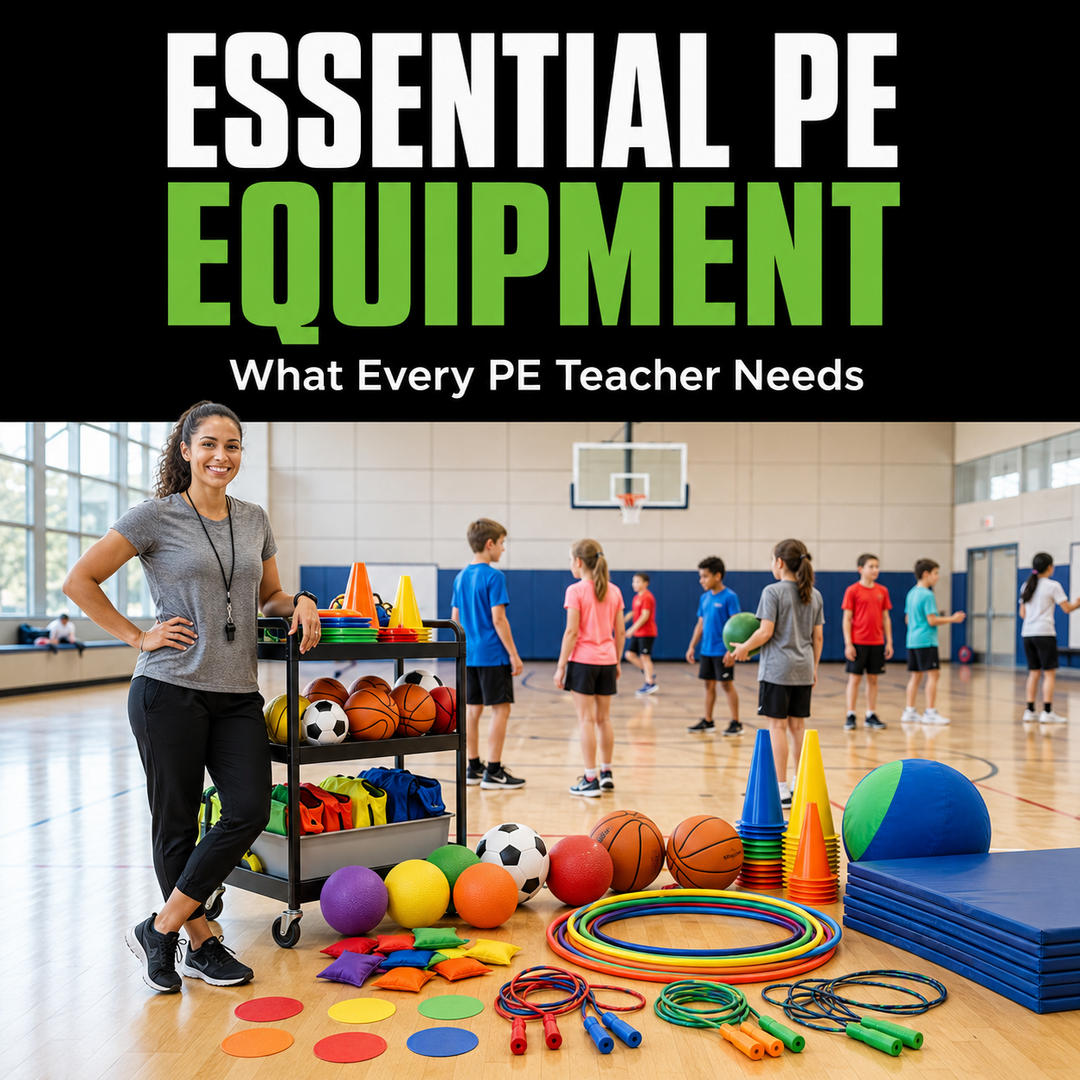
A strong physical education program does not need a storage room packed with expensive gear. It needs safe, durable, and flexible equipment that helps every student stay active.
This essential PE equipment list is designed for physical education teachers, schools, recreation programs, camps, and youth fitness leaders. It covers the must-have items to buy first, helpful quantities, activities you can teach with each item, storage tips, safety checks, and inclusive equipment options.
Use it to build a new PE program, organize your current equipment room, or decide what to replace before the next school year.
Quick answer: Start with cones, floor markers, soft foam balls, playground balls, beanbags, hula hoops, jump ropes, pinnies, mats, and storage bags. These items support the widest range of PE games, movement skills, stations, and team activities.
Table of Contents
- Quick PE Equipment Checklist
- How to Choose PE Equipment
- Essential PE Equipment List
- What to Buy First on a Limited Budget
- Inclusive PE Equipment
- Storage and Safety Checks
- Frequently Asked Questions
Quick PE Equipment Checklist
Use your largest class size when planning quantities. Whenever possible, aim for one item per student or one item per pair. That reduces waiting and gives students more time to practise.
| Equipment | Suggested Starting Amount | Priority |
|---|---|---|
| Cones and floor markers | 30–50 markers in several colors | Buy first |
| Soft foam balls | One per student or pair | Buy first |
| Playground and sport balls | One per pair where possible | Buy first |
| Beanbags and scarves | One per student | Buy first |
| Hula hoops | One per student or pair | Buy first |
| Jump ropes | Class set in mixed lengths | Buy first |
| Pinnies or team vests | Class set in 3–4 colors | Buy first |
| Gym and exercise mats | Based on lesson type and space | Buy first |
| Agility ladders and low hurdles | 4–8 station sets | Add next |
| Targets, pins, and portable goals | Enough for 4–8 stations | Add next |
| Scooter boards | One per student or pair | Expand later |
| Rackets, paddles, and bats | One per student or pair | Expand later |
| Parachute and cooperative gear | One class set | Expand later |
| Timers, dice, whistle, and music | One teacher set plus station timers | Add next |
These are flexible starting amounts, not fixed rules. Adjust them for your class size, student needs, storage space, curriculum, and budget.
How to Choose PE Equipment
Before buying new PE supplies, ask these six questions:
1. Is it safe for the students using it?
Choose age-appropriate sizes, soft materials, rounded edges, secure handles, and non-slip surfaces. Follow your school, district, and activity-specific safety requirements.
2. Can it be used in several activities?
A cone can mark a boundary, become a target, create a relay lane, or hold a station card. Multi-use equipment gives you more lesson options for every dollar spent.
3. Will enough students be active?
Equipment should reduce lines and long waits. When possible, buy enough for individual practice, partner work, or several small stations.
4. Does it fit different ages and abilities?
Look for mixed sizes, weights, colors, textures, and difficulty levels. Students should be able to choose equipment that helps them participate successfully.
5. Is it durable and easy to maintain?
School equipment gets used often. Check seams, grips, valves, wheels, edges, and cleaning instructions before buying.
6. Can you store and move it easily?
Think about carts, wall hooks, labelled bins, mesh bags, and available shelf space. Equipment that is easy to find is also easier to use.
Essential PE Equipment List
1. Cones and Floor Markers
Why you need them: Cones and floor spots may be the most useful items in a PE equipment room. They create clear boundaries, stations, lanes, goals, and personal workout spaces.
What to buy: Use a mix of low dome cones, taller cones, and non-slip floor markers in several colors.
Ways to use them:
- Mark game boundaries and safe zones
- Create relay lanes and agility courses
- Assign teams or stations by color
- Build targets, gates, or small goals
- Give every student a personal movement space
2. Soft Foam Balls
Why you need them: Soft foam balls help students practise throwing, catching, rolling, kicking, and striking with more confidence. They are especially useful for younger learners and indoor activities.
What to buy: Choose several sizes and colors. A mix of small hand-sized balls and larger foam playground balls supports more skills.
Ways to use them: Partner tosses, target games, rolling games, wall-ball activities, striking practice, reaction games, and modified team games.
Safety note: Use soft equipment and game rules that match your school’s policies. Avoid hard throws at other students.
3. Playground and Sport Balls
Why you need them: Students need chances to learn sport skills, but one ball for an entire class creates too much waiting. Partner-based quantities allow more touches and faster learning.
Useful ball types:
- Playground or utility balls
- Basketballs in age-appropriate sizes
- Soccer balls
- Volleyballs or lightweight trainer balls
- Foam footballs
- Tennis or low-compression balls
Keep a reliable ball pump and replacement needles with your equipment. Proper inflation makes balls safer and easier to control.
4. Beanbags and Movement Scarves
Why you need them: Beanbags and scarves are affordable, easy to store, and less intimidating than fast-moving balls. They work well for early learners and inclusive activities.
Ways to use them: Tossing and catching, balancing, color games, relays, target practice, juggling progressions, locomotor activities, and station markers.
What to buy: Choose bright colors and durable seams. Scarves should be light enough to fall slowly, giving students more time to track and catch them.
5. Hula Hoops
Why you need them: Hoops are not only for waist hooping. They can become targets, bases, pathways, personal spaces, or team-building tools.
Ways to use them:
- Hula Hoop Pass
- Floor targets and tossing stations
- Agility patterns and jumping paths
- Team bases and safe zones
- Partner challenges and creative movement
Use different diameters so students can choose a hoop that fits the activity and their comfort level.
6. Jump Ropes
Why you need them: Jump ropes develop rhythm, coordination, timing, and cardiovascular fitness. They are affordable and require little storage space.
What to buy: Build a class set with several rope lengths. Include short individual ropes, a few long ropes, and optional beaded ropes that provide clearer feedback for beginners.
Ways to use them: Basic jumping skills, invisible jump-rope practice, partner challenges, long-rope activities, relay stations, and floor pathways.
7. Pinnies and Team Vests
Why you need them: Pinnies make teams and roles easy to identify. This saves instruction time and reduces confusion during fast-moving games.
What to buy: Choose washable vests in at least three or four high-contrast colors. Include a range of sizes or loose-fitting styles that can be worn comfortably over school clothing.
Ways to use them: Team games, taggers, defenders, station leaders, captains, and rotating activity roles.
8. Gym Mats and Exercise Mats
Why you need them: Mats provide an appropriate surface for floor exercises, rolling, gymnastics, stretching, balance work, and bodyweight fitness.
What to buy: Match the mat to the activity. Thin exercise mats are not a replacement for properly rated gymnastics or landing mats.
Safety check: Look for tears, worn corners, exposed foam, moisture, and slipping. Clean mats regularly and store them completely dry.
9. Agility Ladders and Low Hurdles
Why you need them: These tools help students explore footwork, speed, balance, rhythm, and movement control.
What to buy: Flat agility ladders and soft, low hurdles are easier to store and reduce tripping concerns. Floor tape or spots can also create ladder patterns on a smaller budget.
Ways to use them: Warm-ups, relay stations, locomotor practice, athletic development, reaction drills, and obstacle courses.
10. Targets, Pins, and Portable Goals
Why you need them: Targets give students a clear goal and make skill practice feel like a game.
Useful options: Foam pins, buckets, hoops, floor targets, pop-up goals, portable nets, and wall targets.
Ways to use them: Bowling, kicking accuracy, throwing games, striking activities, team challenges, and point-scoring stations.
Use large targets close to beginners, then increase the distance or reduce the target size as skills improve.
11. Scooter Boards
Why you may want them: Scooter boards add excitement to cooperative games, relays, and movement challenges. They can also support upper-body strength and spatial awareness.
Safety rules: Use scooters only on a clean, smooth floor. Teach safe body positions, keep hands away from wheels, avoid standing on scooters, and set clear traffic directions. Follow your school’s scooter-board rules.
12. Rackets, Paddles, Scoops, and Bats
Why you may want them: Striking and receiving equipment helps students develop tracking, timing, hand-eye coordination, and sport-specific skills.
What to buy: Start with lightweight paddles, plastic scoops, short-handled rackets, foam bats, balloons, and low-compression balls. Add sport-specific equipment as your program grows.
Choose handle sizes and implement weights that students can control safely.
13. Parachute and Cooperative Equipment
Why you may want it: A parachute creates whole-class activities focused on cooperation, rhythm, communication, and upper-body movement.
Ways to use it: Waves, color changes, ball challenges, group patterns, and teamwork games.
Inspect handles and fabric before use. Teach students to lift and lower with control instead of pulling or wrapping material around their bodies.
14. Resistance Bands
Why you may want them: Bands can support strength, stability, mobility, and fitness stations for older students who have received proper instruction.
What to buy: Use durable bands with several resistance levels. Inspect each band for tears, cracks, thinning, or damaged handles before every session.
Safety note: Resistance bands require direct teaching and supervision. Students should never release a stretched band toward another person.
15. Timers, Whistles, Dice, and Music
Why you need them: Small teaching tools can improve class flow as much as large equipment.
- Timers: Keep stations, games, and rest periods moving.
- Whistle or sound cue: Gives the class a clear stop-and-listen signal.
- Foam dice: Randomize exercises, repetitions, teams, or challenges.
- Music: Adds energy and provides start-and-stop cues.
- Whiteboard: Displays teams, station order, rules, and learning goals.
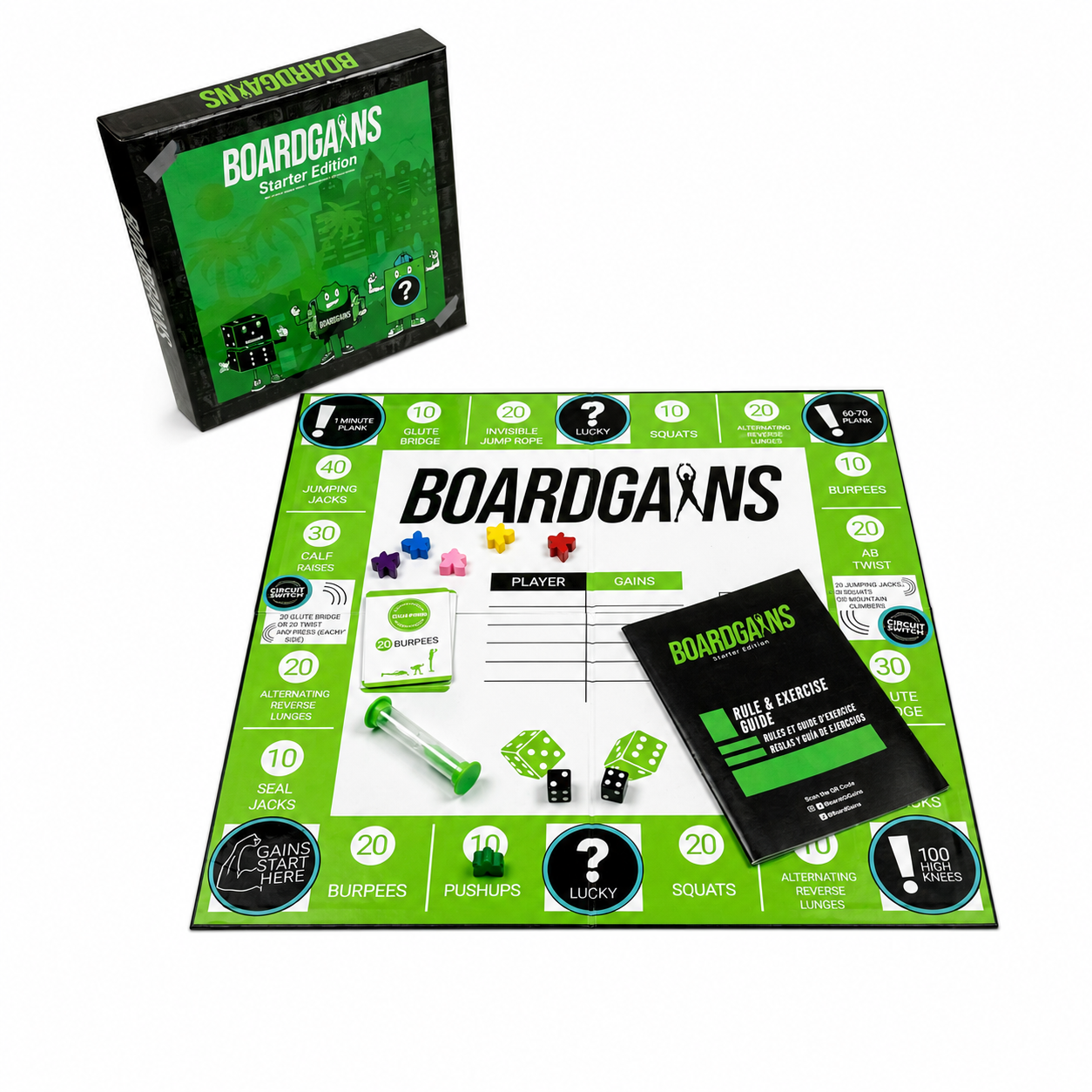
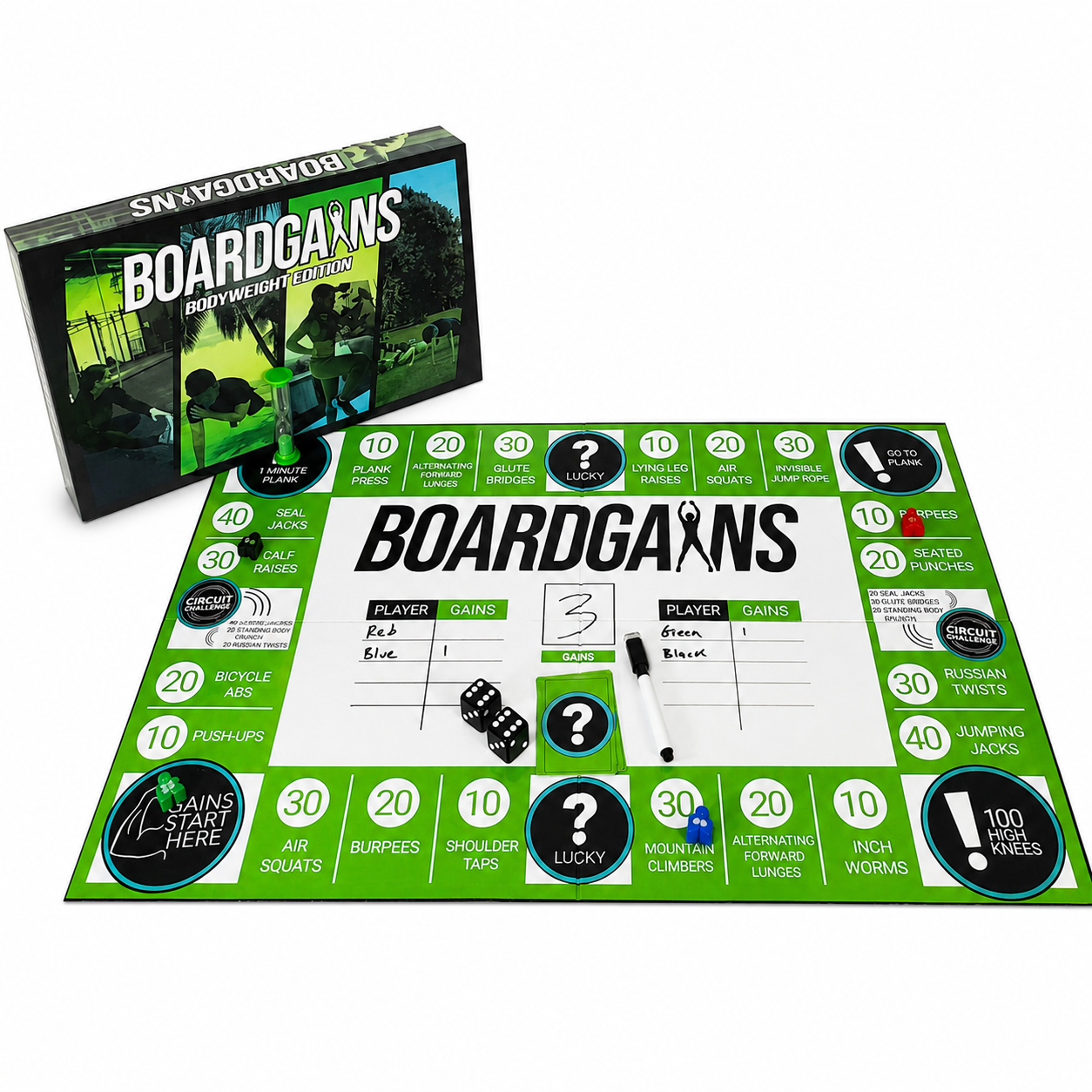
16. BoardGains Fitness Board Game
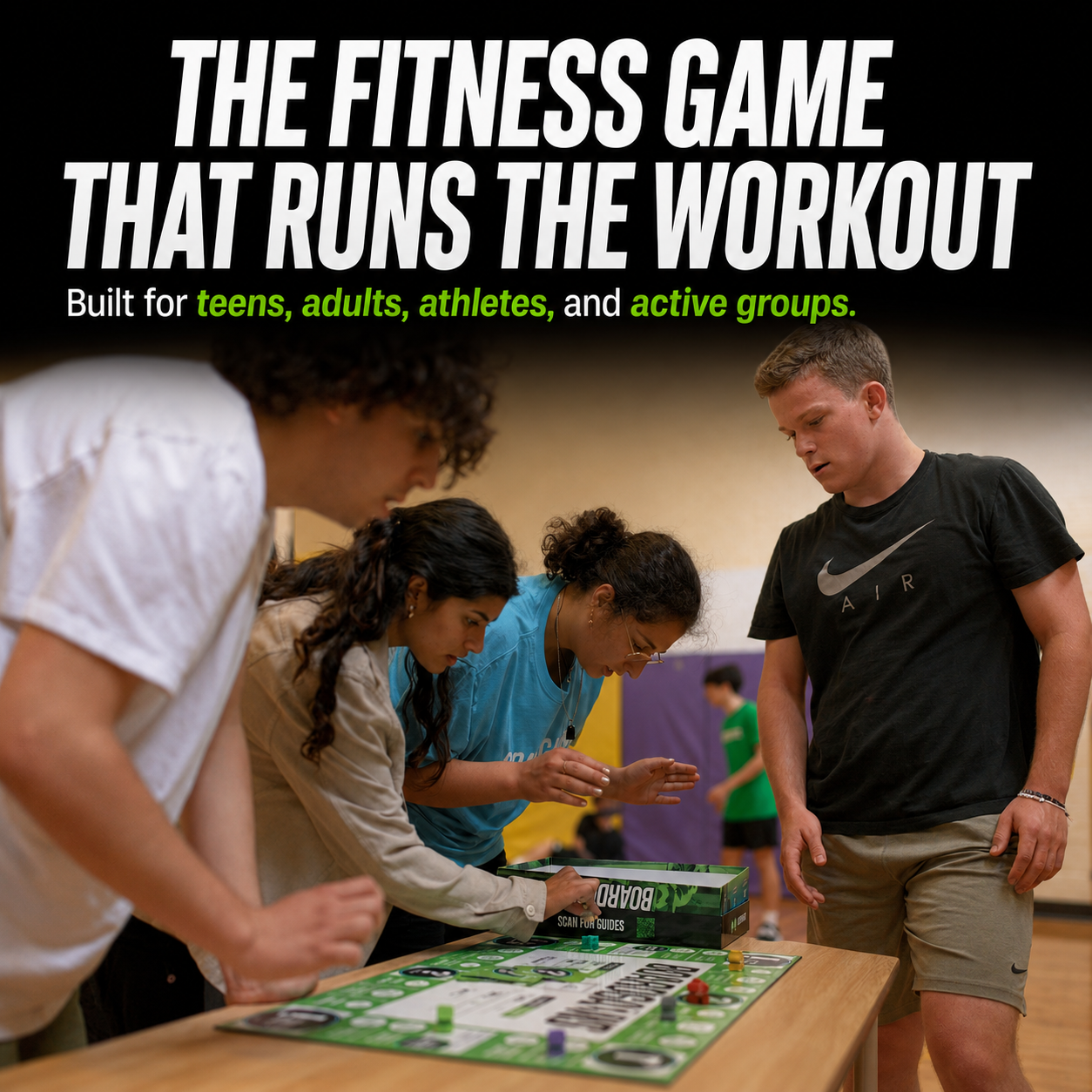
Why it belongs in a PE equipment room: BoardGains turns bodyweight exercises into a social fitness game. Instead of building a new workout every class, the board guides the activity while the teacher coaches the students.
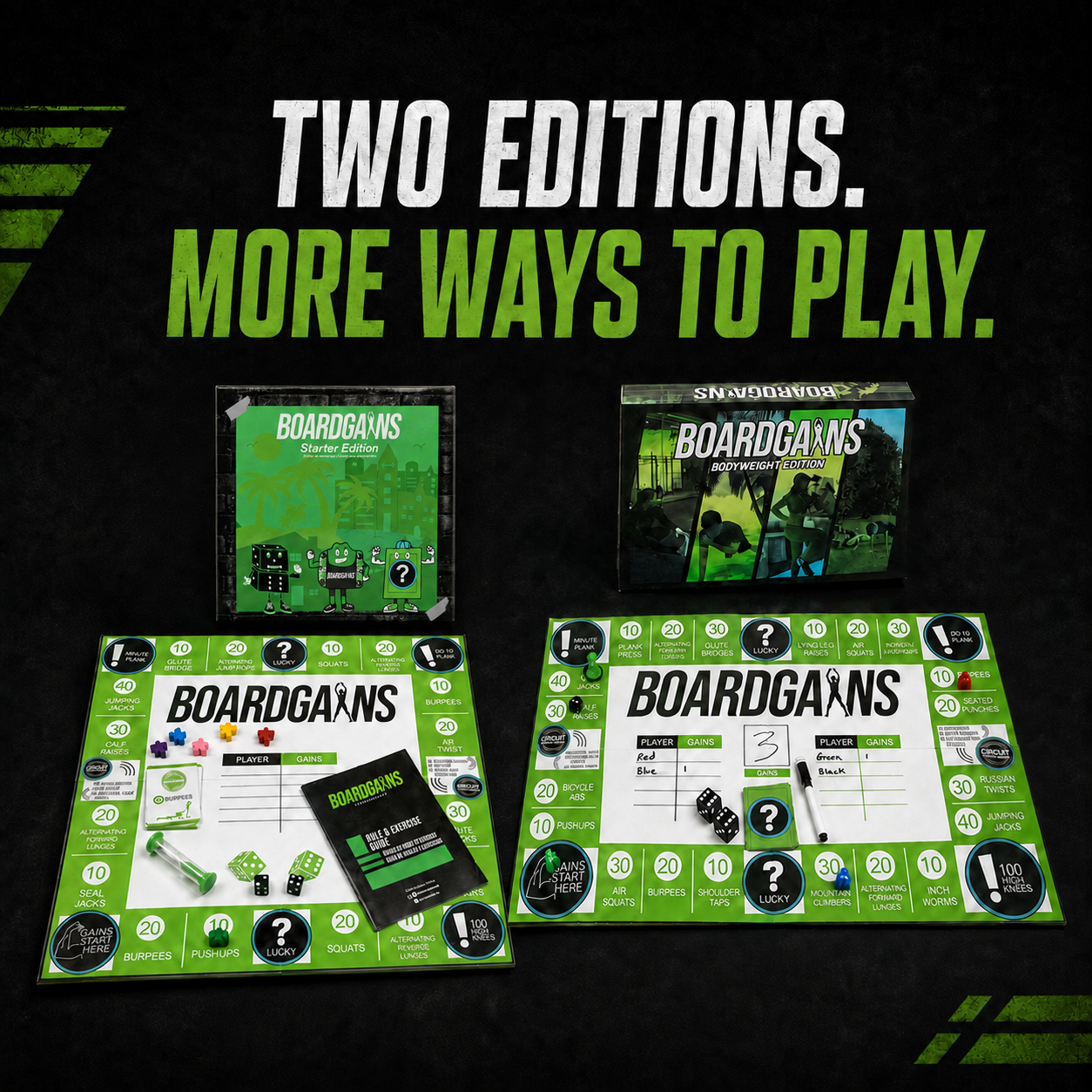
How it works: Players or teams roll the dice, move their game piece, and complete the exercise they land on. Each lap around the board equals one Gain. The first player or team to reach the chosen Gains Goal wins.
Why PE teachers can use it:
- No extra fitness equipment is needed because the exercises use bodyweight.
- Everyone plays at the same time instead of waiting for one turn.
- The Gains Goal can fit a short activity, class finisher, or full PE session.
- Students can play individually or in teams.
- Exercises can be adjusted for different fitness levels.
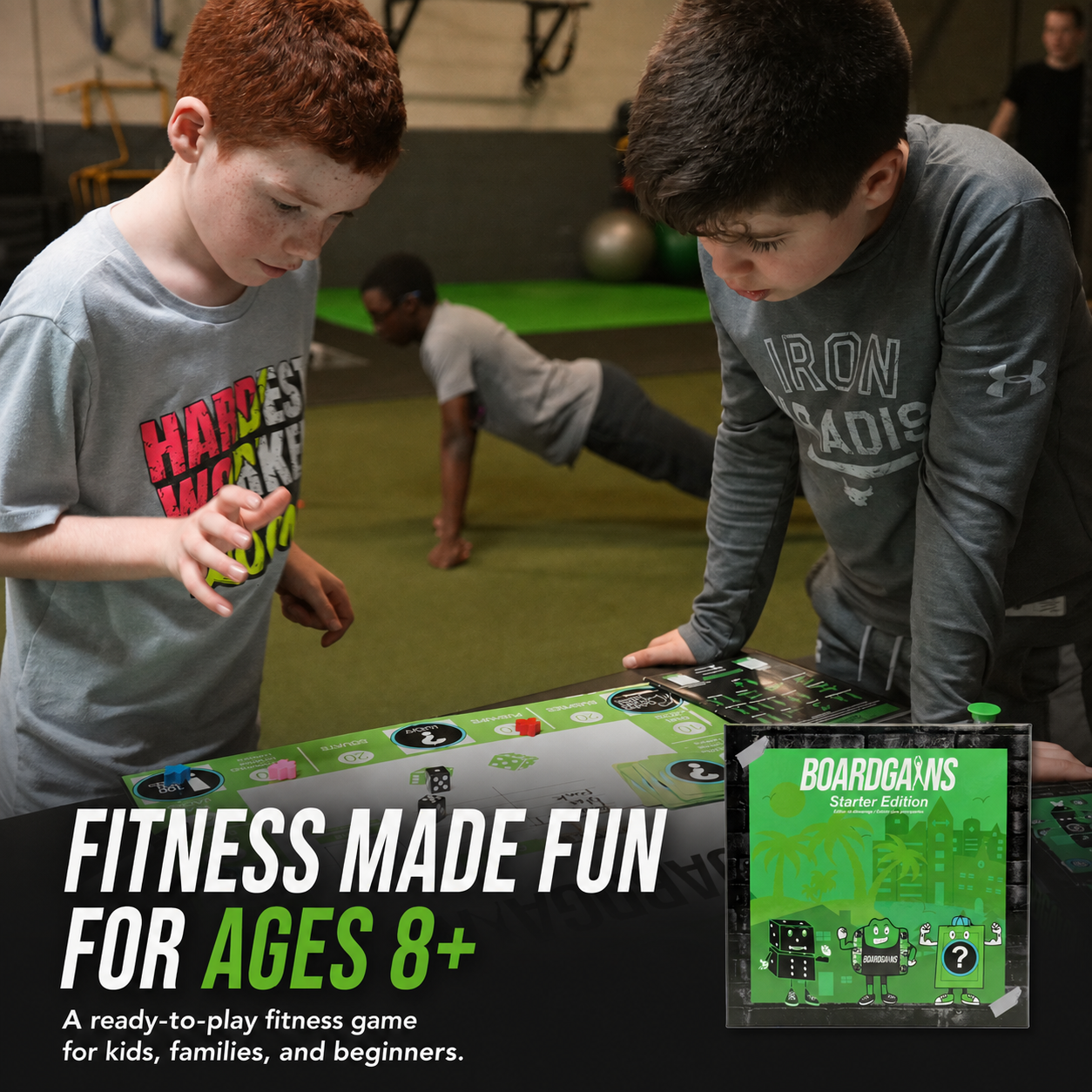
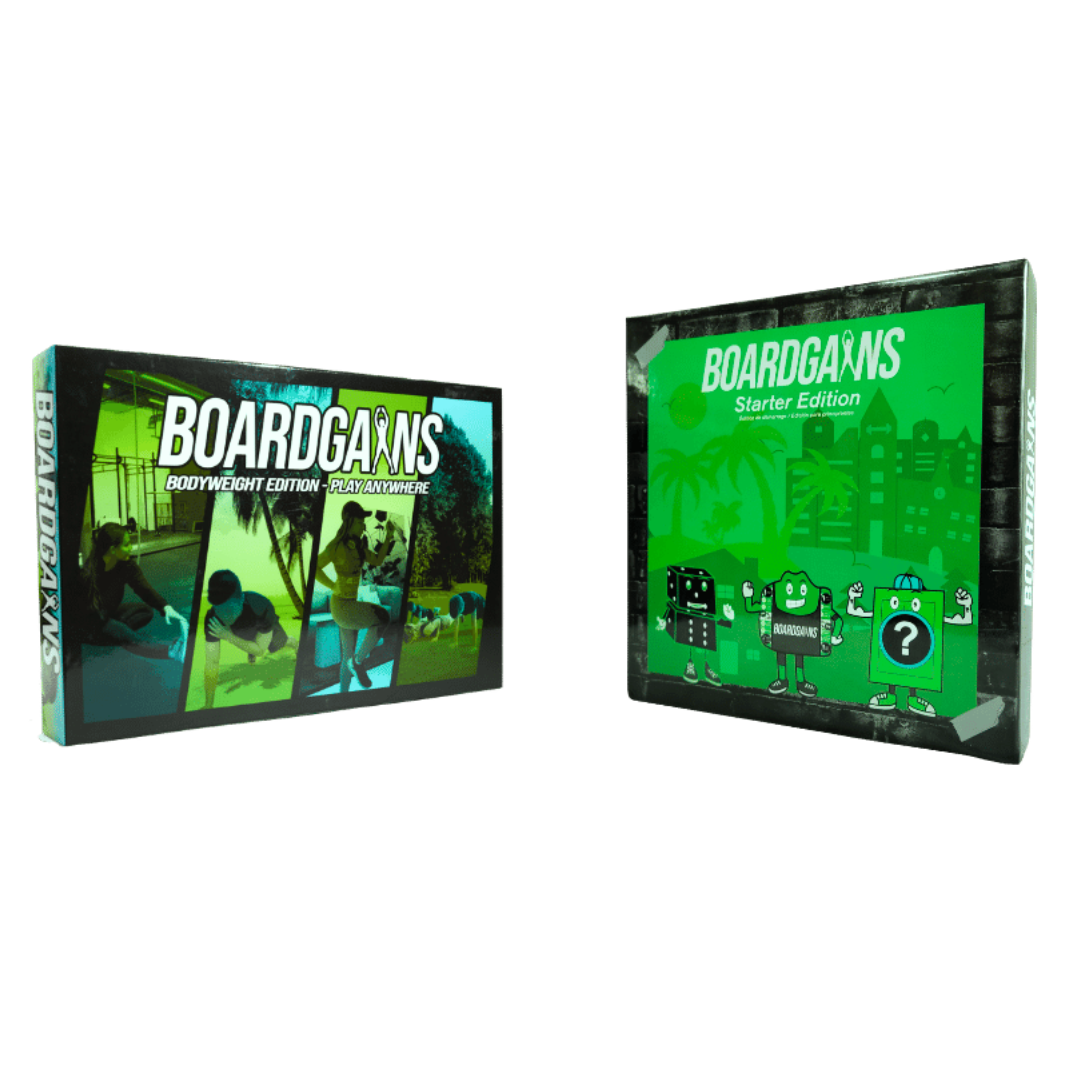
Choose your edition: Starter is designed for ages 8+, kids, families, and beginners. Pro is designed for ages 10+, teens, adults, athletes, and groups that want more exercise variety.
What to Buy First on a Limited Budget
Start Here: Maximum Use, Lower Cost
- Cones and floor markers
- Soft foam balls
- Playground balls
- Beanbags and scarves
- Hula hoops
- Jump ropes
- Pinnies
- Mesh storage bags
Add Next: More Stations and Skill Variety
- Additional sport balls
- Gym and exercise mats
- Agility ladders and soft hurdles
- Targets, pins, and portable goals
- Timers, foam dice, and music equipment
- BoardGains for game-based fitness sessions
Expand Later: Specialized Units
- Scooter boards
- Parachute
- Rackets, paddles, bats, and nets
- Resistance bands
- Sport-specific equipment
Before buying specialized gear, make sure you have enough basic equipment to keep the whole class involved. Twenty different items are less useful than enough balls, hoops, or beanbags for active practice.
Inclusive PE Equipment
Inclusive equipment gives students more ways to take part. It does not mean creating a completely separate lesson. Small changes to the equipment, rules, distance, or movement can help more students experience success.
Consider adding:
- Bright, high-contrast balls and markers
- Textured or audible balls
- Larger and lighter balls that move more slowly
- Larger targets and shorter throwing distances
- Lightweight paddles and easy-grip equipment
- Visual instruction cards and station signs
- Seated and standing versions of movement tasks
- Equipment that can be used independently, with a partner, or in a team
Ask students what helps them participate, and work with your school’s support team when an individual accommodation is needed.
PE Equipment Storage and Safety Checks
Organize Equipment by Category
Use labelled bins, shelves, mesh bags, wall hooks, and rolling carts. Group similar equipment together so teachers and student helpers can set up and clean up quickly.
Use Color Coding
Match cones, pinnies, beanbags, and station cards by color. This makes it easier to assign teams, organize rotations, and return equipment to the correct location.
Complete a Quick Visual Check Before Every Class
- Remove balls with cracks, exposed foam, or damaged seams.
- Check that balls are correctly inflated.
- Remove cracked cones, hoops, paddles, and sticks with sharp edges.
- Inspect ropes, bands, handles, nets, and parachutes for wear.
- Confirm mats are dry, clean, and free from tears.
- Check scooter wheels and handles.
- Make sure goals, carts, and larger equipment are stable.
Complete a Full Equipment Audit
At least once each school year, count your equipment, record its condition, remove damaged items, and create a replacement list. An audit also helps prevent repeat purchases of equipment you already own.
Turn Equipment Into More Active Learning
Equipment alone does not create a great PE class. The lesson still needs clear instructions, safe spacing, different challenge levels, and enough activity time.
Try these planning rules:
- Set up before students arrive whenever possible.
- Use small groups instead of one long line.
- Demonstrate the task and the safety rule together.
- Offer an easier and harder option at each station.
- Choose activities in which everyone can move at the same time.
Need activity ideas for the equipment you already have? Explore our guide to 50 fun indoor PE games.
PE Equipment Frequently Asked Questions
What equipment does every PE teacher need?
The best starting equipment includes cones, floor markers, soft foam balls, playground balls, beanbags, hoops, jump ropes, pinnies, and mats. These items support warm-ups, skill practice, fitness stations, team games, and indoor activities.
How much PE equipment should a school buy?
Plan around the largest class. Aim for one item per student for individual skill practice or one per pair for partner activities. For expensive equipment, create enough small stations to prevent long waits.
What is the best PE equipment for elementary students?
Soft foam balls, beanbags, scarves, floor markers, hoops, jump ropes, lightweight paddles, and large targets are excellent choices. They support fundamental movement skills and can be adjusted as students grow.
What is the best equipment for a small PE space?
Use floor spots, beanbags, scarves, foam dice, resistance bands for properly instructed older students, exercise mats, and visual station cards. Choose controlled activities that do not require fast running or hard throws.
How should PE equipment be stored?
Keep equipment clean, dry, labelled, and easy to reach. Use carts for balls, mesh bags for smaller items, hooks for ropes and hoops, and bins for beanbags, pinnies, and station supplies.
How often should PE equipment be inspected?
Teachers should visually check equipment before it is used and remove damaged items immediately. A full inventory and condition audit should also be completed regularly according to school or district procedures.
What PE equipment gives the best value?
Cones, floor spots, foam balls, beanbags, hoops, and jump ropes offer excellent value because they work across many grades, skills, games, and lesson formats.
Can PE classes run without a lot of equipment?
Yes. Bodyweight exercises, locomotor skills, dance, fitness games, and partner challenges can all keep students active. BoardGains also runs game-based workouts using bodyweight exercises, so no additional workout equipment is required.
One Game. A Complete Group Workout.
BoardGains turns bodyweight exercise into a fun fitness board game for PE classes, teams, gyms, and youth programs. The board guides the workout while you coach the group.
No workout planning. No extra fitness equipment. Everyone stays active.
About the Author
Eric Mathura is a CSEP-Certified Personal Trainer with a B.Sc. in Kinesiology and more than 10 years of experience leading personal training, bootcamp, and group fitness sessions. He created BoardGains to make fitness more active, social, and fun for schools, gyms, teams, and families.
Updated August 2026.

1 comment
abdul manaf
subject Quick Collaboration Opportunity
Hi,
I hope you are doing well.
I came across your website and really liked the content you share. I was wondering if you accept guest posts or collaboration opportunities.
I can provide a high-quality, relevant article that would be useful for your audience.
your website current results
https://www.boardgains.com/
da 19 backlinks 44 spam score 1%
Please let me know your thoughts.
Looking forward to your response.
Thanks & regards,
[manaf ]
[abdulmanafteroo@gmail.com]
Leave a comment
This site is protected by hCaptcha and the hCaptcha Privacy Policy and Terms of Service apply.