
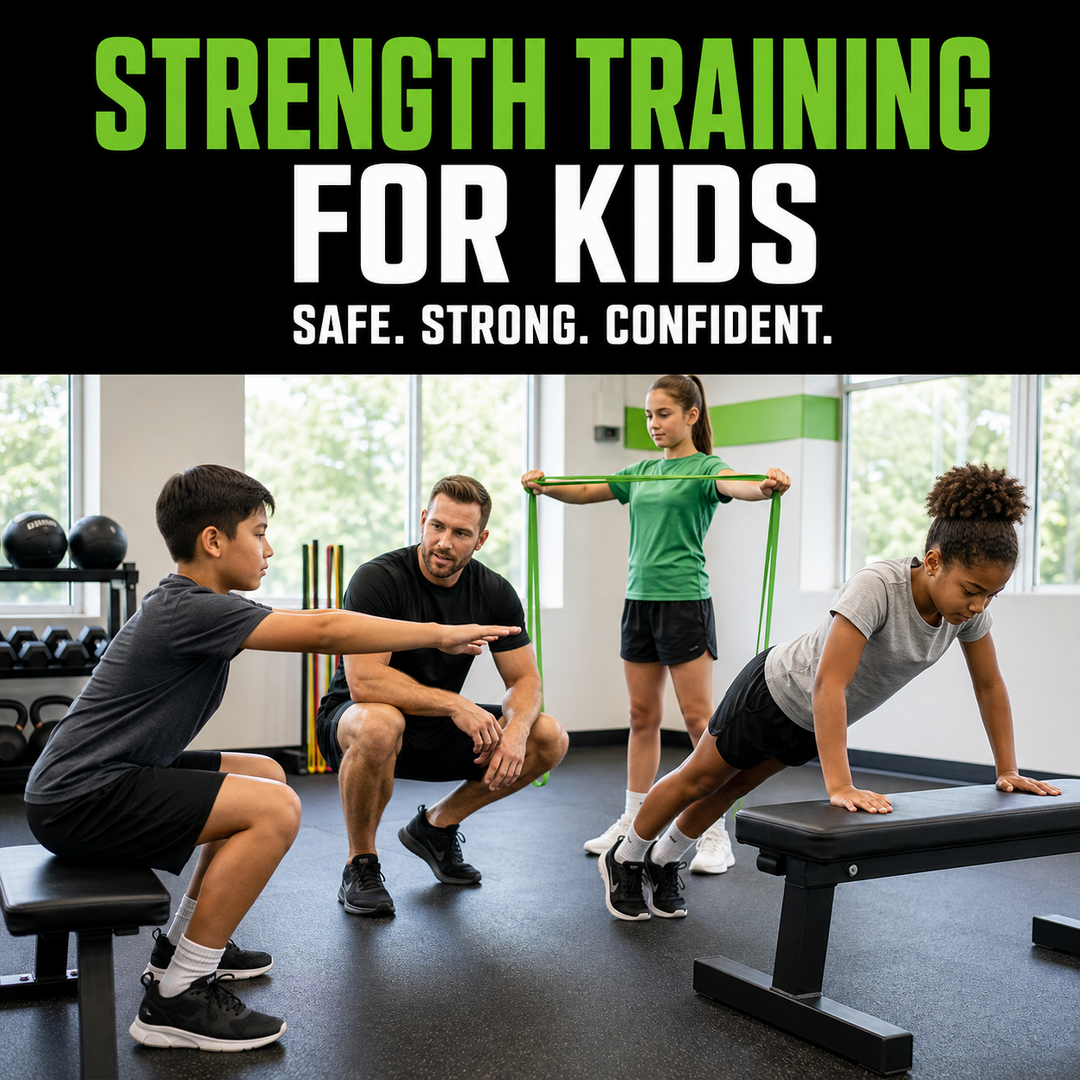
Strength training can be a safe and valuable part of an active childhood when it is designed for young people and supervised by a qualified adult. The goal is not to turn kids into bodybuilders or ask them to lift the heaviest weight possible. It is to teach movement skills, build confidence, and help growing bodies become stronger and more capable.
This guide explains the benefits of strength training for kids, the difference between safe youth training and adult-style lifting, when children may be ready to begin, and how parents, PE teachers, coaches, and trainers can create a positive first experience.
Quick answer: Properly designed youth strength training can be safe and effective when a child can follow instructions, uses age-appropriate resistance, learns correct technique, and receives qualified supervision. Start with bodyweight movements and light resistance. Progress only after the child can perform the movement with control.
This article provides general educational information and is not a personal medical or exercise prescription. A child with an injury, health condition, symptoms during exercise, or special medical needs should receive guidance from an appropriate healthcare professional.
Table of Contents
- What Is Strength Training for Kids?
- Is Strength Training Safe for Kids?
- Benefits of Strength Training for Kids
- When Can a Child Start?
- Youth Strength-Training Guidelines
- Beginner Strength Exercises
- Sample Beginner Workout
- Common Mistakes to Avoid
- How to Make Strength Training Fun
- Frequently Asked Questions
What Is Strength Training for Kids?
Strength training—also called resistance training—is exercise that asks the muscles to work against resistance. That resistance can come from:
- The child's own body weight
- Resistance bands
- Light dumbbells or medicine balls designed for exercise
- Weight machines adjusted to fit the child
- A partner exercise with clear rules and supervision
- Everyday activities such as climbing, crawling, pushing, and carrying
Youth strength training is not the same as bodybuilding, powerlifting, or trying to lift a maximum weight. A good youth program focuses on technique, balance, coordination, full-body strength, and gradual progress.
Is Strength Training Safe for Kids?
Yes—when the program is properly designed and supervised. The American Academy of Pediatrics reports that resistance training can be part of sports training, school PE, and after-school fitness when young people receive appropriate instruction and programming.
Safety depends more on how the activity is taught than on a single birthday. The child should be able to listen, follow directions, control their body, and understand that good technique matters more than lifting more.
Safe Youth Strength Training Includes
- Qualified adult instruction and active supervision
- A proper warm-up
- Equipment that fits the child's size
- Light, manageable resistance
- Controlled repetitions through a comfortable range of motion
- Balanced training for the full body
- Rest between sessions
- Progress based on technique—not pressure or comparison
Stop the Activity and Get Help When Needed
Exercise should stop if a child reports pain, dizziness, unusual shortness of breath, chest discomfort, or another concerning symptom. Pain should not be treated as proof that the workout is effective.
Benefits of Strength Training for Kids
1. Builds Muscular Strength and Endurance
Resistance training helps children become better at producing and controlling force. This can make everyday activities, active play, PE, and sports feel easier.
2. Improves Movement Skills
Squatting, pushing, pulling, bracing, balancing, jumping, and landing are basic movement skills. Practising them with clear coaching can improve coordination and body control.
3. Supports Bone Health
Muscle- and bone-strengthening activities are part of the physical activity recommendations for children and teens. The CDC recommends that youth ages 6–17 include muscle-strengthening and bone-strengthening activity on at least three days each week.
4. May Support Sports Performance
Better strength and movement control can support skills such as running, jumping, changing direction, and maintaining position. Strength training should support sport practice—not replace skill development, rest, or free play.
5. Builds Confidence
Children can see progress when a movement becomes smoother, they complete more controlled repetitions, or they learn a new exercise. This gives success a wider meaning than winning a game or changing appearance.
6. Creates Healthy Exercise Habits
A positive introduction can teach children that strength work is about capability, health, and enjoyment. These lessons can support an active lifestyle as they grow.
7. Gives More Children a Way to Succeed
Not every child enjoys running races or competitive sports. Strength activities can offer individual goals, team roles, and movement choices that help more children feel included.
Common Myths About Kids and Strength Training
| Myth | Better Understanding |
|---|---|
| Kids should never use resistance. | Age-appropriate resistance can be used when instruction and supervision are appropriate. |
| A child must wait until puberty. | Readiness depends on the ability to follow directions and perform movements safely—not puberty alone. |
| Strength training means heavy barbells. | Bodyweight exercise, bands, climbing, and light resistance are all forms of strength training. |
| More weight creates better results. | Technique, consistency, and gradual progress matter more than the amount lifted. |
| Soreness proves the workout worked. | A child can improve without becoming very sore. Pain or extreme soreness is not the goal. |
When Can a Child Start Strength Training?
There is no perfect starting age for every child. A young person may be ready for structured strength activities when they can:
- Listen to and follow coaching instructions
- Stay focused for a short lesson
- Control basic movements such as sitting to a bench, pushing against a wall, and holding a balanced stance
- Respect safety rules and personal space
- Communicate discomfort or ask for help
Younger children often begin through climbing, crawling, playground activity, gymnastics, and bodyweight games. Older children and teens may gradually use bands, dumbbells, machines, or more structured programs when the equipment fits and qualified supervision is available.
Youth Strength-Training Guidelines
1. Teach Technique Before Adding Resistance
Use bodyweight or very light resistance while the child learns the movement. Add resistance only when the repetitions remain controlled.
2. Train the Full Body
Include lower-body, upper-body, and trunk exercises. A balanced program is more useful than focusing only on the muscles a child can see in the mirror.
3. Start With Short Sessions
A beginner session may take 20–30 minutes, including the warm-up and cooldown. Longer does not automatically mean better.
4. Allow Recovery
Schedule recovery between structured strength sessions for the same muscle groups. Sleep, regular meals, hydration, active play, and rest all support progress.
5. Progress One Variable at a Time
First improve technique. Then consider adding a small number of repetitions, a set, a slightly harder variation, or a small amount of resistance. Avoid changing everything at once.
6. Keep Goals Age Appropriate
Focus on learning skills, feeling capable, and enjoying movement. Avoid appearance-based goals, extreme dieting, punishment workouts, and adult lifting pressure.
7. Do Not Test Maximum Lifts Without Specialized Need and Supervision
Most children do not need maximum-effort lifting. Teachers, parents, and general youth coaches can build excellent programs around submaximal resistance and quality repetitions.
Beginner Strength Exercises for Kids
| Movement Pattern | Beginner Exercise | Easier Option |
|---|---|---|
| Squat | Bodyweight squat | Sit to a stable bench |
| Push | Incline push-up | Wall push-up |
| Pull | Light band row | Shorter band range |
| Hinge | Hip hinge with dowel | Hands-on-hips hinge |
| Single-leg | Supported reverse lunge | Split-stance hold |
| Trunk | Bench plank | Wall plank |
| Carry | Light two-hand carry | Shorter distance |
Sample Beginner Strength Workout for Kids
This example is for general education only. Exercise choices should match the child's health, experience, ability, and available supervision.
1. Warm-Up: 5–7 Minutes
- Easy walking or marching
- Arm circles
- Bodyweight sit-to-stand
- Balance practice
- Movement demonstrations
2. Strength Circuit: 2 Rounds
- 6–10 bench squats
- 6–10 wall or incline push-ups
- 8–12 light band rows
- 6–8 supported reverse lunges per side
- 10–20-second wall or bench plank
- 20–30-second light carry
Rest as needed between exercises. Stop the set when technique begins to change.
3. Cooldown: 3–5 Minutes
- Easy walking
- Gentle mobility
- Slow breathing
- One quick reflection: “Which movement felt stronger today?”
Common Youth Strength-Training Mistakes
- Using too much resistance: The child changes position or rushes to finish.
- Copying an adult program: The volume, equipment, and goals do not match the child.
- Training without supervision: Technique errors and unsafe equipment use go unnoticed.
- Making exercise a punishment: Movement becomes connected with embarrassment or failure.
- Comparing children: Growth, experience, coordination, and confidence develop at different rates.
- Ignoring recovery: The schedule does not leave enough time for sleep, meals, sport, play, and rest.
- Chasing soreness: The session becomes harder than needed for learning and progress.
How to Make Strength Training Fun for Kids
Children are more likely to enjoy strength training when it feels like play and gives them meaningful choices.
- Use short stations instead of long sets.
- Let children choose between two safe movement options.
- Create team goals without ranking individual bodies.
- Track skills learned rather than weight lifted.
- Use themes, dice, cards, or fitness games.
- Celebrate control, teamwork, and effort.
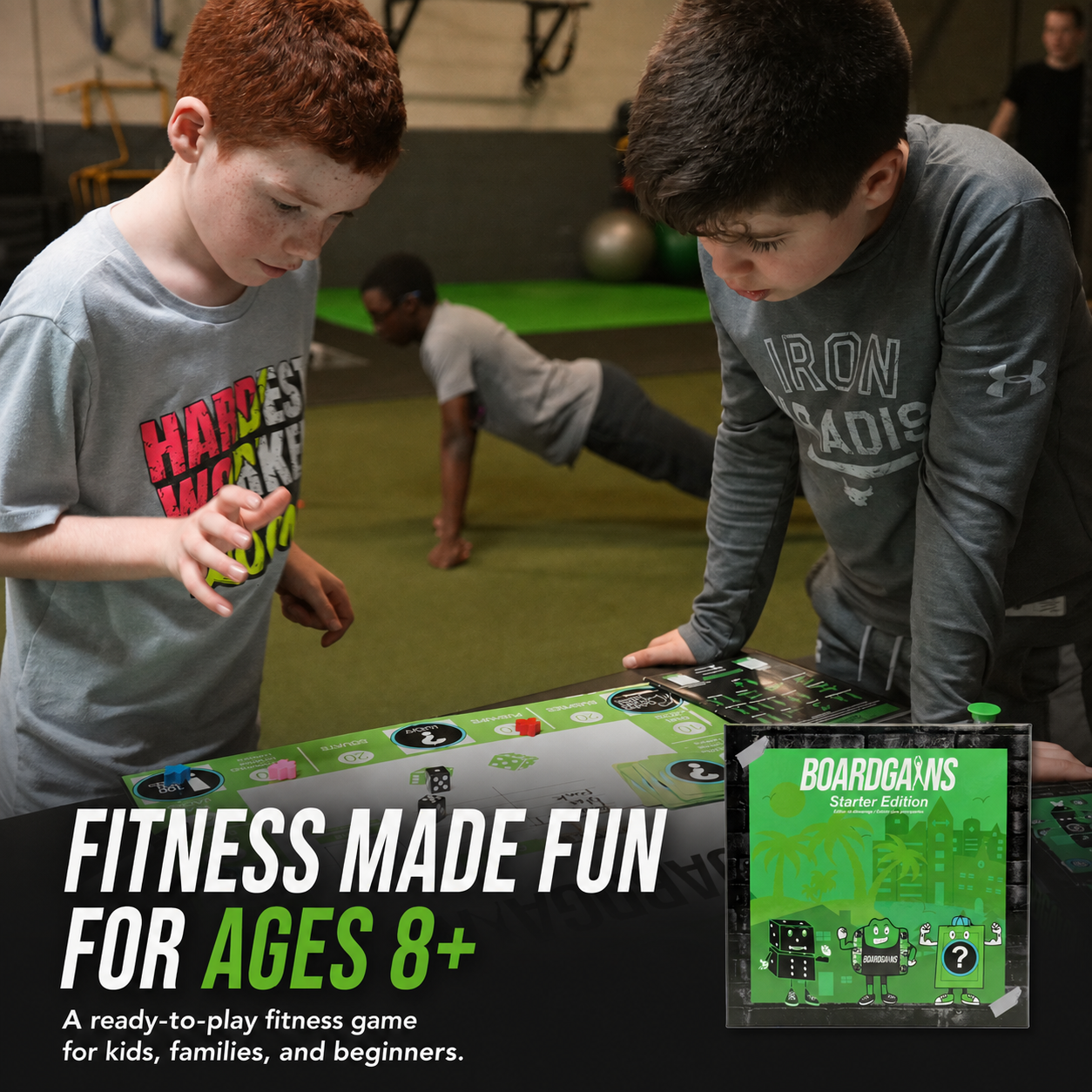
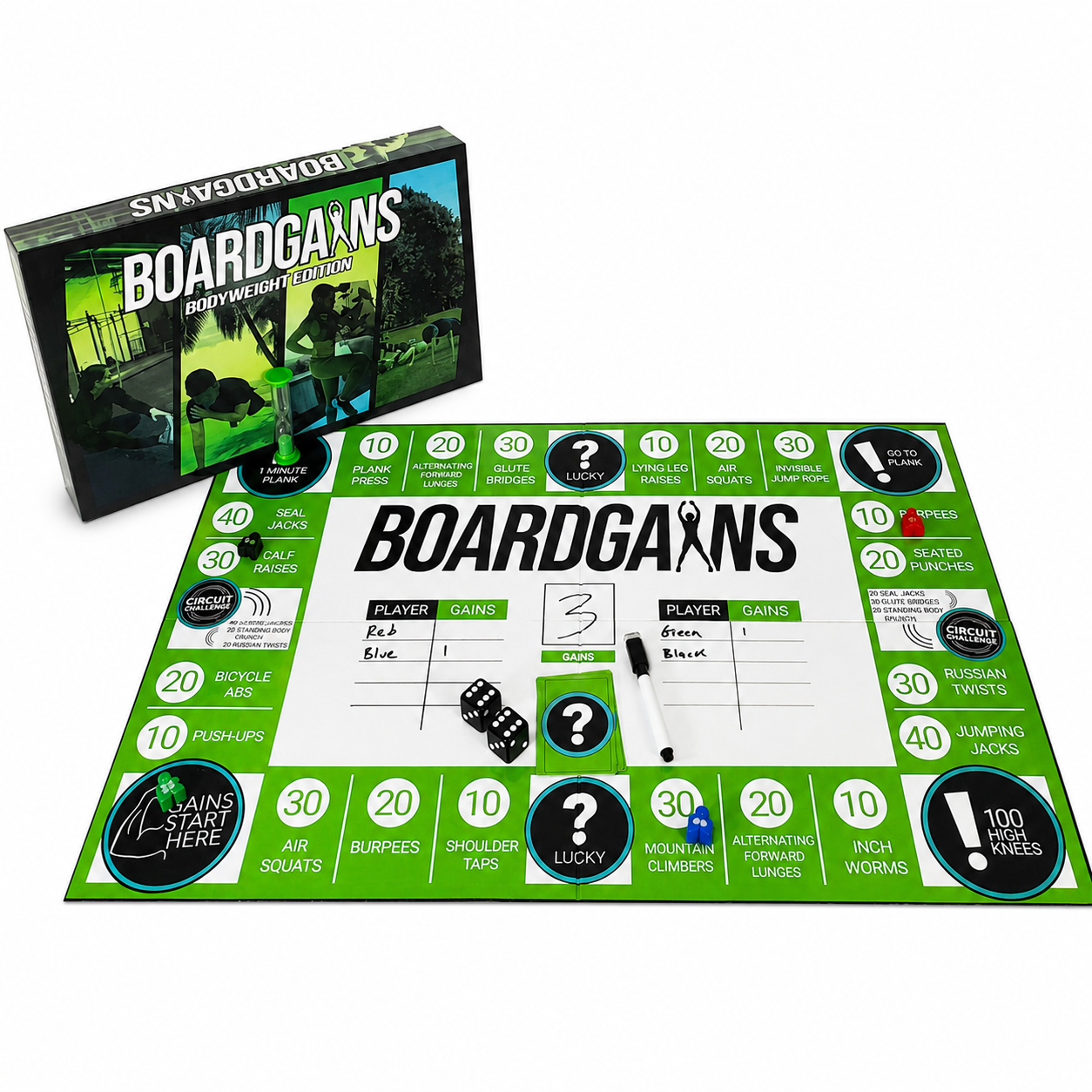
BoardGains uses bodyweight exercises and a simple game goal to make strength and cardio work more social. Students roll, move, complete the exercise they land on, and work toward their Gains Goal.
For youth sessions, review every exercise first, provide modifications, use teams when needed, and let the instructor coach while the board guides the workout.
Explore BoardGains for Schools and Youth Programs →
Frequently Asked Questions
Does strength training stunt a child's growth?
Current guidance does not support avoiding properly designed resistance training because of this myth. The important factors are qualified supervision, appropriate equipment, controlled technique, and sensible progression.
What age can kids start strength training?
There is no single starting age. A child should be able to follow directions, control basic movements, respect safety rules, and communicate discomfort. Younger children often begin with play, climbing, crawling, and bodyweight exercises.
Should kids lift weights?
Some children can use light external resistance with qualified supervision and equipment that fits. Bodyweight movements and resistance bands are also effective starting tools. Technique comes before added weight.
How often should kids do muscle-strengthening activity?
The CDC recommends muscle-strengthening activity as part of daily movement on at least three days per week for children and teens ages 6–17. Structured training frequency should still match the child's program, activity schedule, and recovery.
How long should a youth strength session last?
A beginner session may take 20–30 minutes, including warm-up and cooldown. The right length depends on age, attention, experience, exercise selection, and training goals.
Can strength training help young athletes?
It can support strength, movement control, and physical preparation when it is part of a balanced program. Sport skills, aerobic activity, recovery, and enjoyment still matter.
Is bodyweight training enough for kids?
Bodyweight exercises can build useful skills and strength, especially for beginners. As technique improves, bands or other appropriate resistance may provide additional progression.
Who should supervise youth strength training?
The adult should understand youth development, exercise technique, safe equipment use, modifications, and emergency procedures. They should actively watch the session rather than simply being present.
When should a child see a healthcare professional first?
Seek personal guidance when a child has a medical condition, recent injury, pain, unexplained symptoms, or another concern that may affect exercise. A qualified healthcare professional can advise whether restrictions or further assessment are needed.
Help Kids Build Strength—and Confidence
Strength training for kids should begin with good coaching, simple movements, and achievable goals. When adults focus on technique instead of maximum weight, children can learn skills that support PE, sports, play, and everyday life.
Keep the sessions short, positive, and age appropriate. The best youth program is not the one that looks the hardest—it is the one children can perform safely, enjoy, and continue.
Make Youth Fitness Feel Like Play
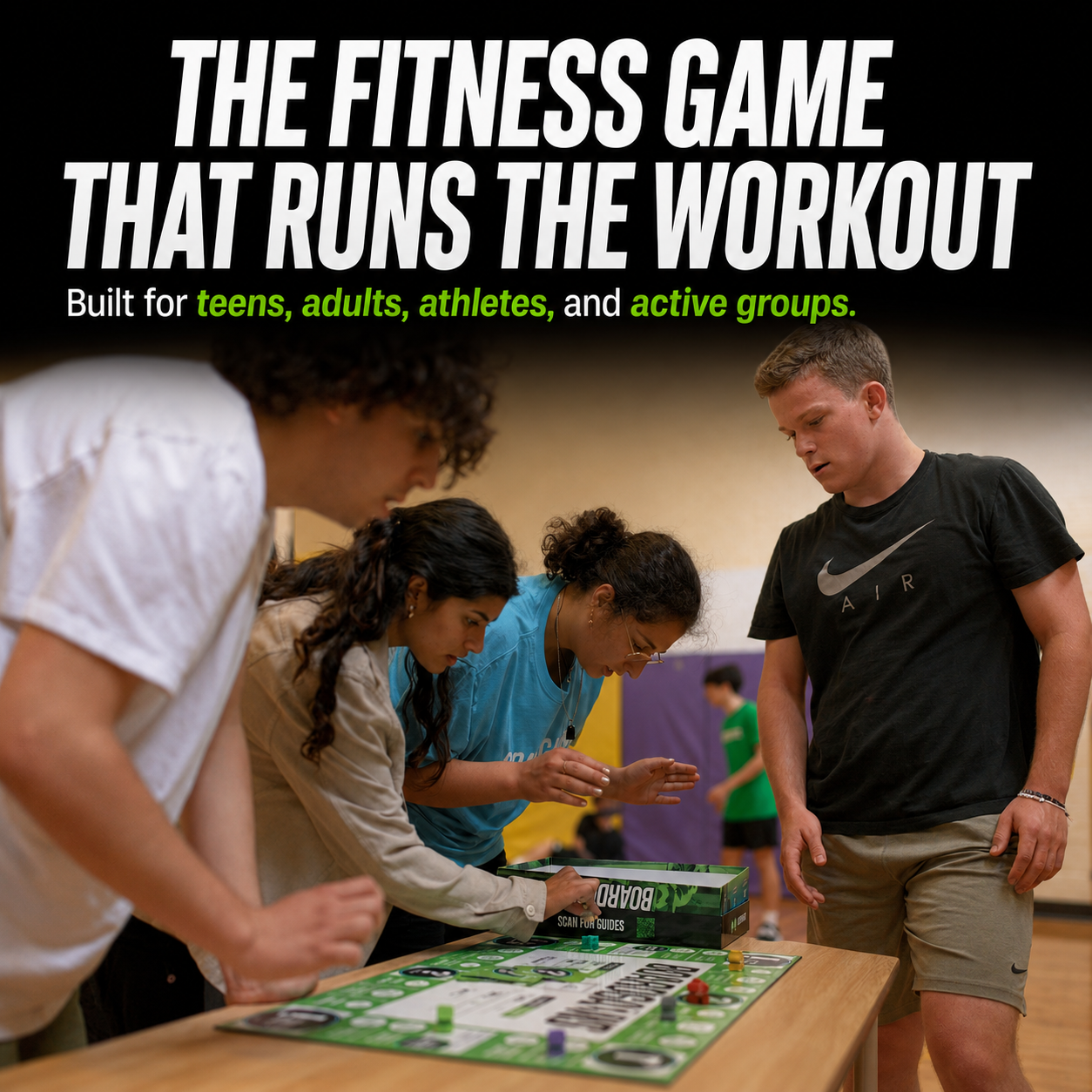
BoardGains turns bodyweight exercises into a fun, social game for PE classes, youth programs, teams, and families. Review the movements, choose a Gains Goal, and let everyone roll, move, and sweat together.
Research and Guidance
- American Academy of Pediatrics: Resistance Training for Children and Adolescents
- British Journal of Sports Medicine: International Consensus on Youth Resistance Training
- CDC: Physical Activity Guidelines for Children
About the Author: Eric Mathura holds a B.Sc. in Kinesiology and has more than 10 years of experience as a personal trainer and group fitness instructor. He created BoardGains to make fitness more fun, social, and engaging for every group.
Updated August 2026.




Leave a comment
This site is protected by hCaptcha and the hCaptcha Privacy Policy and Terms of Service apply.