

The standing body crunch is a no-equipment core exercise that combines a knee lift with a controlled side crunch.
Unlike a traditional crunch performed on the floor, this version keeps you standing. That makes it easy to include in PE classes, bootcamps, home workouts and BoardGains fitness games.
The exercise also challenges coordination and balance because you briefly stand on one leg during each repetition.
This guide explains how to perform standing crunches with proper form, count your repetitions and use a supported modification when needed.
Written by Eric Mathura, B.Sc. Kinesiology and CSEP-CPT, with more than 10 years of experience as a personal trainer and group fitness instructor. Updated August 18, 2026.
Quick answer:
Stand tall with your fingertips lightly beside your head. Lift one knee and bring the same-side elbow toward it. Return to standing and switch sides. Each side counts as one repetition.
Quick exercise overview
- Exercise: Standing body crunch
- Also called: Standing crunch or standing ab crunch
- Level: Beginner to intermediate
- Equipment: None
- Main muscles: Abdominals and obliques
- Also works: Hip flexors, glutes, thighs, feet and ankles
- Rep count: Each side counts as one rep
Watch: How to Do a Standing Body Crunch
Table of Contents
- What Is a Standing Body Crunch?
- How to Do Standing Crunches
- How to Count Repetitions
- Important Form Tips
- Muscles Worked
- Benefits
- Modifications
- Variations
- Common Mistakes
- Group Coaching Tips
- Frequently Asked Questions
What Is a Standing Body Crunch?
A standing body crunch is an alternating exercise in which you lift one knee and bring the same-side elbow toward it.
In the BoardGains version:
- The left elbow moves toward the left knee.
- The right elbow moves toward the right knee.
- Each side counts as one repetition.
This same-side movement is different from a standing bicycle crunch, where the opposite elbow moves toward the raised knee.
The BoardGains exercise is called the Standing Body Crunch, but people may also search for it as a standing crunch, standing ab crunch or standing oblique crunch.
How to Do Standing Crunches With Proper Form
- Stand tall with your feet about hip-width apart.
- Keep a small, comfortable bend in your knees.
- Place your fingertips lightly behind your head or beside your ears.
- Open your elbows without forcing your shoulders backward.
- Brace your core and keep your chest tall.
- Shift your weight onto your right foot.
- Lift your left knee toward the side of your body.
- Bend your torso slightly to the left as you bring your left elbow toward your left knee.
- Return your left foot to the floor and stand tall.
- Lift your right knee and bring your right elbow toward it.
- Return to the starting position.
- Continue alternating sides.
Your elbow and knee do not need to touch. Move only as far as you can while staying balanced and in control.
Movement cue: Stand tall. Knee up. Crunch to the side. Switch.
How to Count Standing Body Crunch Repetitions
Each side counts as one repetition.
- Left knee toward left elbow = 1 rep
- Right knee toward right elbow = 1 rep
- Left plus right = 2 total reps
During BoardGains, continue alternating until you complete the total number shown.
If the exercise number is odd, finish after completing the last repetition on either side. You can begin with the opposite side the next time you perform the exercise.
Important Standing Crunch Form Tips
Do Your Elbow and Knee Need to Touch?
No. Your elbow and knee do not have to touch for the repetition to count.
Trying to force them together may cause you to:
- Pull on your neck
- Round too far forward
- Lose your balance
- Swing the knee with momentum
- Collapse your torso instead of controlling the crunch
Lift your knee and lower your elbow only as far as your mobility and balance allow. The goal is a controlled shortening through the side of your torso—not winning an elbow-to-knee touching contest.
Should You Keep Your Back Straight?
Your back does not need to remain completely straight during a standing crunch. A crunch includes a small amount of controlled trunk bending.
Begin tall, perform a short side crunch and return to a tall position between repetitions. Avoid turning the movement into a deep forward bend.
Where Should You Place Your Hands?
Place your fingertips lightly behind your ears or along the sides of your head. Avoid locking your fingers together and pulling on the back of your head.
Keep your neck long and your chin slightly tucked. Your head should follow your torso instead of being pulled forward by your hands.
Participants who find this position uncomfortable can place their hands across their chest or hold their arms in front of the body.
What Should the Standing Leg Do?
Keep the entire foot of your standing leg connected to the floor. Maintain pressure through your heel, the base of your big toe and the base of your little toe.
Keep the standing knee slightly soft instead of forcefully locking it. If you lose your balance, lower the height of the knee lift, slow down or lightly hold a stable chair or wall.
What Muscles Do Standing Crunches Work?
Obliques
The internal and external obliques are located along the sides of the abdomen. They help bend and control the torso during the same-side crunch.
Rectus Abdominis
The rectus abdominis is the muscle along the front of the abdomen. It assists with trunk flexion and helps control the position of the ribs and pelvis.
Deeper Core Muscles
Deeper abdominal and spinal muscles help stabilize the torso as your weight shifts from one leg to the other.
Hip Flexors
The hip flexors help lift the knee toward the body. It is normal to feel these muscles working during the exercise.
Standing-Leg Muscles
The glutes, thighs, calves and smaller foot and ankle muscles help keep you balanced on the supporting leg.
Benefits of Standing Body Crunches
Trains the Core While Standing
Standing body crunches train the abdominal muscles without requiring participants to get onto the floor.
Challenges Coordination
The same-side elbow and knee must move together while the participant returns to a tall position between repetitions.
Adds a Balance Challenge
Each knee lift creates a brief single-leg balance challenge. Balance should not prevent controlled movement, so support can be used when needed.
Requires No Equipment
The exercise can be performed in a gym, classroom, home or outdoor workout space.
Works Well in Group Workouts
Everyone can perform standing crunches at the same time without waiting for equipment or floor space.
Easy to Modify
The knee height, range, speed and hand position can all be adjusted to match the participant.
Standing crunches may raise your heart rate when performed continuously, but they are mainly a core, balance and coordination exercise. They cannot selectively remove fat from the stomach.
Standing Body Crunch Modifications
Chair-Supported Standing Crunch
This is a helpful option for participants who need more balance support.
- Stand beside a sturdy, non-wheeled chair or wall.
- Place one hand lightly on the support.
- Place your other hand beside your head or across your chest.
- Shift your weight onto the leg closest to the support.
- Lift the outside knee.
- Bring the same-side elbow toward the raised knee.
- Lower the foot with control.
- Complete the planned repetitions and switch sides.
Use the chair or wall for balance instead of pulling your body upward.
Modification cue: Hold lightly, lift the knee and crunch with control.
Reduced-Range Standing Crunch
- Place both hands across your chest.
- Lift the knee only a few inches.
- Perform a small same-side crunch.
- Return the foot to the floor.
- Alternate sides.
The knee does not need to reach hip height. Begin with a range that allows the participant to stay tall and balanced.
Standing Crunch Variations
Hands-Across-Chest Crunch
Cross your arms over your chest instead of placing your hands beside your head. This can reduce the temptation to pull on the neck.
Pause Standing Crunch
Hold the top of each repetition for one or two seconds before returning the foot to the floor.
Slow-Tempo Standing Crunch
Take two seconds to lift and crunch, pause briefly and take two seconds to return. The slower speed makes it harder to use momentum.
Same-Side Repetitions
Complete all planned repetitions on one side before switching. This reduces the constant side-to-side transition but may create more fatigue in the standing leg.
Standing Bicycle Crunch
Lift one knee toward the opposite elbow instead of the same-side elbow. This creates a cross-body rotation challenge and is a separate variation from the BoardGains Standing Body Crunch.
Common Standing Crunch Mistakes
Pulling on the Neck
Participants may pull their head forward to bring the elbow closer to the knee.
Fix: Rest the fingertips lightly beside the head or place the hands across the chest.
Forcing the Elbow and Knee Together
Making contact is not required and may cause poor balance or excessive rounding.
Fix: Use a comfortable range you can control.
Lifting the Knee Too High
Forcing the knee upward may cause the participant to lean backward or swing the leg.
Fix: Lift only as high as you can without losing your posture.
Swinging the Knee
Momentum reduces control and makes it harder to balance.
Fix: Slow the movement and briefly pause at the top.
Leaning Too Far Sideways
A standing crunch requires a small amount of side bending, not a large sideways collapse.
Fix: Keep the movement short and return to a tall position after every rep.
Twisting Instead of Crunching
Turning the opposite shoulder toward the knee changes the exercise into a standing bicycle crunch.
Fix: Bring the same-side elbow toward the same-side knee.
Locking the Standing Knee
Forcefully pushing the standing knee backward can make the position uncomfortable.
Fix: Keep the standing knee soft and stable.
Moving Too Quickly
Fast repetitions can turn the exercise into an uncontrolled knee drive.
Fix: Return to a tall, balanced position between sides.
How Many Standing Crunches Should You Do?
The number of repetitions depends on the workout and the participant’s experience.
- Beginners: 2 sets of 6–8 repetitions per side
- General fitness: 2–3 sets of 8–12 repetitions per side
- Timed circuits: 20–40 seconds
- BoardGains games: Complete the total number shown during play
End the set if the participant can no longer balance, control the knee lift or return to a tall position.
How to Coach Standing Crunches in a Group
Standing crunches are useful in group settings because they require little space and no floor setup.
- Give participants enough room to lift their knees.
- Begin with a slow practice round.
- Explain that the same elbow and knee move together.
- Count each side as one repetition.
- Show the hands-across-chest option.
- Provide access to a wall or stable chair.
- Encourage participants to lower the knee height when needed.
- Ask everyone to reset tall between repetitions.
- Focus on control instead of speed.
- Avoid presenting elbow-to-knee contact as the goal.
Group coaching cue: Same side. Stand tall. Knee up. Switch.
Standing Body Crunches in BoardGains
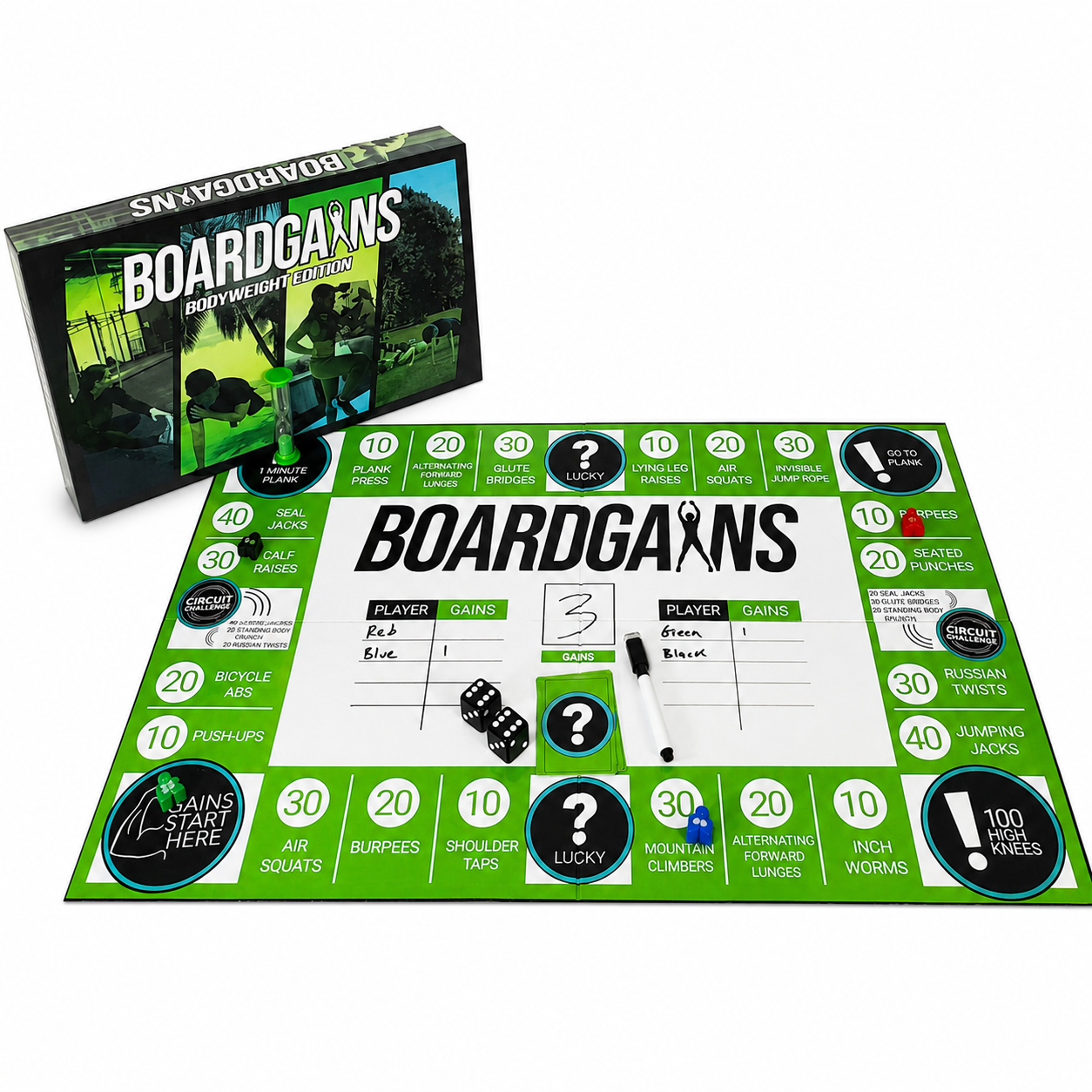
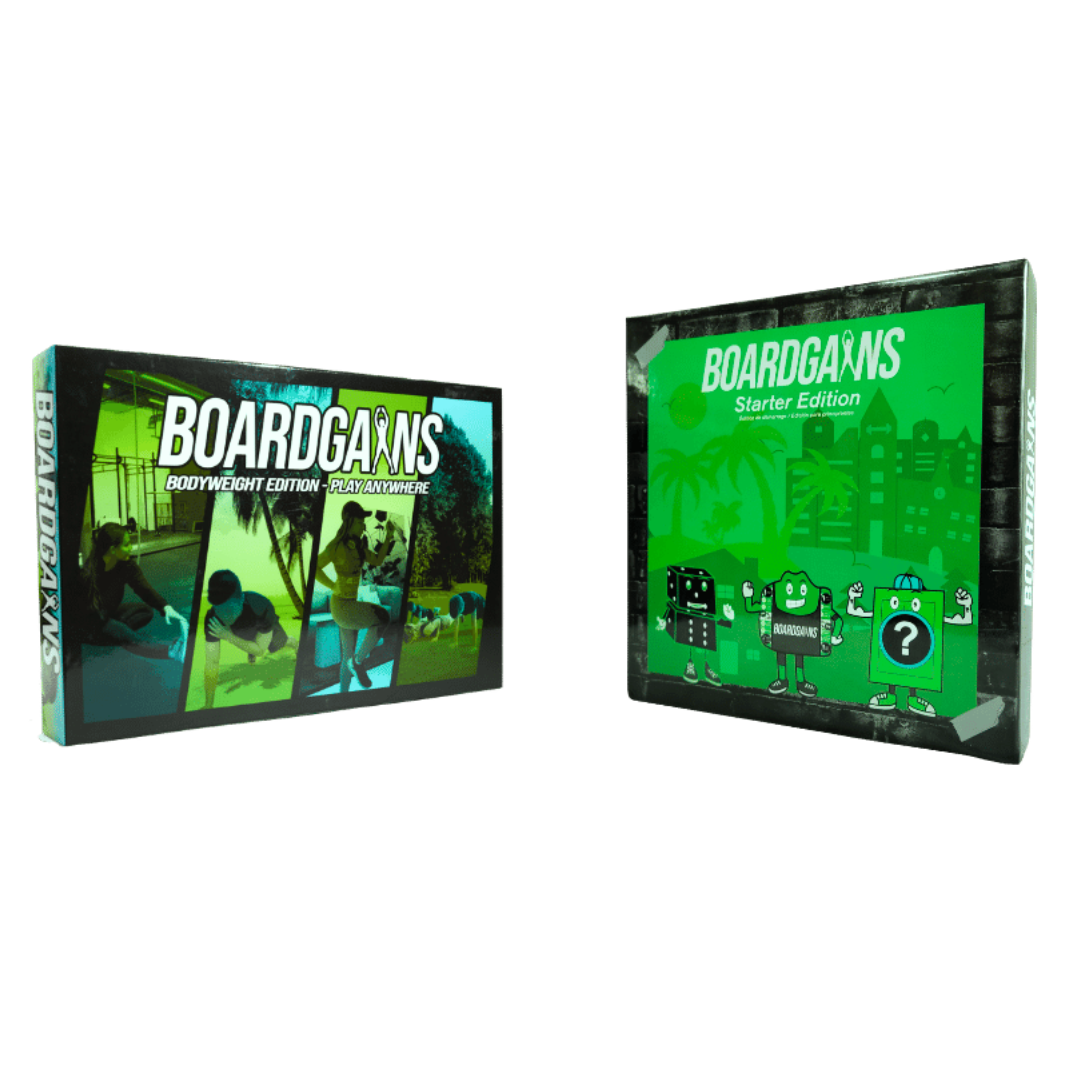
The Standing Body Crunch is one of the 20 bodyweight exercises included in the BoardGains Pro Edition.
When a player lands on the Standing Body Crunch:
- Stand tall with your hands lightly beside your head.
- Lift one knee toward the same-side elbow.
- Return to the starting position.
- Switch sides.
- Count each side as one repetition.
- Use a wall or chair if balance support is needed.
- Complete the total shown and continue playing.
Players should focus on controlled repetitions instead of rushing to finish first.
Turn Your Workout Into a Game
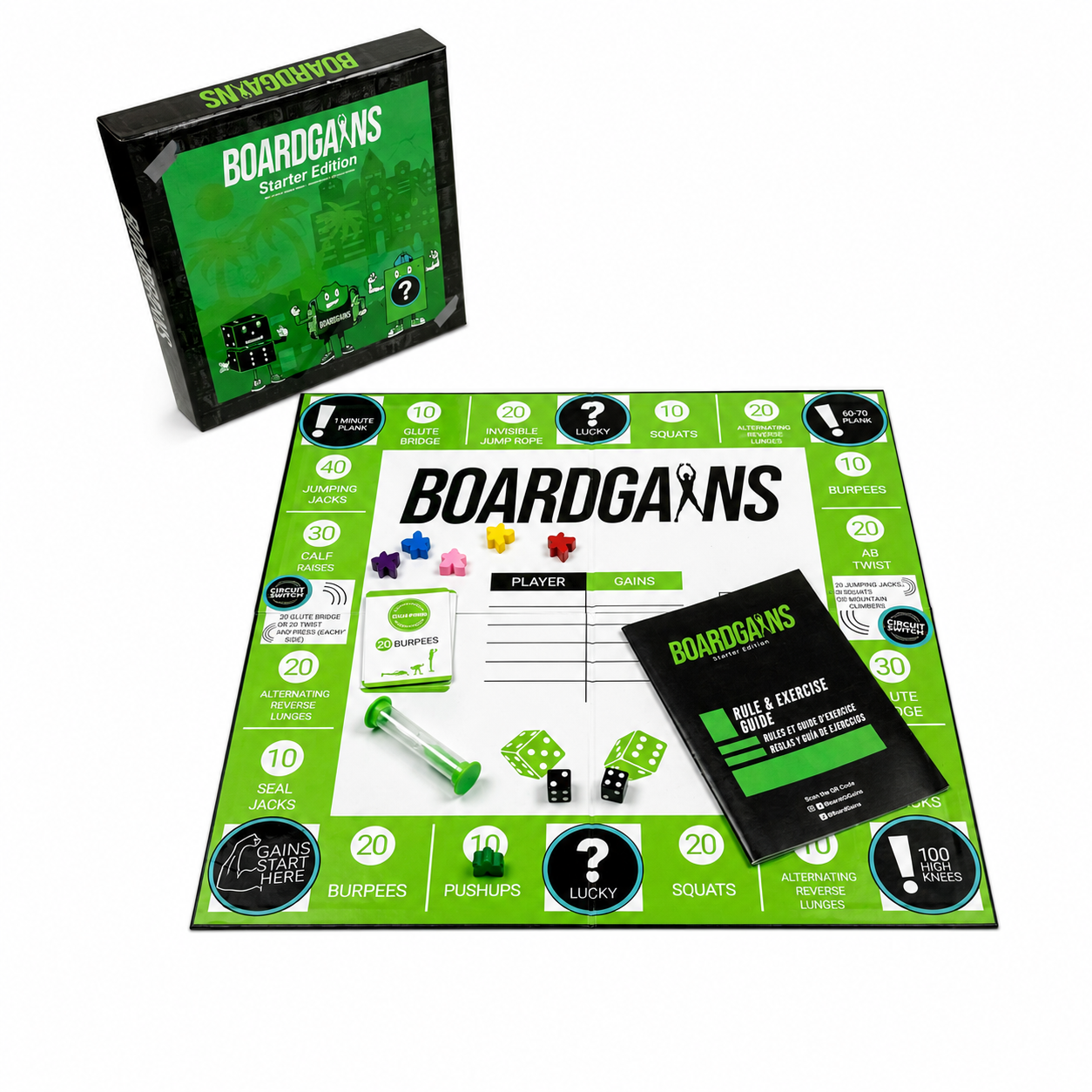
BoardGains is a ready-to-play fitness game for PE classes, group workouts, teams and families. No workout planning. No equipment. Everyone moves.
Frequently Asked Questions
Is a standing body crunch the same as a standing crunch?
Yes. Standing body crunch, standing crunch and standing ab crunch can describe similar upright abdominal exercises. BoardGains uses the name Standing Body Crunch.
Do I bring the same elbow or opposite elbow to my knee?
For the BoardGains Standing Body Crunch, bring the same-side elbow toward the raised knee. Bringing the opposite elbow toward the knee is a standing bicycle crunch.
Does each side count as one repetition?
Yes. The left side counts as one rep, and the right side counts as one rep. Completing both sides gives you two total repetitions.
Do my elbow and knee need to touch?
No. Move through the largest comfortable range you can control. Contact is not required.
How high should I lift my knee?
Lift your knee only as high as you can without leaning backward, swinging your leg or losing your balance.
Should I keep my back straight?
Begin and finish tall, but allow a small amount of controlled trunk bending during the crunch. Avoid pulling your neck or folding deeply forward.
Why do I feel the exercise in my hips?
Your hip flexor muscles lift the knee, so it is normal to feel them working. Reduce the knee height if they become the only muscles you feel.
What should I do if I cannot balance?
Use a stable wall or chair, lower your knee height and slow the movement down.
Are standing crunches easier than floor crunches?
They are different exercises. Standing crunches remove the need to get on the floor but add knee lifting, coordination and balance.
Are standing crunches a cardio exercise?
They may raise your heart rate when performed continuously, especially during a circuit. However, they are mainly a core, balance and coordination exercise.
Can standing crunches burn belly fat?
Standing crunches can strengthen abdominal muscles, but they cannot selectively burn fat from the stomach. Body-composition changes depend on overall activity, nutrition, sleep and other factors.
Can I hold a weight?
Resistance can be added, but it is not necessary. First master the bodyweight version without pulling your neck, swinging the knee or losing your balance.
What should I do if the exercise causes pain?
Stop the exercise if you feel sharp, increasing or unusual pain. Use a smaller range or choose another movement that can be performed comfortably.
Final Standing Crunch Form Checklist
- Feet about hip-width apart
- Standing knee soft
- Fingertips light beside the head
- No pulling on the neck
- Same elbow moving toward the same knee
- Knee lifted under control
- Supporting foot planted
- Small, controlled side crunch
- Tall reset between repetitions
- Each side counts as one rep
Keep it controlled: stand tall, lift the knee, crunch to the side and switch.


Leave a comment
This site is protected by hCaptcha and the hCaptcha Privacy Policy and Terms of Service apply.