

Seated punches are a bodyweight exercise performed from a supported V-sit position on the floor. You lean back slightly, raise your feet and alternate straight punches in front of you.
The movement challenges your core to hold your torso steady while your shoulders and arms punch. It also adds coordination without requiring you to stand, jump or use equipment.
Good form matters more than punch speed. Keep your spine long, wrists straight and shoulders relaxed. Each punch should return to the starting position before the other arm moves.
This guide explains how to do seated punches with proper form, count every repetition and use a feet-down or chair-based option when more support is needed.
Written by Eric Mathura, B.Sc. Kinesiology and CSEP-CPT, with more than 10 years of experience as a personal trainer and group fitness instructor. Updated August 18, 2026.
Quick answer:
Sit with your knees bent, lean back slightly and lift your feet if you can stay balanced. Hold your fists near eye level, then punch one arm up and forward. Bring it back before switching arms. Each single punch counts as one repetition, so a right and left punch equal two reps.
Quick exercise overview
- Exercise: Seated punches
- Movement type: Alternating bodyweight punches from a seated position
- Level: Beginner to intermediate
- Equipment: None; an exercise mat is optional
- Main muscles: Shoulders, triceps and core
- Also works: Chest, upper back and hip flexors when the feet are raised
- Rep count: Each punch counts as one rep
Watch: How to Do Seated Punches
Table of Contents
- What Are Seated Punches?
- How to Do Seated Punches
- How to Count Repetitions
- Posture, Punch Direction and Wrist Position
- Muscles Worked
- Benefits
- Feet-Down and Chair Modifications
- Variations
- Common Mistakes
- Group Coaching Tips
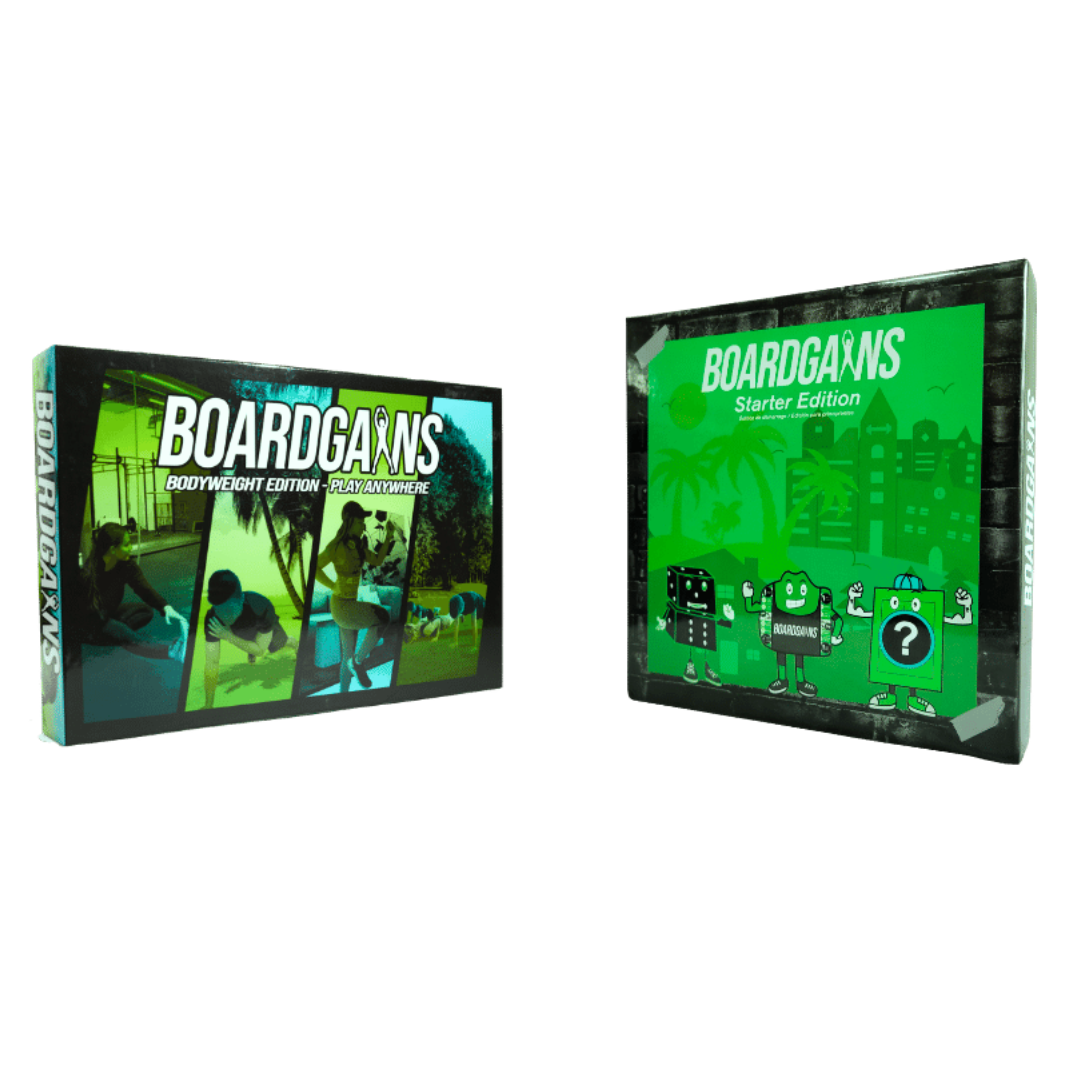
- Seated Punches in BoardGains
- Frequently Asked Questions
What Are Seated Punches?
Seated punches combine a seated core hold with alternating straight punches. In the BoardGains version, you sit on the floor with your knees bent, lean back slightly and raise your feet. Your body creates a supported V shape while your arms punch up and forward.
The exercise is inspired by shadow boxing, but it is not a lesson in competitive boxing technique. The goal is controlled fitness movement—not striking a person, wall, pad or other object.
Participants can keep both feet on the floor to reduce the balance and core demand. Seated air punches can also be performed from a stable chair when getting to the floor is not suitable.
How to Do Seated Punches With Proper Form
- Sit on the floor or an exercise mat with your knees bent.
- Place your feet about hip-width apart.
- Sit tall, then lean your torso back slightly from your hips.
- Keep your chest open and your spine long instead of rounding your lower back.
- Brace your core and lift your feet a few inches from the floor.
- Keep your knees bent and lower legs relaxed.
- Make relaxed fists with your thumbs resting outside your fingers.
- Hold your fists near eye or chin level with your elbows bent.
- Punch your right arm up and forward without locking your elbow.
- Bring your right fist back to the starting position.
- Punch your left arm up and forward, then return it.
- Continue alternating while keeping your torso steady and breathing normally.
Movement cue: Sit tall. Brace your core. Punch and return. Switch sides.
How to Count Seated-Punch Repetitions
Each single punch counts as one repetition.
- Right punch = 1 rep
- Left punch = 2 reps
- Right punch = 3 reps
- Left punch = 4 reps
A right and left punch together equal two total reps—not one.
Count the punch after the arm extends and returns to the guard position. During BoardGains, keep alternating until you complete the number shown on the board.
Seated-Punch Form Tips
How Far Should You Lean Back?
Lean back only far enough to feel your core working while you can still keep your chest open and spine long. The angle will look different for each person.
If your lower back rounds, your chest collapses or you cannot breathe steadily, sit more upright or place your feet on the floor.
How High Should Your Feet Be?
Lift your feet only a few inches. Raising them higher does not automatically improve the exercise and may make it harder to control your torso.
Keep your knees bent and your legs quiet. If you rock backward, grip through your hip flexors or lose your posture, lower your feet.
Where Should You Punch?
Punch forward on a slight upward angle, around eye level. Imagine reaching toward a target in the air that is just beyond your fist.
Do not punch straight overhead unless your workout calls for that separate variation. Keep the range comfortable for your shoulders.
How Should You Hold Your Hands?
Make a gentle fist without squeezing as hard as possible. Wrap your fingers in and keep each thumb outside the fingers rather than trapped underneath them.
Keep your wrist straight so your knuckles and forearm stay in one line. Avoid bending the wrist up, down or sideways as the punch extends.
Should You Lock Your Elbows?
Extend the arm with control but keep a small amount of softness at the elbow. Do not snap or force the joint into a hard lockout.
Return the fist before throwing the next punch. This keeps the rhythm clear and gives every repetition a complete start and finish.
Should Your Torso Rotate?
A small, natural shoulder movement may happen, but keep your hips and trunk mostly steady in the BoardGains version. Large, fast twisting can make it harder to balance with your feet raised.
If you want to add rotation, place your feet on the floor first and use a slow range you can control.
How Should You Breathe?
Use a short exhale with each punch and inhale naturally as the hand returns. Keep your jaw, neck and shoulders relaxed.
If you notice that you are holding your breath, slow the pace or use the feet-down option.
What Muscles Do Seated Punches Work?
Shoulders
The deltoid muscles help lift and extend each arm as you punch. The shoulders also control the return to the guard position.
Triceps
The triceps straighten the elbow during each punch. Keeping a slight bend at the end helps you avoid snapping the joint.
Chest and Upper Back
The chest assists with the forward punch, while muscles around the shoulder blades help guide and control the arms.
Core Muscles
Your abdominal and back muscles help hold the leaned-back seated position. They also resist unwanted rocking as the arms alternate.
Hip Flexors
The hip flexors help keep your thighs and feet raised in the standard version. They work less when your feet remain supported on the floor.
Seated punches involve several muscle groups, but they are mainly an endurance and coordination exercise rather than a heavy strength movement.
Benefits of Seated Punches
Builds Upper-Body Muscular Endurance
Repeated punches challenge the shoulders and arms to work for multiple repetitions or a timed interval.
Challenges Core Control
The leaned-back position asks your trunk to stay steady while your arms move. Lifting the feet increases this challenge.
Develops Left-to-Right Coordination
Alternating punches requires rhythm and awareness of both sides of the body. Coaches can change the tempo or call out patterns to add a reaction challenge.
Provides a Low-Impact Option
The exercise includes no jumping or repeated foot impact. It can be useful when a workout needs an upper-body station or a break from standing movements.
Requires No Equipment
Participants only need enough personal space to sit and extend their arms. A mat can make the floor position more comfortable.
Easy to Scale for Groups
Players can raise or lower their feet, sit more upright, reduce the punch range or use a chair. Everyone can complete the same movement pattern at an appropriate level.
Faster seated punches may raise your heart rate, but the effect depends on your pace, duration and total workout. One exercise alone cannot guarantee fat loss, visible abs or improved boxing performance.
Seated-Punch Modifications
Modification 1: Feet on the Floor
This is the main BoardGains modification. It reduces the balance demand and the work required from the hip flexors.
- Sit with your knees bent and both feet flat.
- Lean back only slightly while keeping your spine long.
- Brace your core and bring your fists near your chin or eyes.
- Punch one arm up and forward.
- Return the fist, then switch sides.
- Keep both feet planted for the entire set.
Modification 2: Sit More Upright
Reduce the backward lean while keeping your feet down. A taller position lowers the challenge to the core and may feel more comfortable for the lower back.
Modification 3: Stable-Chair Punches
Use a solid chair without wheels when sitting on the floor is not suitable. Sit tall with both feet flat and enough room to extend your arms safely. Avoid chairs with arms if they restrict your movement.
Punch one arm forward, return it and switch sides. The chair version is a separate supported option; do not lift both feet or lean far back in the chair.
Modification cue:
Keep your feet down, sit taller and shorten the punch. A supported repetition still counts.
Seated-Punch Variations
Slow Seated Punches
Take two seconds to extend each arm and two seconds to return. A slower pace removes momentum and gives you time to check your wrist and shoulder position.
Pause-and-Return Punches
Pause for one second with the arm almost straight, then pull the fist back to the guard position. Avoid holding the elbow in a locked position.
High-and-Low Punches
Alternate one punch at eye level and one punch toward a lower target in front of your chest. Keep both ranges comfortable and controlled.
Coach-Call Punches
The coach calls “right,” “left” or a short number pattern. Participants respond while keeping their base position steady. This turns the movement into a listening and reaction drill.
Feet-Down Rotational Punches
Plant both feet and add a small torso rotation toward the punching side. Rotate through a comfortable range and return to centre before switching.
Timed Seated Punches
Punch at a controlled pace for 15 to 30 seconds. Rest, check your posture and repeat if your form remains steady.
Avoid holding dumbbells during fast air punches. Added weight increases the demand on the shoulder and elbow and may encourage uncontrolled momentum. Use slower resistance exercises separately when strength is the goal.
Common Seated-Punch Mistakes
1. Rounding the Lower Back
The problem: You collapse through your chest and sit on the back of your pelvis.
The fix: Sit taller, reduce the lean or place your feet down. Think “long spine, open chest.”
2. Leaning Too Far Back
The problem: You lose balance or cannot hold your torso steady.
The fix: Move closer to upright. Use only the angle you can control while breathing.
3. Raising the Feet Too High
The problem: Your legs take over, your hip flexors grip or your body rocks.
The fix: Lower your feet closer to the floor or keep them planted.
4. Punching With a Bent Wrist
The problem: Your hand bends up, down or sideways as the arm extends.
The fix: Keep the knuckles and forearm in one straight line.
5. Snapping the Elbow Straight
The problem: You forcefully lock the elbow at the end of every punch.
The fix: Extend with control and keep the elbow slightly soft.
6. Shrugging the Shoulders
The problem: Your shoulders rise toward your ears and your neck becomes tense.
The fix: Relax your shoulders, slow down and shorten the punch if needed.
7. Dropping the Returning Hand
The problem: One hand stays low while the other punches.
The fix: Bring every fist back near your chin or eyes before the next punch.
8. Punching Too Fast
The problem: Your arms swing, your torso rocks and the repetitions become difficult to count.
The fix: Use a punch-return-switch rhythm. Add speed only when the motion stays controlled.
9. Holding Your Breath
The problem: You become tense while trying to hold the seated position.
The fix: Exhale with each punch and use the feet-down modification if needed.
How Many Seated Punches Should You Do?
The right amount depends on the participant, workout and pace.
- Learning the movement: 2 sets of 8 to 10 total punches
- General muscular endurance: 2 to 3 sets of 12 to 20 total punches
- Timed circuit: 15 to 30 seconds of controlled punches
- BoardGains: Complete the total number shown on the board
Because every punch is one rep, a set of 20 total punches gives you approximately 10 punches per side when you alternate evenly.
End the set when you cannot keep your spine long, wrists straight or shoulders relaxed. Quality repetitions are more useful than rushed ones.
How to Teach Seated Punches in a Group
A clear setup prevents players from punching into another person’s space.
- Give every participant enough room to sit and fully extend both arms.
- Stagger rows so players are not directly behind one another.
- Use mats when the floor is hard or slippery.
- Demonstrate the feet-raised version and feet-down option before starting.
- Explain that each punch—not each pair—counts as one rep.
- Cue a clear punch-return-switch rhythm.
- Remind players that they are punching the air, not another person or object.
- Offer a solid, non-wheeled chair to anyone who should not sit on the floor.
Coach it in four cues:
Long spine. Straight wrist. Punch and return. One punch equals one rep.
Seated Punches in BoardGains
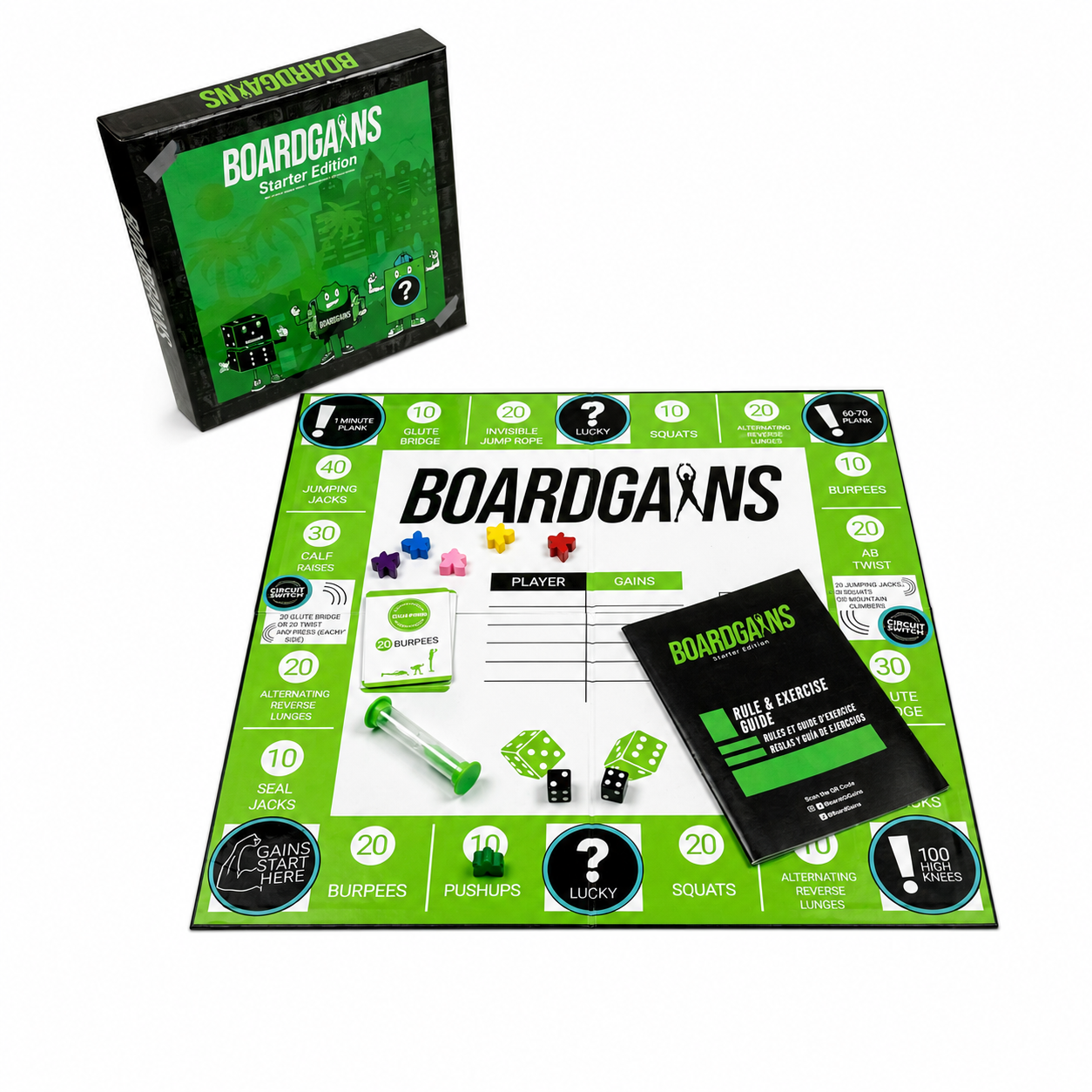
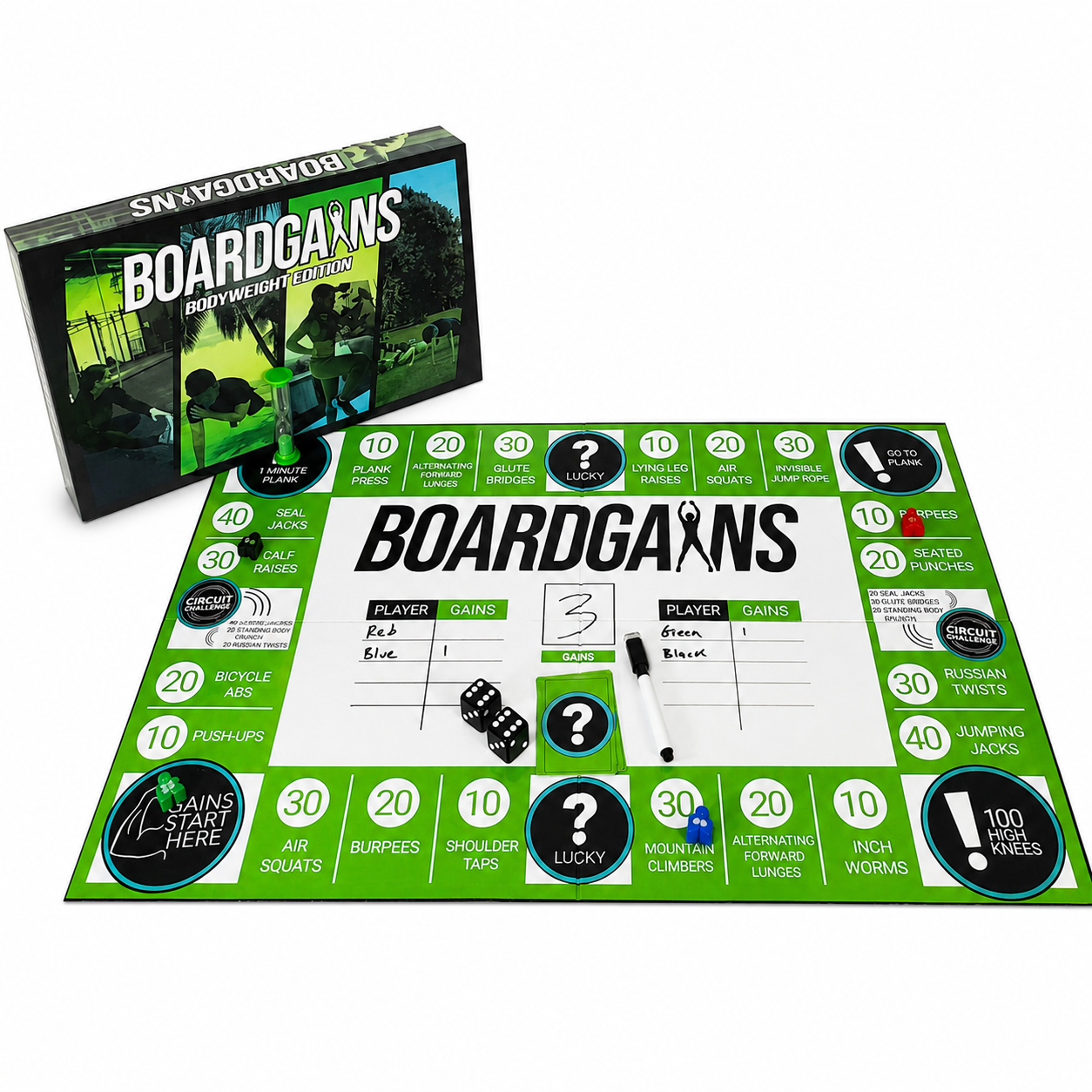
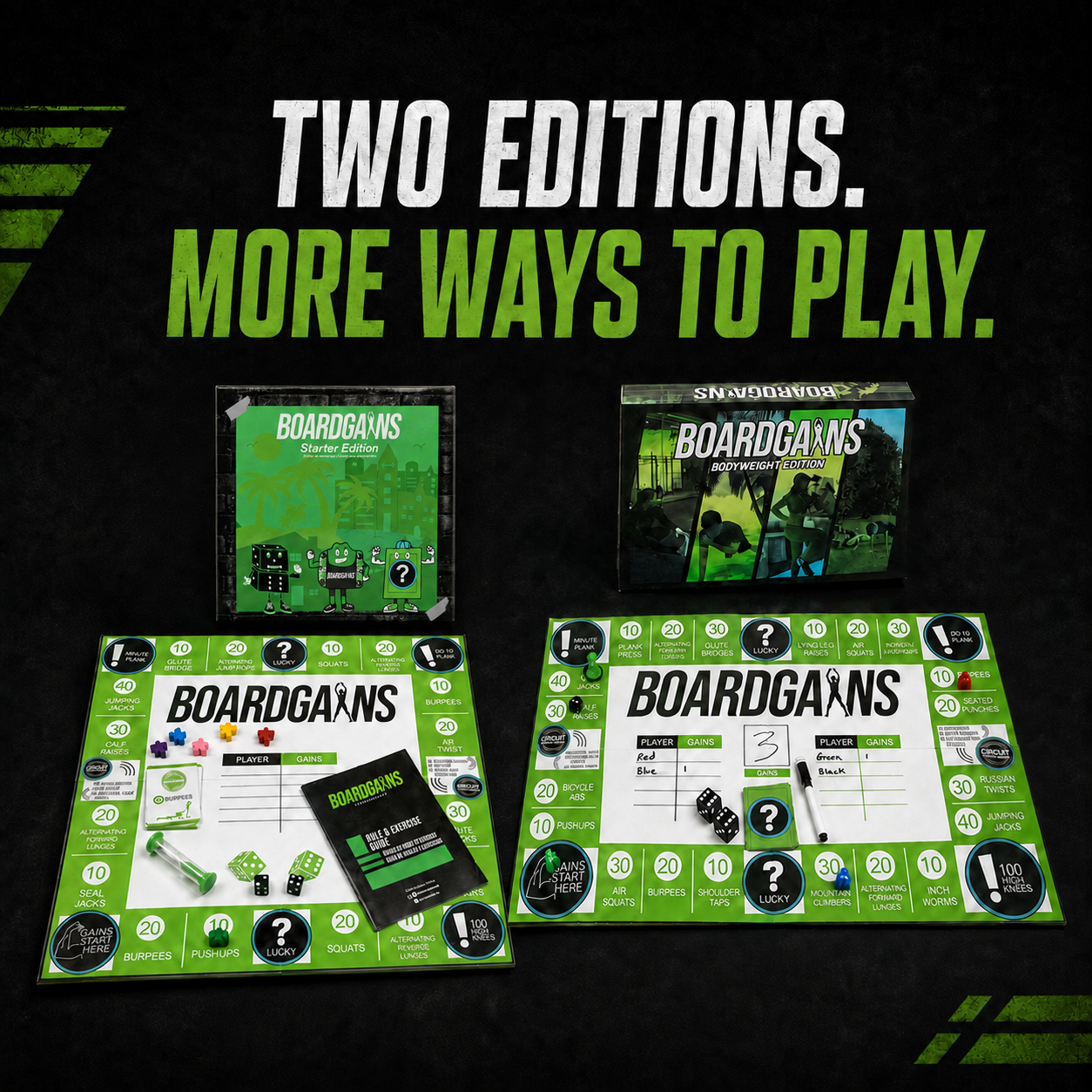
Seated punches are one of the 20 bodyweight exercises included in the BoardGains Pro game. The exercise adds upper-body movement and core control between standing, jumping and floor-based stations.
When a player lands on seated punches, they complete the total rep number shown on the board. A right punch counts as one and a left punch counts as two.
Before gameplay, show everyone the feet-down modification. This keeps the game moving because players can adjust immediately instead of stopping when balance or core fatigue becomes the limiting factor.
Turn Your Workout Into a Game
BoardGains combines bodyweight exercises, teamwork and friendly competition for trainers, PE teachers, families and fitness groups.
Seated-Punch FAQs
What counts as one seated-punch repetition?
Each punch counts as one repetition. A right punch followed by a left punch equals two reps.
Do my feet have to stay off the floor?
No. Raising the feet increases the balance and core demand, but it is not required. Keeping both feet planted is the main modification and every controlled punch still counts.
How far should I lean back?
Lean back only far enough to feel your core working while your spine stays long and your breathing remains steady. Sit more upright if your back rounds or you begin to rock.
Are seated punches an ab exercise?
Your abdominal muscles help hold and steady the seated position, especially when your feet are raised. Your shoulders and triceps also work during every punch.
Can I perform seated punches in a chair?
Yes. Use a solid chair without wheels, keep both feet flat and sit tall. Make sure there is enough space in front of you and around both arms.
Should I use weights for seated punches?
Fast air punches are best performed without weights. Holding dumbbells can increase stress on the shoulders and elbows and may make the motion harder to stop. Use a separate controlled resistance exercise if added strength work is the goal.
How fast should I punch?
Start slowly enough to extend and return each arm without rocking your torso. Increase the pace only while your wrists, elbows, shoulders and posture remain controlled.
Why do I feel seated punches in my hip flexors?
The hip flexors help hold your legs up. Lower your feet or place them on the floor if that effort becomes stronger than the work in your core and upper body.
What if my lower back feels uncomfortable?
Place your feet down, sit more upright and reduce the number of repetitions. Stop if you feel pain. A qualified health professional can help determine whether the exercise is suitable for you.
What if my shoulders hurt?
Shorten the punch, lower the target and slow down. Do not force a painful range. Stop if discomfort continues and seek individual guidance when needed.
Can seated punches replace boxing training?
No. They are a general fitness exercise. Competitive boxing requires coaching in stance, footwork, defence, striking technique and safe use of equipment.
Are seated punches low impact?
They involve no jumping or repeated landing impact. However, the feet-raised version can still be challenging for the core, hips and shoulders, so use the modification that fits the participant.
Final Form Checklist
- Sit on the floor with your knees bent
- Lean back slightly with a long spine
- Lift your feet only if you can stay balanced
- Keep your fists near your chin or eyes
- Hold each wrist in line with the forearm
- Punch up and forward without locking the elbow
- Return the fist before switching arms
- Keep your torso steady and breathe
- Count every single punch as one rep
Strong seated punches look controlled and repeatable. Set your posture first, choose the right foot position and use a smooth punch-return-switch rhythm from the first rep to the last.

Leave a comment
This site is protected by hCaptcha and the hCaptcha Privacy Policy and Terms of Service apply.