

The plank press is a challenging bodyweight exercise that combines two familiar positions: the high plank and the forearm plank.
Instead of holding one position, you move from your hands to your forearms and then press yourself back up. This adds upper-body movement while your core works to keep your hips and spine steady.
The exercise is also called an up-down plank, plank up-down or plank-up. In BoardGains, we call it the Plank Press.
This guide explains how to perform plank presses with proper form, count each repetition and use a knee-supported modification.
Written by Eric Mathura, B.Sc. Kinesiology and CSEP-CPT, with more than 10 years of experience as a personal trainer and group fitness instructor. Updated August 18, 2026.
Quick answer:
Begin in a high plank. Lower one forearm at a time to enter a forearm plank, then place one hand at a time on the floor and press back into the high plank. That complete down-and-up transition counts as one rep.
Quick exercise overview
- Exercise: Plank press
- Also called: Up-down plank or plank-up
- Level: Intermediate
- Equipment: Exercise mat recommended
- Main muscles: Abdominals, shoulders and triceps
- Also works: Chest, serratus anterior, glutes and thighs
- Rep count: High plank to forearm plank and back equals one rep
Watch: How to Do a Plank Press
Table of Contents
- What Is a Plank Press?
- How to Do a Plank Press
- How to Count Repetitions
- Important Form Tips
- Muscles Worked
- Benefits
- Knee-Supported Modification
- Variations
- Common Mistakes
- Group Coaching Tips
- Frequently Asked Questions
What Is a Plank Press?
A plank press is a dynamic plank exercise. You begin in a high plank with your hands on the floor. You then lower one forearm at a time before pressing through your hands to return to the starting position.
Unlike a regular plank, your arms are moving while your core resists unwanted movement through your hips and lower back.
The main goal is not to move as quickly as possible. It is to move between both plank positions without letting your hips sag, lift or rotate excessively.
How to Do a Plank Press With Proper Form
- Begin in a high plank with your hands directly under your shoulders.
- Extend your legs behind you and place your feet about hip- to shoulder-width apart.
- Tighten your core, glutes and legs.
- Keep your body in a straight line from your head to your heels.
- Lower your right forearm to the floor, placing your right elbow under your shoulder.
- Lower your left forearm to enter a forearm plank.
- Place your right hand on the floor where your right elbow was.
- Press through your right hand, followed by your left hand, to return to the high plank.
- Begin the next repetition with your left arm.
- Continue alternating the arm that leads each repetition.
Movement cue: Hand plank. Elbow plank. Press back up.
How to Count Plank Press Repetitions
One complete transition counts as one repetition:
High plank → forearm plank → high plank = 1 rep
Moving only from the hands to the forearms does not complete the repetition. You must return to the high plank before counting the rep.
For balanced practice:
- Rep one can lead with the right arm.
- Rep two can lead with the left arm.
- Continue alternating sides.
During BoardGains, complete the total number shown. You do not need to count one repetition on each side as a pair.
Important Plank Press Form Tips
Set Up a Strong High Plank
Place your hands directly under or slightly outside your shoulders. Spread your fingers and press through your palms.
Avoid placing your hands far in front of your shoulders. This can make it harder to support your upper body and control the transition.
Aim to create a long line from your head through your shoulders, hips and heels. Keep your head neutral, core braced, glutes engaged and legs strong.
Choose the Right Foot Position
Start with your feet about hip- to shoulder-width apart. A wider stance provides more stability and can help reduce hip rotation. A narrow stance makes the movement more challenging.
Place Your Elbows Under Your Shoulders
Each elbow should land underneath or close to the same-side shoulder. Avoid placing your elbow too far forward, too far outside or across the centre of your body.
Use a mat on a hard floor. Lower each forearm with control instead of dropping your elbow into the ground.
Replace Your Elbow With Your Hand
When pressing back up, place your hand close to the spot where your elbow was. This helps prevent your body from slowly moving forward or backward during the set.
Keep Your Hips Steady
Some hip movement is normal, but large side-to-side rotation reduces control.
To keep your hips steadier:
- Widen your feet slightly.
- Tighten your glutes.
- Brace your core before moving the first arm.
- Press both feet firmly into the floor.
- Move your arms slowly.
- Keep your shoulders and hips facing the floor.
- Alternate the lead arm.
Imagine balancing a light object across your lower back. Your goal is to avoid letting it fall from side to side.
What Muscles Do Plank Presses Work?
Core Muscles
Your abdominal muscles work to keep your lower back and hips steady. The exercise also creates an anti-rotation challenge as you move one arm at a time.
Shoulders
The shoulder muscles help support your body weight and control the movement between the high and forearm plank positions.
Triceps
Your triceps straighten your elbows as you press from your forearms back onto your hands.
Chest
Your chest muscles assist with the pressing portion of the exercise.
Serratus Anterior
The serratus anterior helps control the shoulder blades while you support yourself above the floor.
Glutes and Legs
Your glutes, quadriceps and other leg muscles help maintain a strong plank position.
Benefits of Plank Presses
Builds Upper-Body Strength and Endurance
Your shoulders, chest and triceps work to lower and press your body between two plank positions.
Trains Core Control
Your core must resist sagging, arching and rotating while your arms move.
Challenges Coordination
You must organize the order of your elbows and hands while keeping the rest of your body steady.
Requires No Equipment
Plank presses can be used in gyms, classrooms, homes and outdoor workout spaces. A mat is helpful but not always required.
Works Well in Circuits
The exercise can be combined with lower-body or cardio movements in a full-body circuit.
Plank presses may increase your heart rate when performed continuously, but their main purpose is controlled core and upper-body training. They cannot selectively burn fat from the stomach.
Knee-Supported Plank Press Modification
The knee-supported plank press reduces the amount of body weight supported by the upper body.
- Begin on your hands and knees.
- Move your knees slightly behind your hips.
- Create a straight line from your head through your hips to your knees.
- Keep your hands under your shoulders.
- Lower one forearm at a time.
- Press through one hand at a time to return to the starting position.
- Alternate the arm that leads each repetition.
Avoid sitting your hips back toward your heels. Keep your hips forward so your core remains active. A folded mat can be placed underneath the knees for comfort.
Modification cue: Head, hips and knees stay in one line.
Is the Knee Modification Easier on the Wrists?
The knee-supported version reduces the overall load, but your wrists still support weight in the high plank position.
If a participant feels wrist pain, a regular forearm plank or another core exercise may be a better option. Do not continue through sharp or increasing pain.
Plank Press Variations
Slow Plank Press
Take two seconds to lower and two seconds to press back up. This makes it harder to use momentum.
Wide-Stance Plank Press
Place your feet wider than shoulder-width. The wider base can help reduce hip rotation while learning the movement.
Narrow-Stance Plank Press
Move your feet closer together. This creates a greater stability challenge and should only be used when regular plank presses are controlled.
Plank Press With a Pause
Pause for one or two seconds in the forearm plank before pressing back up.
Plank Press With Shoulder Taps
After returning to the high plank, tap one hand to the opposite shoulder. This is an advanced variation because it adds another anti-rotation challenge.
Common Plank Press Mistakes
Allowing the Hips to Sag
Sagging the hips can increase unwanted movement through the lower back.
Fix: Tighten your glutes and core. Use the knee-supported version if you cannot maintain your alignment.
Lifting the Hips Too High
Raising the hips reduces the plank challenge and changes the exercise.
Fix: Keep your shoulders, hips and heels—or knees—lined up.
Rotating From Side to Side
Large hip rotation often happens when the feet are too close or the movement is rushed.
Fix: Widen your stance, brace before moving and slow down.
Dropping Onto the Elbows
Falling quickly from the hands to the forearms reduces control and may be uncomfortable.
Fix: Lower one forearm gently at a time and use a mat when needed.
Placing the Elbows Too Wide
Elbows that land far outside the shoulders can create an awkward position.
Fix: Aim to place each elbow underneath the same-side shoulder.
Reaching the Hands Too Far Forward
Placing the hands ahead of the shoulders can make the press harder to control.
Fix: Put each hand close to the spot where the elbow was positioned.
Always Leading With the Same Arm
Using one arm first for every repetition creates uneven practice.
Fix: Alternate the lead arm after every completed rep.
Rushing the Repetitions
Speed can cause the hips to rotate and the elbows to land poorly.
Fix: Prioritize steady, complete repetitions.
How Many Plank Presses Should You Do?
- Beginners: 2 sets of 4–6 repetitions
- General fitness: 2–3 sets of 6–12 repetitions
- Timed circuits: 15–30 seconds
- BoardGains games: Complete the number shown during play
End the set if you can no longer keep your hips controlled or place your hands and elbows safely. Quality matters more than completing extra repetitions with poor form.
How to Coach Plank Presses in a Group
Plank presses can work well in circuits and fitness games when the group understands the movement.
- Give each participant enough floor space.
- Use mats on hard surfaces.
- Demonstrate one full repetition before starting.
- Explain that participants must return to their hands before counting the rep.
- Show the knee-supported option.
- Ask participants to alternate their lead arm.
- Encourage wider feet when the hips rotate.
- Use controlled repetitions instead of racing.
- Stop the set when form begins to break down.
Group coaching cue: Down to the elbows. Press to the hands. Switch your lead.
Plank Presses in BoardGains
The Plank Press is one of the 20 bodyweight exercises included in the BoardGains Pro Edition.
When a player lands on the Plank Press:
- Begin in a high plank.
- Lower to a forearm plank.
- Press back into the high plank.
- Count one complete transition as one rep.
- Alternate the lead arm.
- Use the knee-supported option when needed.
- Complete the total shown and continue playing.
The game keeps everyone active at the same time, but players should still focus on controlled repetitions instead of racing through the movement.
Turn Your Workout Into a Game
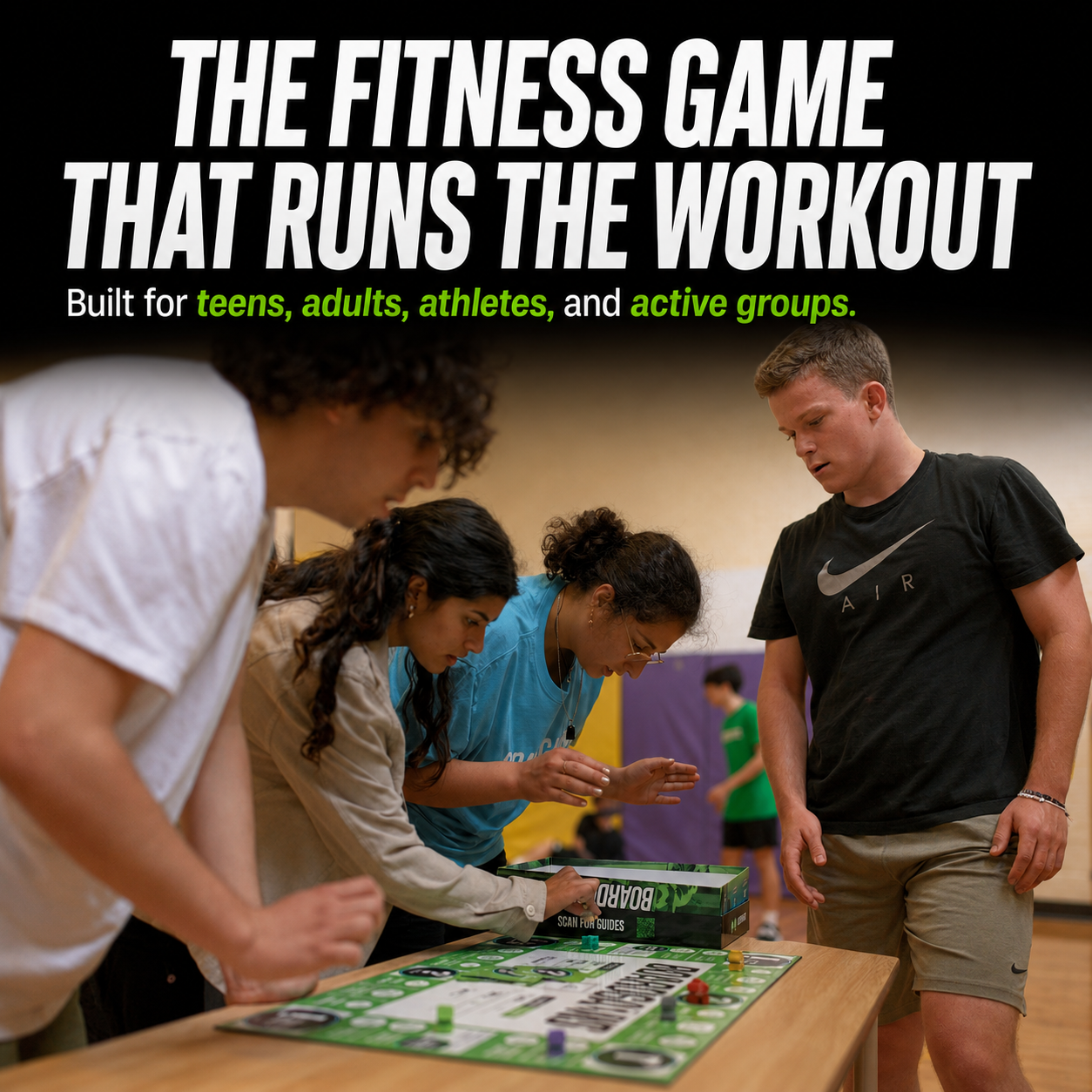
BoardGains is a ready-to-play fitness game for PE classes, group workouts, teams and families. No workout planning. No equipment. Everyone moves.
Frequently Asked Questions
Is a plank press the same as an up-down plank?
Yes. Plank press, up-down plank and plank-up are different names for the same basic exercise. BoardGains uses the name Plank Press.
What counts as one plank press?
Moving from a high plank to a forearm plank and returning to the high plank counts as one repetition.
Which arm should move first?
Either arm can lead. Alternate the lead arm after each completed repetition.
How wide should my feet be?
Start with your feet about hip- to shoulder-width apart. Widening your stance can help reduce hip rotation.
Should my elbows be directly under my shoulders?
Your elbows should land underneath or close to your shoulders when you enter the forearm plank.
Why do my hips rotate?
Hip rotation can happen when your stance is too narrow, your core loses tension or you move too quickly. Widen your feet, squeeze your glutes and slow down.
Are plank presses harder than regular planks?
For most people, yes. Plank presses add arm movement and require you to stabilize your body while shifting between two positions.
Can beginners perform plank presses?
Beginners can start with the knee-supported version. They should also be comfortable holding a high plank and forearm plank before performing several continuous repetitions.
Are plank presses a cardio exercise?
They may increase your heart rate during a circuit, but they are mainly a bodyweight strength and core-control exercise.
Can plank presses help lose belly fat?
Plank presses can strengthen the core, but exercises cannot target fat loss from one area. Body-composition changes depend on overall activity, nutrition and other lifestyle factors.
What should I do if my wrists hurt?
Stop if you feel sharp or increasing pain. A forearm plank or another core exercise that does not require repeated wrist loading may be more appropriate.
How often can I perform plank presses?
Frequency depends on the participant’s training plan and recovery. Two or three weekly sessions may be enough for many general fitness programs.
Final Plank Press Form Checklist
- Hands underneath the shoulders
- Feet wide enough for control
- Body in one long line
- Core and glutes engaged
- Elbows landing under the shoulders
- Hands replacing the elbows
- Hips facing the floor
- Controlled transitions
- Lead arm alternating
- High plank to forearm plank and back equals one rep
Keep it strong and steady: down to the elbows, press to the hands and switch your lead.






Leave a comment
This site is protected by hCaptcha and the hCaptcha Privacy Policy and Terms of Service apply.