
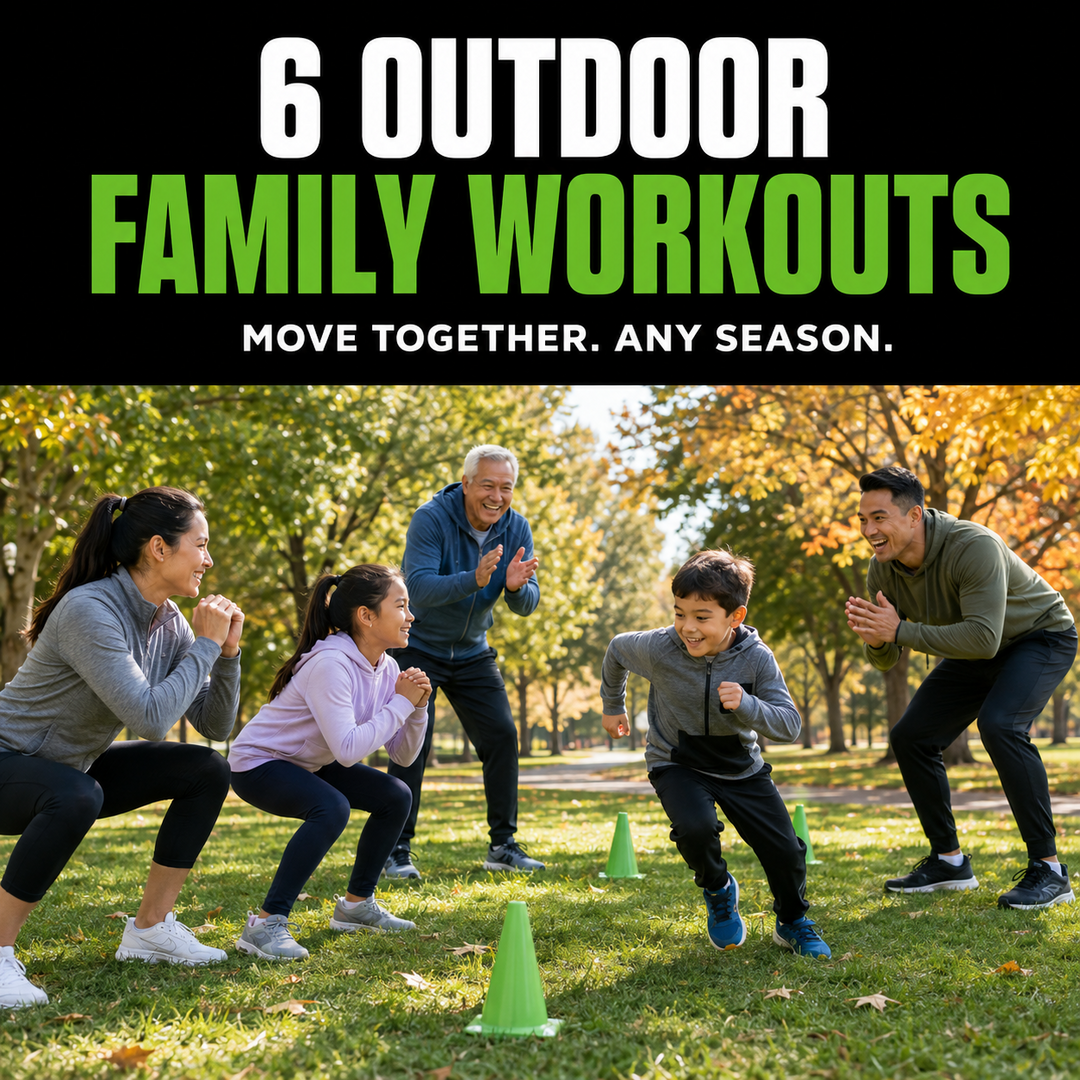
Outdoor family workouts are a simple way to move, spend time together, and break away from screens. You do not need a perfect trail, expensive equipment, or an hour-long plan. A park, driveway, backyard, field, or safe walking route can become your family fitness space.
These six outdoor workouts can be adjusted for children, adults, and older family members. You will also find seasonal ideas, safety reminders, easier options, and a ready-to-use 30-minute plan.
Quick answer: Choose one activity that matches your family's age, ability, weather, and available space. Try an adventure walk, bike-and-move intervals, a playground circuit, BoardGains outdoors, a family relay, or a nature mobility session. Keep the first workout short and finish while everyone is still having fun.
Table of Contents
- Why Exercise Outdoors as a Family?
- Outdoor Family Workout Safety
- 1. Family Adventure Walk
- 2. Bike-and-Move Intervals
- 3. Playground Fitness Circuit
- 4. Outdoor BoardGains Game
- 5. Family Fitness Relay
- 6. Nature Yoga and Mobility
- Seasonal Workout Adjustments
- 30-Minute Family Workout Plan
- Frequently Asked Questions
Why Exercise Outdoors as a Family?
Family workouts do more than add exercise to the day. They give adults a chance to model active habits while children see movement as something the family does together.
Outdoor family activity can:
- Create quality time without requiring a formal event
- Help children and adults practise strength, balance, coordination, and endurance
- Add variety through changing spaces, routes, and seasons
- Give every family member a role
- Make movement feel like an adventure or game
- Support the habit of choosing active recreation
The goal is not to make every family member complete the same workout. A successful session gives everyone a safe way to take part.
Outdoor Family Workout Safety
- Check the weather and air conditions: Change plans during extreme heat, cold, storms, poor air quality, or unsafe wind.
- Inspect the area: Look for traffic, ice, wet grass, holes, broken equipment, and other hazards.
- Dress for the conditions: Use practical layers, sun protection, suitable footwear, and reflective clothing when visibility is low.
- Bring water: Schedule breaks before anyone becomes very thirsty or tired.
- Choose age-appropriate routes: Distance, hills, surfaces, and traffic should match the least experienced family member.
- Use helmets and safety gear: Bikes, scooters, skates, and similar activities require properly fitted protective equipment.
- Stop for concerning symptoms: Pain, dizziness, unusual breathing difficulty, chest discomfort, or confusion means the activity should stop.
Quick Family Workout Guide
| Workout | Main Focus | Equipment | Time |
|---|---|---|---|
| Adventure Walk | Endurance and exploration | None | 20–60 minutes |
| Bike-and-Move | Cardio and strength | Bikes and helmets | 20–45 minutes |
| Playground Circuit | Full-body movement | Playground | 15–30 minutes |
| BoardGains | Fitness and game play | BoardGains | 10–35 minutes |
| Family Relay | Teamwork and speed | Cones or markers | 10–20 minutes |
| Nature Mobility | Balance and recovery | Optional mats | 10–25 minutes |
1. Family Adventure Walk
Turn a walk or easy hike into a mission. Choose a safe route and add simple challenges along the way.
How to Do It
- Choose a route that works for the youngest or least experienced family member.
- Set a time goal rather than a distance goal.
- Add one challenge every five minutes.
- Let a different person lead each challenge.
- Turn around before the group becomes tired.
Challenge Ideas
- Find three different leaf shapes
- Walk quickly to the next bench
- Complete five bench squats
- Balance for 10 seconds per side
- Count birds, dogs, bridges, or trail signs
Mixed-age option: Adults can add a longer stride or extra repetitions while children lead the scavenger hunt.
2. Bike-and-Move Intervals
Combine a family bike ride with short movement stops. Use a traffic-free path, school track, or closed recreation area.
How to Do It
- Check every bike, helmet, and route before starting.
- Ride at an easy pace for five minutes.
- Stop in a safe area for one short bodyweight movement.
- Repeat the ride-and-move pattern three to six times.
- Finish with an easy ride home.
Movement stops: Squats, calf raises, step jacks, standing punches, or balance holds.
No-bike option: Use scooters, skates, walking, or jogging when the route and safety equipment are appropriate.
3. Playground Fitness Circuit
A playground already offers stations for climbing, balancing, stepping, pushing, and active play.
Sample Circuit
- Walk or jog one lap around the play area.
- Complete 8–12 bench squats.
- Perform 6–10 incline push-ups against a stable surface.
- Cross a balance feature or walk along a painted line.
- Climb or hang only on equipment designed for that use.
- Finish with 20 seconds of jumping jacks or step jacks.
Complete two or three rounds with rest and water as needed.
Parent tip: Follow posted age limits and playground rules. Check surfaces for heat, ice, water, and damage before using the equipment.
4. Outdoor BoardGains Game
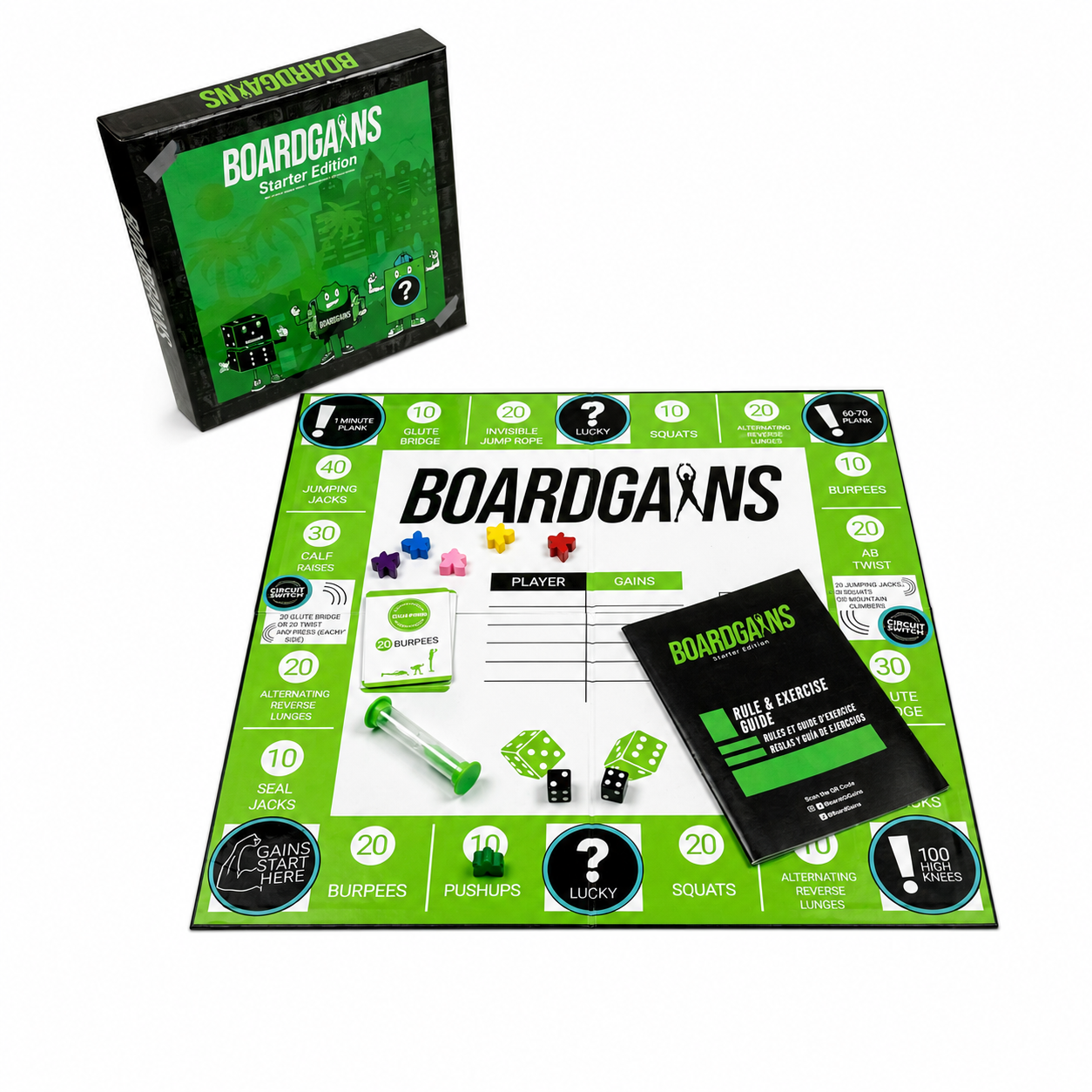
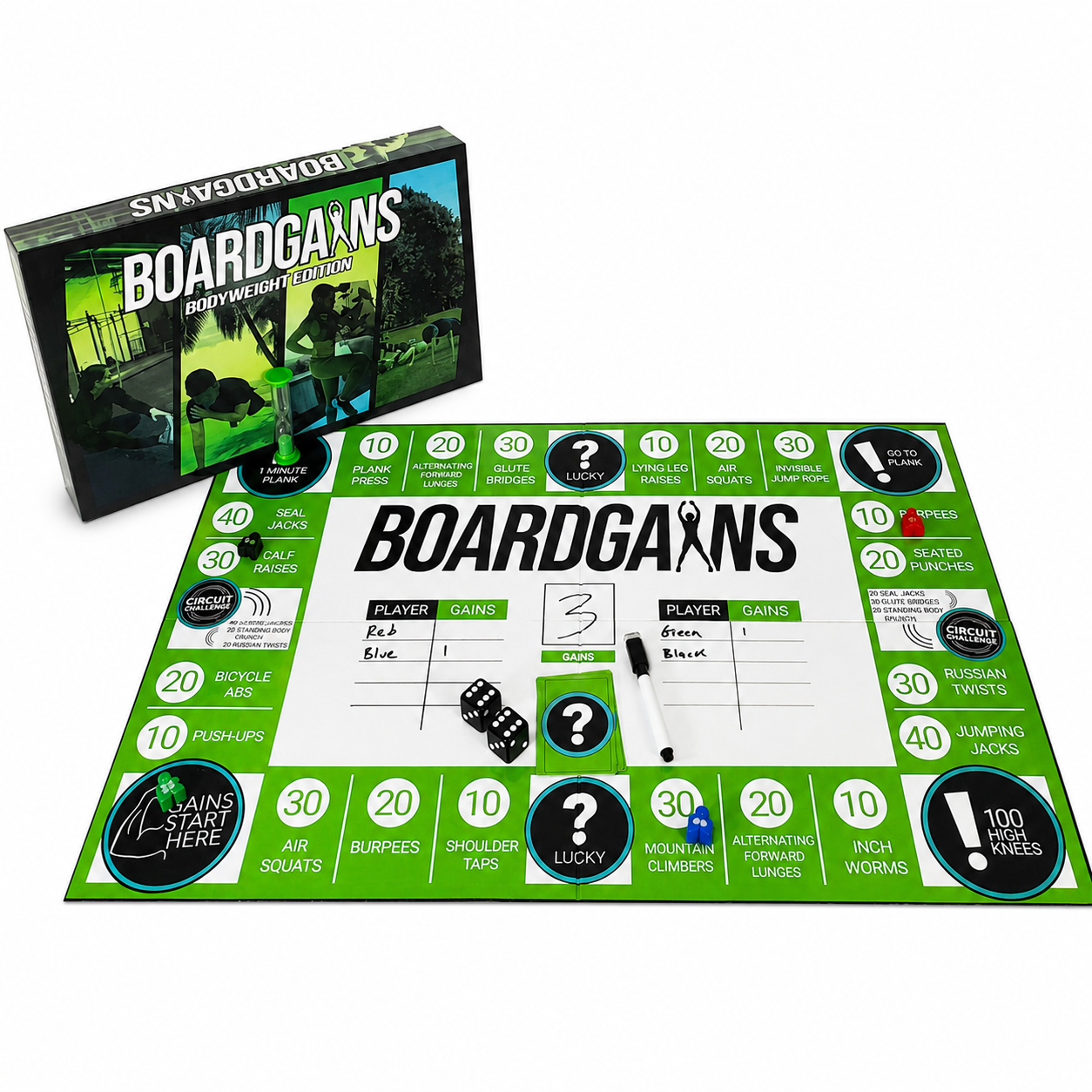
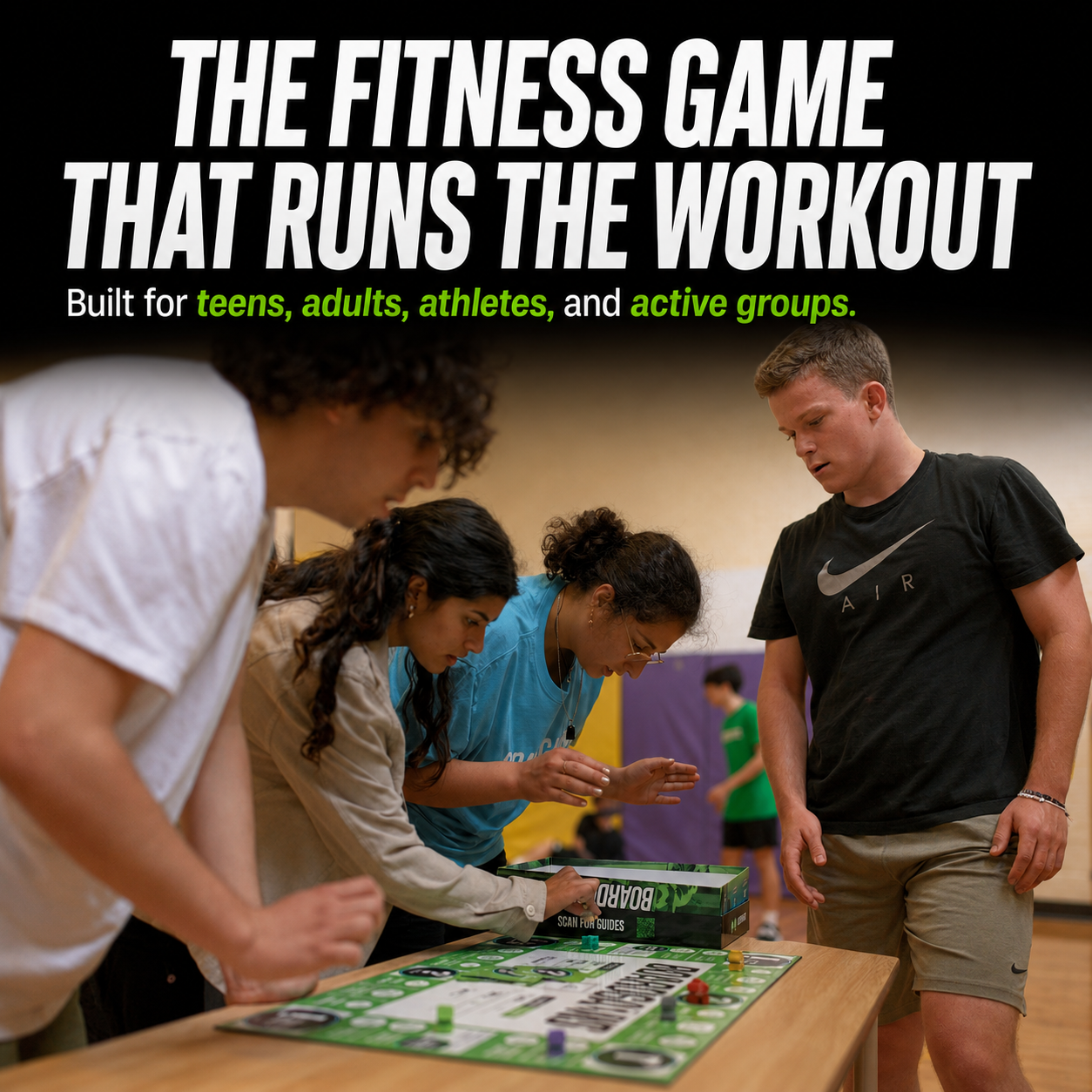
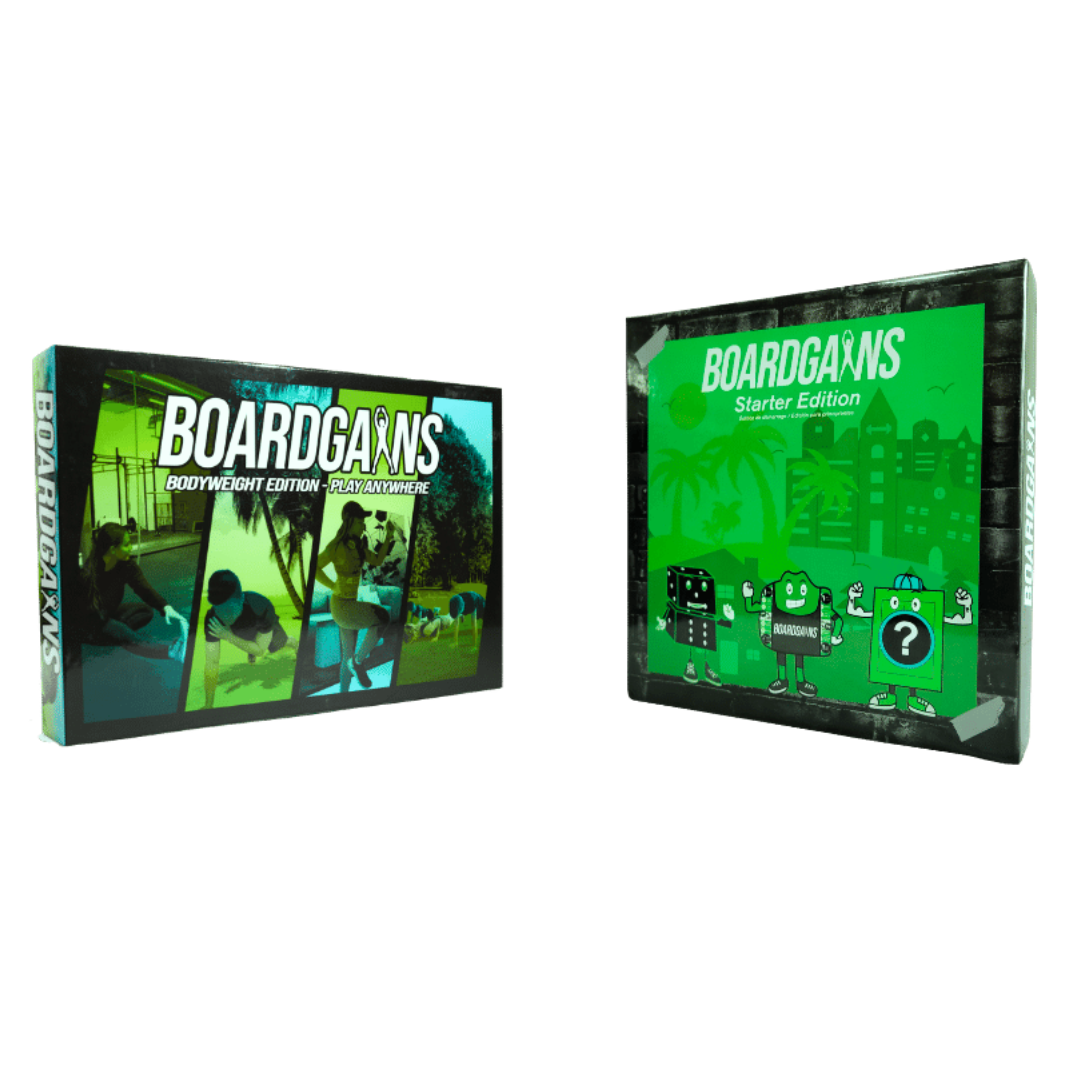
BoardGains turns a family workout into a race around a game board. The exercises use body weight, so you can play at a park, backyard, campsite, field, or covered outdoor space.
How to Play
- Place the board on a stable table or flat surface protected from wind and moisture.
- Choose a Gains Goal. One lap around the board equals one Gain.
- Give each player or team a game piece and workout area.
- Roll, move, complete the exercise you land on, and repeat.
- The first player or team to reach the Gains Goal wins.
Family setup: Pair younger children with an adult or older sibling. Let each person use the movement modification that fits them.
Quick options: Choose 3 Gains for about 10–15 minutes, 5 Gains for about 15–25 minutes, or 7 Gains for about 25–35 minutes.
5. Family Fitness Relay
A short relay brings teamwork and friendly competition to the backyard or park.
How to Do It
- Create a short lane using cones, shoes, chalk, or safe markers.
- Divide the family into teams or work together against the clock.
- The first person travels to the marker and returns.
- They complete five controlled repetitions of a movement.
- The next person begins after a clear signal.
Travel ideas: Walk, run, side shuffle, skip, or move around markers in a figure eight.
Movement ideas: Squats, step jacks, wall push-ups, seated punches, or marching knees.
Inclusive scoring: Award points for safe movement, teamwork, and cheering—not only speed.
6. Nature Yoga and Mobility
A quiet outdoor session can build balance, mobility, and body awareness. Choose a flat, dry, comfortable area.
Simple Flow
- Easy walking and arm swings
- Standing reach and side bend
- Supported single-leg balance
- Bodyweight squat or chair squat
- Cat-cow movement on a mat or standing against a bench
- Gentle lunge stretch or split-stance hold
- Slow breathing while noticing outdoor sounds
Make it playful: Let children name poses after animals, trees, weather, or objects they see nearby.
How to Adapt Outdoor Workouts for Every Season
| Season | Best Adjustments | Watch For |
|---|---|---|
| Spring | Use trails, parks, and short circuits | Rain, mud, allergies, changing temperatures |
| Summer | Exercise early, use shade, shorten intervals | Heat, sun exposure, dehydration, poor air quality |
| Fall | Try hikes, relays, and outdoor games | Wet leaves, shorter daylight, cooler starts |
| Winter | Use cleared surfaces, layers, and short sessions | Ice, wind chill, frostbite risk, limited visibility |
“Any season” does not mean every weather condition. Move the workout indoors when the temperature, surface, storm risk, air quality, or visibility makes outdoor activity unsafe.
Ready-to-Use 30-Minute Outdoor Family Workout
- 0–5 minutes: Easy family walk and movement warm-up
- 5–10 minutes: Adventure-walk challenges
- 10–22 minutes: BoardGains, playground circuit, or family relay
- 22–27 minutes: Team challenge or choice activity
- 27–30 minutes: Easy walking and slow breathing
How to Keep Family Workouts Fun
- Let a different person choose the activity each week.
- Use time goals instead of distance goals.
- Give every exercise an easier and harder option.
- Work together against a timer instead of always competing.
- Allow children to invent a challenge or movement name.
- Finish with a playground stop, picnic, warm drink, or family game.
- End before the youngest person is exhausted.
Frequently Asked Questions
What is the best outdoor workout for families?
The best activity is one that fits your family's ages, abilities, interests, weather, and available space. Adventure walks, playground circuits, relays, biking, mobility, and BoardGains are flexible options.
How long should a family workout last?
Start with 15–30 minutes. Younger children may enjoy shorter bursts of movement mixed with play and rest. You can gradually add time when the whole family is comfortable.
How can different ages exercise together?
Keep the same game but change the distance, speed, repetitions, work time, or movement. Adults can add a harder option while children or older family members use a shorter or lower-impact version.
What outdoor family workout needs no equipment?
An adventure walk, bodyweight circuit, nature mobility session, and simple relay using chalk or natural landmarks can all require little or no equipment.
Can families exercise outdoors in winter?
Yes, when the surface, temperature, wind, visibility, and weather are safe. Wear suitable layers, shorten the session, stay close to shelter, and move indoors when conditions are not appropriate.
How do I motivate children to join?
Give them choices, use games instead of fixed workouts, let them lead a challenge, and keep the first session short. Focus on time together rather than calories, body size, or perfect performance.
What should we bring?
Bring water, weather-appropriate clothing, suitable footwear, sun protection when needed, any required safety equipment, and a charged phone for longer outings.
What if the weather changes?
Have a nearby shelter and an indoor backup. Turn a park circuit into a living-room bodyweight game or play BoardGains indoors if conditions become unsafe.
Make Movement Part of Family Time
An outdoor family workout does not need to be perfect to be valuable. Choose a safe activity, give everyone a way to participate, and keep the mood light.
Some days may become a long hike. Other days may be a 10-minute game in the backyard. Both count as family movement—and both can help create memories around being active together.
Turn Your Family Workout Into a Game
BoardGains makes bodyweight fitness fun, social, and easy to play indoors or outdoors. Set your Gains Goal, roll the dice, complete the exercises, and race around the board together.
About the Author: Eric Mathura holds a B.Sc. in Kinesiology and has more than 10 years of experience as a personal trainer and group fitness instructor. He created BoardGains to make fitness more fun, social, and engaging for every group.
Updated August 2026.



Leave a comment
This site is protected by hCaptcha and the hCaptcha Privacy Policy and Terms of Service apply.