
Updated August 2026
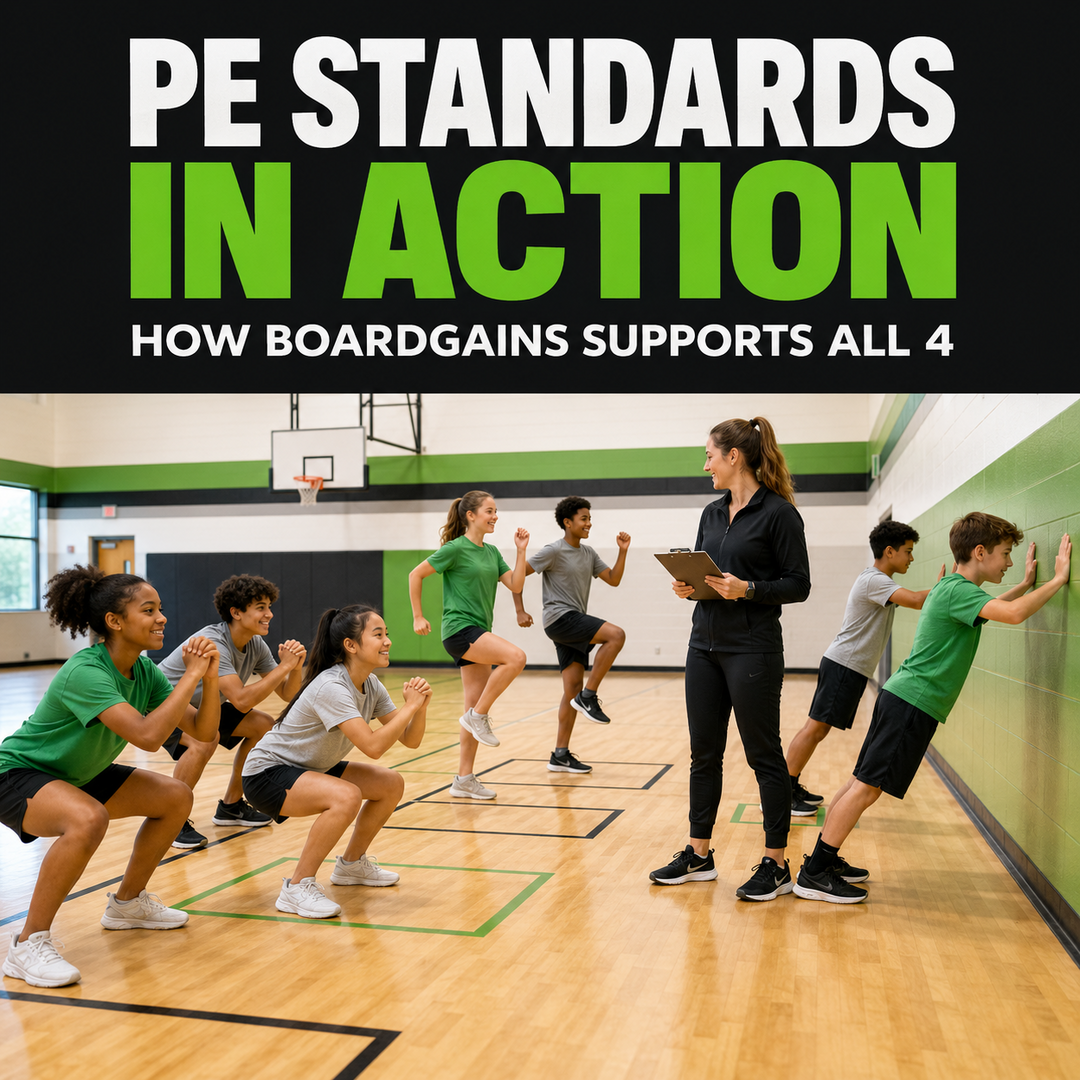
BoardGains can help physical education teachers turn fitness practice into an active, social, and easy-to-run lesson. But a game does not become standards-based simply because students are moving. True alignment comes from the learning objective, teacher instruction, student choices, and assessment built around the activity.
This guide explains practical ways BoardGains can support the four 2024 SHAPE America National Physical Education Standards. It also includes example objectives, assessment ideas, grade-span adjustments, and a ready-to-use lesson structure.
Important: BoardGains is an independent fitness game. It is not endorsed, certified, sponsored, or officially approved by SHAPE America. Standards alignment depends on how each teacher plans, teaches, and assesses the lesson. Always follow your state, district, and school curriculum requirements.
Quick answer: How can BoardGains support the SHAPE America PE standards?
BoardGains can provide practice with bodyweight movement skills, fitness concepts, communication, teamwork, goal setting, choice, and reflection. Teachers create stronger standards connections by choosing a specific grade-span indicator, teaching it directly, observing student performance, and ending with a short assessment or reflection.
Table of contents
- What changed in the 2024 PE standards?
- BoardGains standards-support overview
- Standard 1: Motor skills
- Standard 2: Movement and fitness knowledge
- Standard 3: Social skills through movement
- Standard 4: Personal skills and meaningful activity
- Ready-to-use standards-supporting lesson
- Simple assessment tools
- Grade-span adjustments
- Frequently asked questions
What changed in the 2024 National PE Standards?
SHAPE America released revised National Physical Education Standards in March 2024. The framework now contains four standards rather than the five found in the 2013 edition. The standards describe what students should know and be able to do within a highly effective physical education program.
The four areas focus on:
- Developing a range of motor skills
- Applying knowledge about movement and fitness
- Developing social skills through movement
- Building personal skills, understanding the benefits of movement, and choosing meaningful physical activity
Each standard includes learning indicators for PreK–2, grades 3–5, grades 6–8, and grades 9–12. Teachers should begin with the indicator they want students to learn, then select or adapt an activity that creates the right practice opportunity. Review the official 2024 National Physical Education Standards before placing a standards code in a lesson plan.
BoardGains is best viewed as an instructional activity—not a complete curriculum. It can support selected fitness, social, and personal-learning indicators, but it does not cover every outcome in the standards. For example, a bodyweight fitness game will not replace instruction in throwing, catching, swimming, dance, or other skill areas.
BoardGains standards-support overview
| Standards area | BoardGains opportunity | Teacher action | Evidence of learning |
|---|---|---|---|
| 1. Motor skills | Repeated practice of squats, lunges, push-ups, planks, jumping jacks, and other movements | Teach one or two form cues and provide modifications | Student demonstrates the selected cues with control |
| 2. Movement and fitness knowledge | Pacing, exercise selection, effort monitoring, recovery, and fitness concepts | Add questions, RPE checks, or strategy tasks | Student explains a choice and adjusts effort appropriately |
| 3. Social skills | Team roles, encouragement, shared equipment, rules, feedback, and problem-solving | Teach communication expectations and rotate roles | Student uses respectful language and contributes to the team |
| 4. Personal skills and engagement | Gains Goals, movement choice, challenge selection, personal reflection, and social connection | Let students choose levels and reflect on what felt meaningful | Student sets a goal, makes a suitable choice, and reflects |
Standard 1: Supporting motor-skill development
The first standard centres on developing a variety of motor skills. BoardGains creates repeated opportunities to practise bodyweight and fitness movements. Depending on the edition, students may encounter squats, lunges, push-ups, planks, glute bridges, high knees, jumping jacks, mountain climbers, and other exercises.
Repeated movement alone does not prove learning. Choose a limited number of skills and teach them before gameplay.
Example learning objective
Students will demonstrate a controlled bodyweight squat using the class’s two selected performance cues during gameplay.
How to teach it
- Demonstrate the standard squat and available modifications.
- Give two simple cues, such as keeping the feet stable and standing with control.
- Let students practise several repetitions without game pressure.
- During play, observe one team at a time and give brief feedback.
- Allow a chair sit-to-stand or reduced range when appropriate.
Assessment idea
Use a three-point checklist: not yet, developing, or demonstrated. Observe whether students begin in a stable position, move through an appropriate range, and return with control.
Important limitation: BoardGains mainly provides fitness and bodyweight movement practice. Teachers still need other units and activities to address the full variety of motor skills and grade-span indicators.
Standard 2: Supporting movement and fitness knowledge
The second standard focuses on applying knowledge related to movement and fitness concepts. BoardGains can become a stronger learning tool when students do more than complete the movement shown. Ask them to monitor effort, select an appropriate level, explain a strategy, or identify the fitness component being trained.
Example learning objective
Students will use a simple rating of perceived exertion scale to monitor effort and select an appropriate exercise option during a BoardGains round.
Ways to build knowledge into gameplay
- RPE check: After each Gain, students rate their effort from 1–10 and decide whether to maintain, lower, or increase intensity.
- Fitness category: Students identify whether an exercise mainly challenges cardiovascular endurance, muscular strength, muscular endurance, mobility, or skill-related fitness.
- Form explanation: Before a team performs a movement, one student shares a key safety or technique cue.
- Pacing strategy: Teams discuss how they will divide work or manage effort during a longer game.
- Warm-up connection: Students explain why the warm-up movements prepare them for the game.
- Recovery reflection: Students describe how breathing, water, rest, and lower-intensity movement affect readiness.
Assessment idea
Use an exit ticket with two questions: “What exercise option did you choose, and why?” and “How did you adjust your effort during the game?” This gives evidence of decision-making, not only participation.
Standard 3: Supporting social skills through movement
Team play naturally creates opportunities for communication, leadership, respectful behaviour, problem-solving, and constructive feedback. Those opportunities become learning only when expectations are taught and observed.
Example learning objective
Students will use respectful communication to choose team roles, encourage participation, and solve one gameplay problem.
Team roles to rotate
- Roller: rolls the dice and moves the team’s piece
- Movement leader: reads or demonstrates the selected exercise option
- Form coach: reminds teammates of the class cue
- Encourager: uses positive, specific support
- Gain tracker: records each completed lap
Rotate roles after every Gain so leadership is shared. Avoid allowing the most athletic or outspoken student to make every decision.
Communication prompts
- “Which option helps everyone contribute?”
- “How can we divide the work fairly?”
- “What feedback would be useful right now?”
- “How can we solve this without blaming anyone?”
Assessment idea
Observe one social behaviour per lesson. For example: listens to teammates, shares equipment, follows rules, encourages others, or responds respectfully to feedback. Record a quick note instead of trying to assess every social skill at once.
Standard 4: Supporting personal skills and meaningful participation
The fourth standard connects movement to personal benefits, choice, goal setting, self-expression, social interaction, challenge, and reflection. BoardGains can support this area because the Gains Goal gives the class a visible objective while exercise modifications allow individual choice.
Example learning objective
Students will select an appropriately challenging movement option, work toward a personal or team goal, and explain one reason the activity was meaningful to them.
Ways to build personal choice into the game
- Offer a supported, standard, and advanced version for each exercise.
- Let students choose a personal focus such as form, effort, teamwork, or confidence.
- Use three Gains for a short goal, five for a main activity, or seven for a longer challenge.
- Allow students to switch exercise levels at any point.
- End with a reflection about enjoyment, challenge, social connection, or personal progress.
A student should not receive fewer points for selecting a lower-impact or supported version. The movement choice should match the learning goal, the student’s needs, and safe participation.
Assessment idea
Ask students to complete this sentence: “I chose ___ because ___, and next time I will ___.” The response can show choice, self-awareness, and goal setting.
Ready-to-use 45-minute BoardGains standards-supporting lesson
This example can be adapted for grades 6–8. Choose the exact grade-span indicators required by your curriculum before teaching.
- 0–4 minutes: Learning target. Explain that students will practise one movement cue, use respectful team communication, and monitor effort.
- 4–10 minutes: Dynamic warm-up. March, step-touch, perform shoulder circles, practise hip hinges, and complete shallow squats.
- 10–16 minutes: Skill instruction. Teach squat and push-up options. Let students practise and give one partner feedback statement.
- 16–20 minutes: Game setup. Form teams, assign workout spaces, review roles, set a three- or five-Gain goal, and complete one practice turn.
- 20–36 minutes: BoardGains gameplay. Everyone plays at the same time. Pause once for an RPE check and role rotation.
- 36–40 minutes: Team challenge. Each team selects one movement to demonstrate with the class cue and explains its chosen modification.
- 40–45 minutes: Cool-down and exit ticket. Lower the pace, breathe comfortably, and complete the personal-choice reflection.
What the teacher assesses
- One selected movement cue
- One social behaviour
- One knowledge or personal-choice response
Trying to assess all four standards in one game can produce weak evidence. It is better to use one primary learning target and one supporting target per lesson.
Simple assessment tools for BoardGains lessons
1. Movement checklist
Create a class list with two performance cues. Mark each student as not yet observed, developing, or demonstrated. Observe one team for 30–60 seconds before moving to the next.
2. Teamwork observation
Choose one behaviour such as sharing roles, using encouragement, following rules, or giving constructive feedback. Record short evidence rather than a general participation grade.
3. RPE check
At the halfway point, students show an effort number with their fingers or record it on a small card. Ask them to choose whether to maintain, increase, or reduce intensity.
4. Exit ticket
Use one question connected to the lesson target:
- What movement cue helped you most?
- How did your team solve a problem?
- Why did you choose your exercise level?
- What will you change next round?
5. Student self-assessment
Students rate themselves from 1–4 on form, safe effort, communication, or goal progress and provide one example. Make clear that a high score is not based on being the fastest.
How to adjust BoardGains by grade span
| Grade span | Teaching focus | Game adjustment | Assessment example |
|---|---|---|---|
| PreK–2 | Simple locomotor and non-locomotor skills, space, encouragement, and short goals | Teacher-led mini-board, one movement at a time, no race | Can the student follow the cue and share space safely? |
| Grades 3–5 | Movement cues, fitness vocabulary, roles, fair choices, and goal setting | Starter Edition, small teams, short Gains Goal | Can the student explain one cue or exercise choice? |
| Grades 6–8 | Fitness technique, RPE, strategies, feedback, and group problem-solving | Starter or Pro, rotating roles, three to five Gains | Can the student adjust effort and contribute positively? |
| Grades 9–12 | Training principles, self-selected challenge, leadership, personal goals, and lifetime activity | Pro Edition, student-designed modifications or game modes | Can the student justify a plan and reflect on personal meaning? |
These are planning examples, not official learning indicators. Use the SHAPE America resources for teachers and administrators and your local curriculum to choose the correct expectations.
Frequently asked questions
Is BoardGains officially endorsed by SHAPE America?
No. BoardGains is an independent product and should not be described as endorsed, certified, sponsored, or officially approved by SHAPE America.
Does BoardGains automatically meet all four PE standards?
No activity automatically meets a standard. BoardGains can create useful learning opportunities, but the teacher must select an appropriate indicator, teach the skill or concept, and collect evidence of learning.
Can one BoardGains lesson address all four standards?
A lesson may create connections to all four areas, but assessing every standard at once is usually not practical. Choose one primary learning target and one supporting target.
Which standard is the strongest match for BoardGains?
The best match depends on the lesson design. A technique lesson may focus on motor skills. An RPE or training lesson may focus on fitness knowledge. Team roles can support social skills, while movement choice and reflection can support personal skills.
Can BoardGains replace a complete PE curriculum?
No. BoardGains can be a warm-up, fitness unit activity, station, team challenge, or full lesson format, but students still need a broad curriculum with many movement environments and skill areas.
Can BoardGains be used in elementary PE?
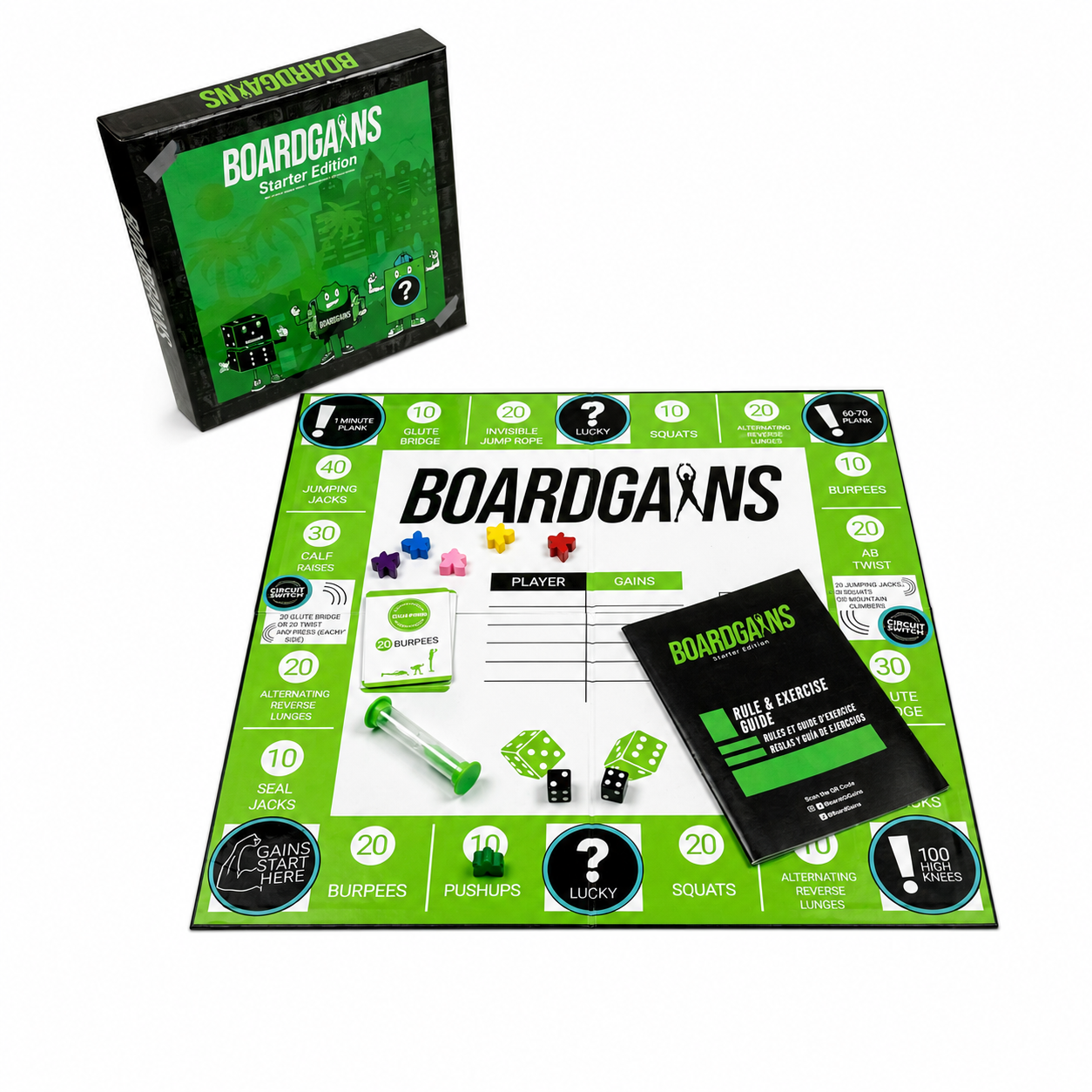
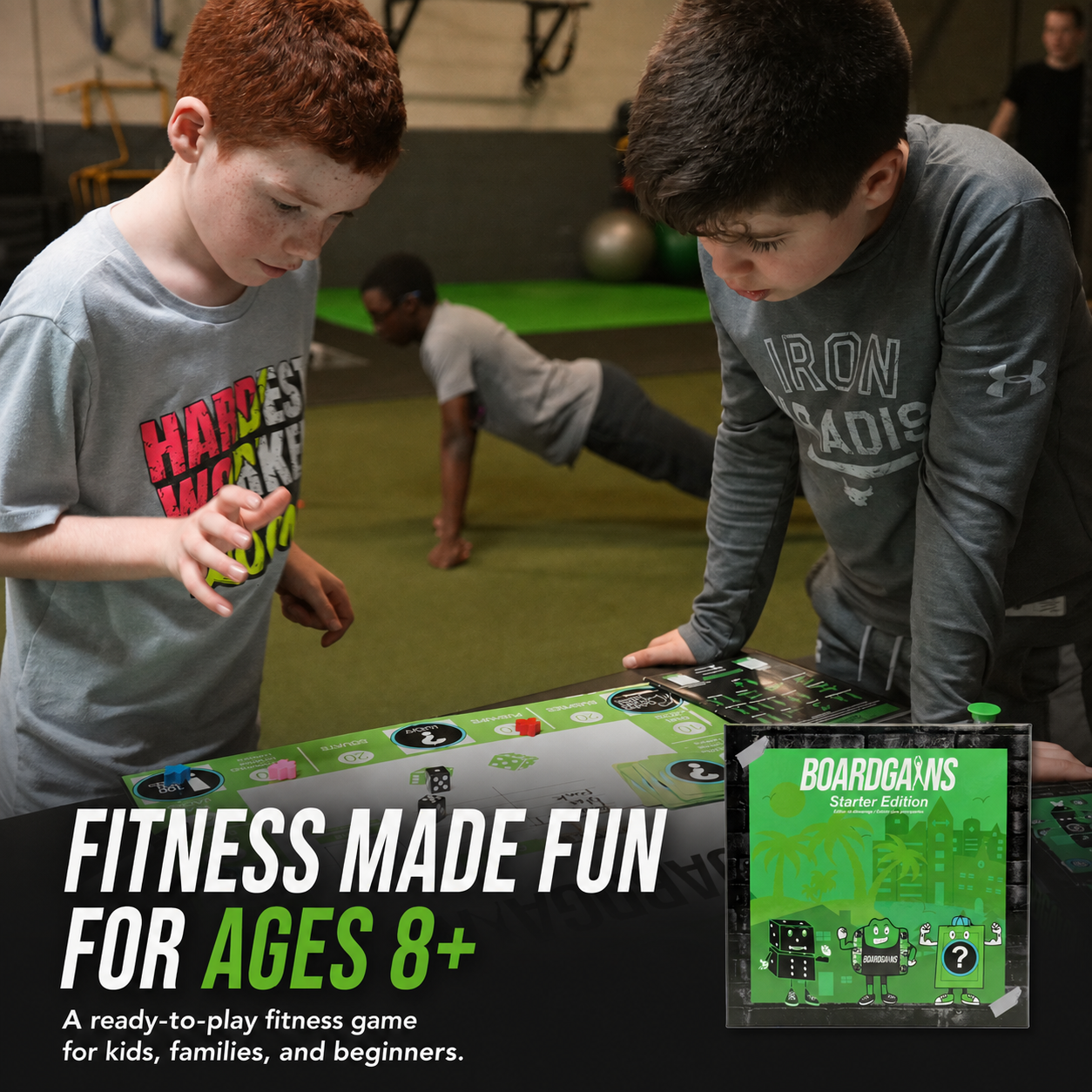
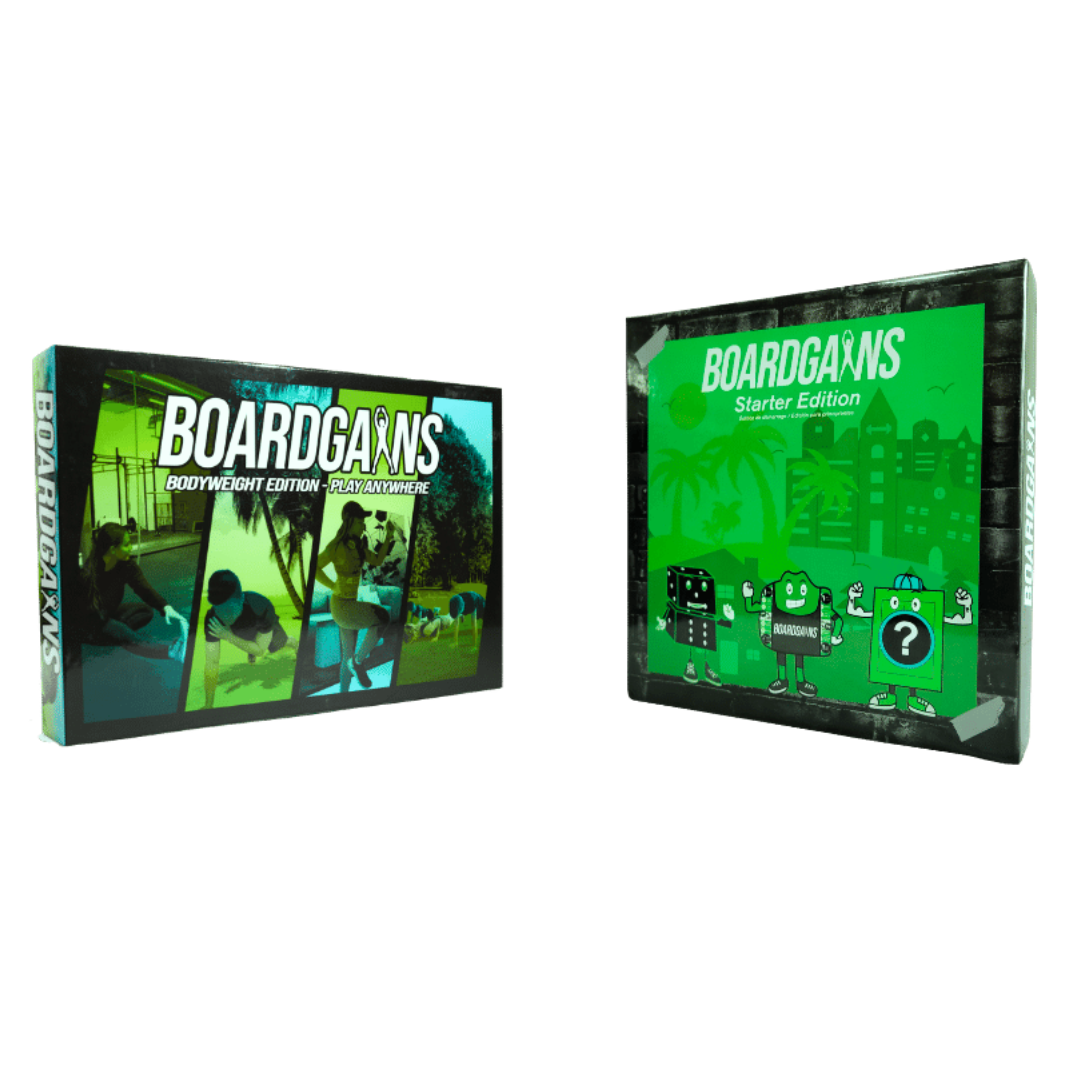
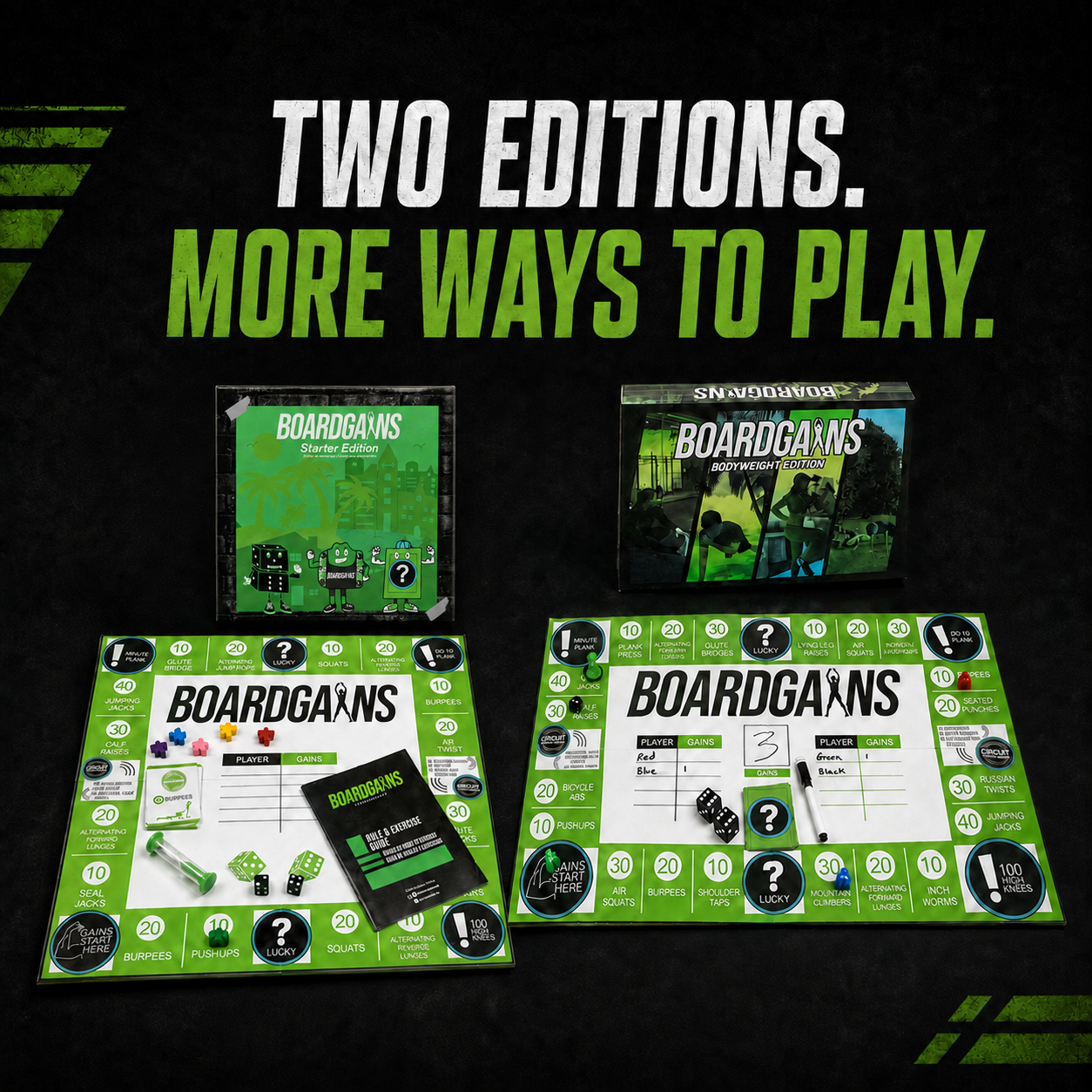
Yes, with age-appropriate exercises, short rounds, teacher guidance, and simple goals. The Starter Edition has 13 exercises and a smaller board designed for kids and beginners.
Can BoardGains be used with middle and high school students?
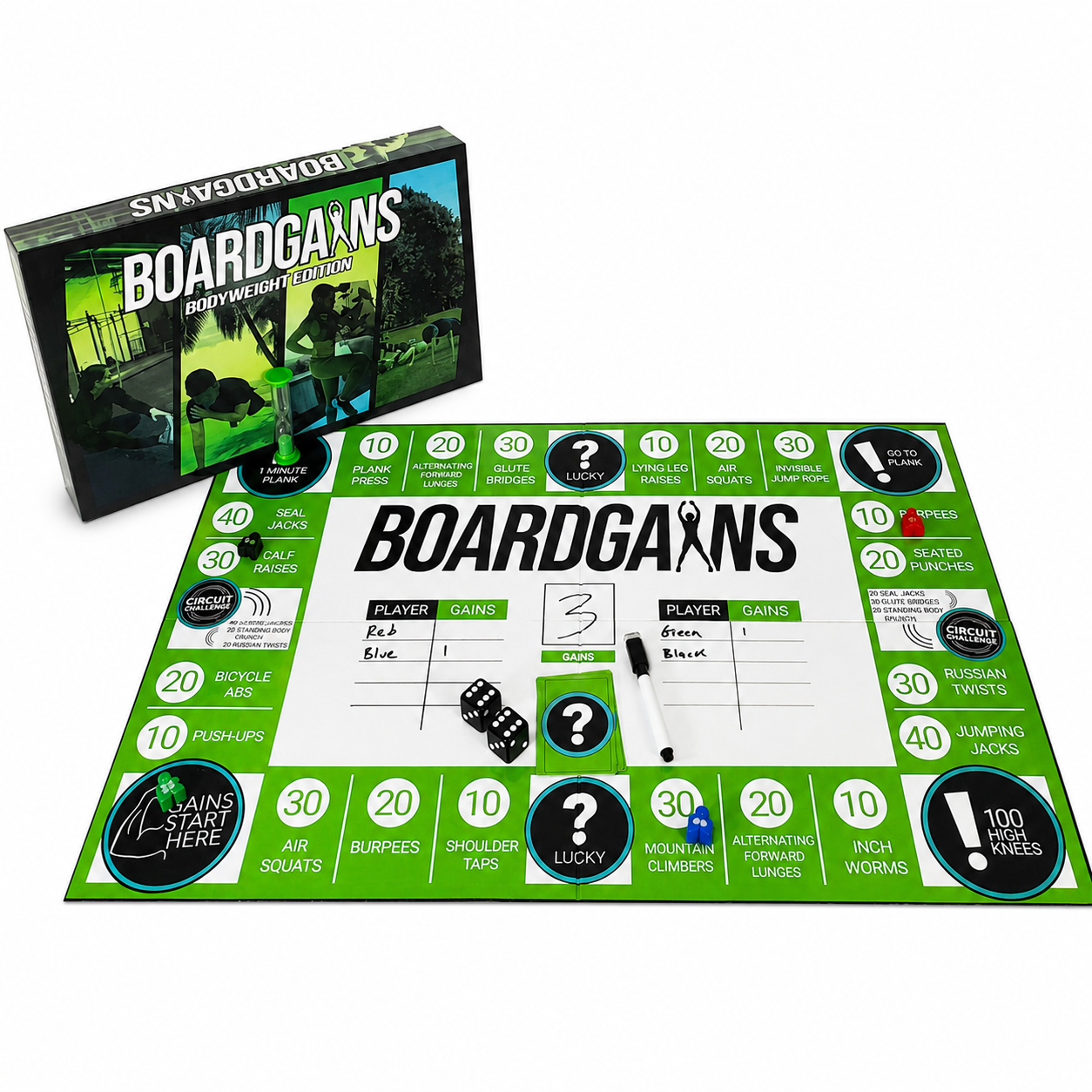
Yes. The Pro Edition has 20 bodyweight exercises and can support lessons about fitness technique, effort, training principles, teamwork, leadership, and personal goals.
Where can teachers find the official standards?
Use the official SHAPE America National Physical Education Standards page. Teachers should also consult state, district, and school curriculum documents.
Turn standards into visible learning
BoardGains can help make PE active, social, and easier to lead. The strongest standards connection happens when the teacher starts with a clear objective, teaches the target skill, offers meaningful choices, and collects simple evidence of learning.
Ready to explore the game? Visit BoardGains for physical education or review the complete how-to-play guide. The board runs the game while the teacher coaches the learning.
About the author: Eric Mathura is the founder and creator of BoardGains. He holds a BSc in Kinesiology and has more than 10 years of experience as a personal trainer and group fitness instructor. He created BoardGains to make fitness more fun, social, and inclusive.

Leave a comment
This site is protected by hCaptcha and the hCaptcha Privacy Policy and Terms of Service apply.