
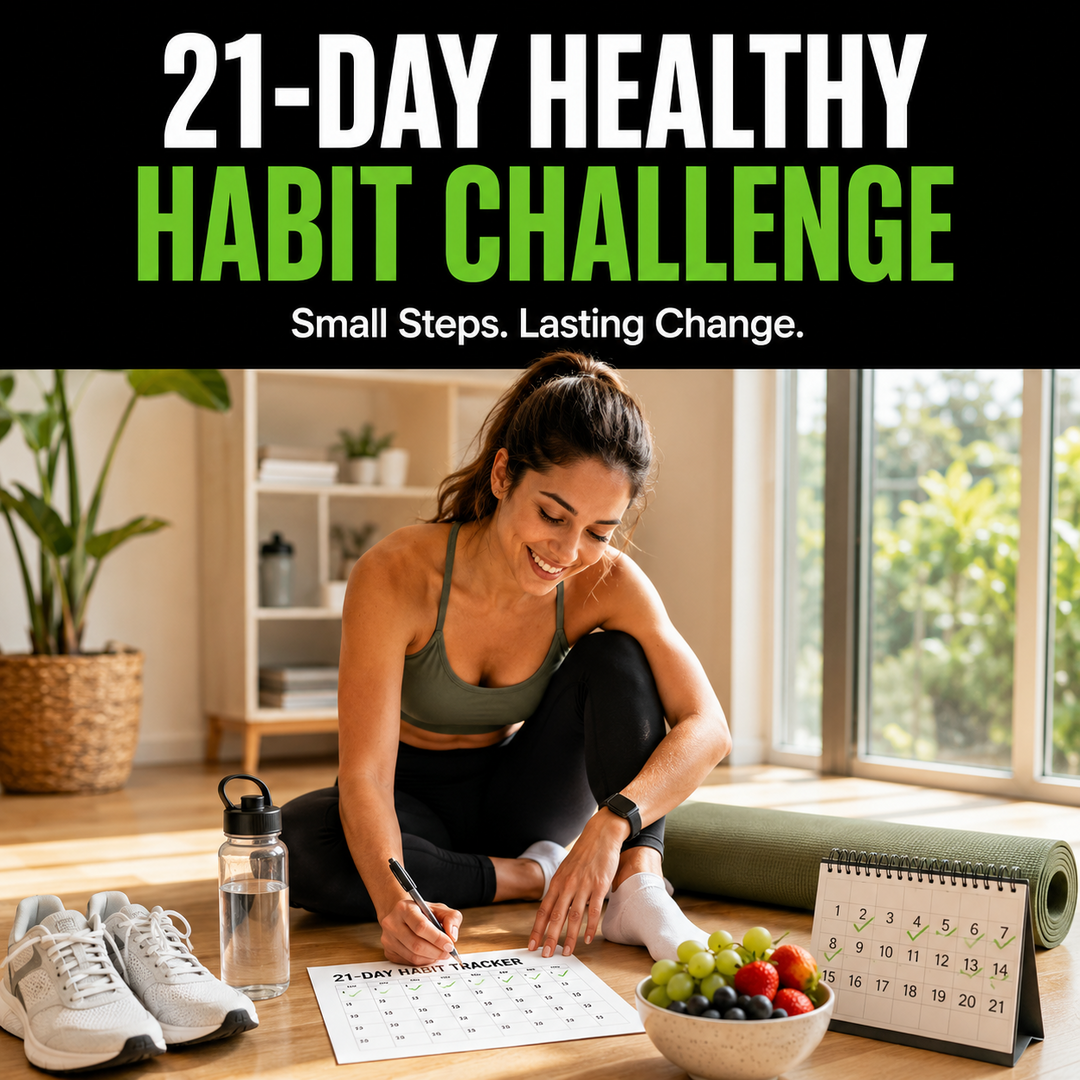
Want to build a healthier routine without changing your entire life overnight? A 21-day challenge can give you a clear starting point, a simple plan, and enough time to practise showing up.
But here is the honest part: 21 days is not a magic deadline. Research shows that habits often take much longer to feel automatic, and the timeline can vary widely based on the person and the behaviour. Think of these three weeks as the launch phase of your habit—not the finish line.
This guide will help you choose one realistic healthy habit, connect it to a reliable cue, reduce common barriers, track your progress, recover from missed days, and create a plan that continues after Day 21.
Quick answer: Use 21 days to build consistency and learn what works. Keep repeating the behaviour in the same situation after the challenge so it has time to become easier and more automatic.
Table of Contents
- Does It Really Take 21 Days to Form a Habit?
- Choose One Healthy Habit
- Create Your Habit Formula
- Your 21-Day Healthy Habit Plan
- Healthy Habit Ideas
- How to Handle Missed Days
- What to Do After Day 21
- Frequently Asked Questions
Does It Really Take 21 Days to Form a Habit?
No single number works for everyone.
The popular 21-day idea is often linked to observations made by plastic surgeon Maxwell Maltz in the 1960s. It later became a general promise that any habit could be created in three weeks. Modern habit research does not support that guarantee.
A widely cited habit-formation study found that participants took a median of about 66 days to reach a high level of automaticity, but individual timelines varied greatly. A newer systematic review also found wide differences based on the behaviour, the person, and how consistently the action was repeated.
| Common Belief | More Realistic View |
|---|---|
| A habit is permanent after 21 days. | Twenty-one days can build momentum, but automatic habits often take longer. |
| Missing one day ruins the habit. | One missed day is a problem to solve, not proof that you failed. |
| Motivation must stay high. | A clear cue and an easy action can keep the habit moving when motivation drops. |
| Bigger goals create faster change. | Smaller behaviours are usually easier to repeat consistently. |
The goal of this challenge is not to become a completely new person in 21 days. It is to create a routine you can keep practising.
How Healthy Habits Form
A habit becomes stronger when a behaviour is repeated in a stable situation. Over time, the situation begins to prompt the action with less planning and effort.
A practical habit pattern has four parts:
- Cue: The time, place, event, or action that reminds you to begin.
- Behaviour: The small action you want to repeat.
- Immediate result: A useful or enjoyable benefit that makes the action worth repeating.
- Repetition: Performing the behaviour again when the same cue appears.
For example:
After I finish my morning coffee, I will walk for five minutes outside. Then I will mark it on my tracker.
The coffee is the cue. The walk is the behaviour. The fresh air, sense of progress, and check mark provide an immediate positive result.
Choose One Healthy Habit
Trying to improve your workouts, food, sleep, water intake, stress, and productivity at the same time can make each goal harder to repeat. Start with one behaviour that matters to you.
Make It Specific
“Get healthy” is a direction, not a habit. Choose an action you can clearly complete.
- Instead of “exercise more,” try “walk for 10 minutes after lunch.”
- Instead of “eat better,” try “add one fruit or vegetable to lunch.”
- Instead of “drink more water,” try “fill my water bottle after breakfast.”
- Instead of “sleep earlier,” try “put my phone on charge outside the bedroom at 10 p.m.”
Make It Small Enough for a Busy Day
Your starting habit should feel almost too easy. You can always do more when you have the time and energy, but the minimum version keeps the routine alive.
| Goal | Minimum Habit | Optional Extra |
|---|---|---|
| Move more | Walk for 5 minutes | Continue for 15–30 minutes |
| Build strength | Complete one controlled set | Complete the full workout |
| Hydrate | Fill a water bottle | Follow a personal hydration plan |
| Eat more produce | Add one fruit or vegetable | Prepare several servings |
| Relax before bed | Take five slow breaths | Complete a 10-minute wind-down routine |
Connect It to Your Reason
Write one sentence explaining why the habit matters. Keep the reason personal and practical.
Example: “I want a short movement break after work because it helps me shift out of work mode and have more energy for my evening.”
Create Your Habit Formula
Use this simple sentence:
After [reliable cue], I will [small behaviour] in/at [location].
Examples:
- After I brush my teeth, I will stretch for two minutes beside my bed.
- After I put my lunch on the table, I will add one fruit or vegetable.
- After I close my laptop, I will put on my shoes and walk around the block.
- After the students leave, I will take five slow breaths at my desk.
- After dinner on Tuesday and Thursday, my family will play one short fitness game.
Choose a cue that already happens most days. A stable event such as finishing breakfast is often easier to use than a vague cue such as “when I have time.”
Design Your Environment
Make the healthy action easier to notice and complete. Add useful reminders and remove unnecessary steps.
For a Movement Habit
- Place your shoes or workout clothes where you will see them.
- Choose the workout before the day begins.
- Keep your mat, resistance band, or fitness game ready to use.
- Schedule the activity with a partner or group.
For a Nutrition Habit
- Wash and prepare simple food options in advance.
- Place the foods you want to choose where they are easy to see.
- Keep a backup option for busy days.
For an Evening Habit
- Set a reminder before the routine should begin.
- Move distracting devices away from the space.
- Prepare anything you need earlier in the day.
A good environment does not remove every challenge, but it lowers the effort needed to make the choice you planned.
Your 21-Day Healthy Habit Plan
Days 1–7: Make It Easy
The first week is about learning how the habit fits your real life.
- Complete the minimum version of the habit.
- Use the same cue and location whenever possible.
- Track whether you started—not whether the performance was perfect.
- Notice what makes the action easier or harder.
- Adjust the time or location if the cue is unreliable.
End-of-week question: What is the biggest barrier I can remove before Week 2?
Days 8–14: Make It Consistent
Keep the cue and minimum action stable. Add more only if the basic habit already feels manageable.
- Prepare the environment before the cue arrives.
- Use a calendar, checklist, or habit tracker.
- Ask a friend, coworker, or family member to check in.
- Create a backup version for busy days.
- Pay attention to an immediate benefit, such as energy, enjoyment, or calm.
End-of-week question: What part of this routine is becoming easier?
Days 15–21: Make It Resilient
The final week prepares your habit for real-life interruptions.
- Use the backup version on one intentionally busy day.
- Plan how the habit will work on weekends or travel days.
- Write down how you will restart after a missed day.
- Choose the schedule you will continue after Day 21.
- Celebrate completing the launch phase without treating it as the end.
Day 21 question: What should stay the same, and what needs to change for the next three weeks?
Healthy Habit Ideas for Your Challenge
Movement and Fitness
- Take a 5–10 minute walk after lunch.
- Complete one set of squats, wall push-ups, or seated punches.
- Stretch for two minutes after brushing your teeth.
- Schedule two or three short group workouts each week.
- Use a fun fitness game instead of repeating the same workout.
Food and Hydration
- Add one fruit or vegetable to a regular meal.
- Fill a reusable water bottle after breakfast.
- Prepare one simple snack before leaving home.
- Sit down without a screen for the first five minutes of a meal.
Sleep and Recovery
- Begin a short wind-down routine at the same time.
- Move your phone away from the bed.
- Prepare tomorrow’s clothes or bag before sleeping.
- Take five slow breaths when you get into bed.
Stress and Focus
- Write your top task after opening your planner.
- Take a one-minute breathing break after closing your laptop.
- Step outside for a short break at a regular time.
- Write one sentence of reflection before bed.
Choose an action that fits your health needs and current ability. If you have a medical condition, injury, eating concern, or other health limitation, ask an appropriate qualified professional for personal guidance.
Use Fun and Social Support
A healthy behaviour is easier to repeat when it is enjoyable and connected to other people. If your goal is to move more, you do not have to rely only on traditional workouts.
Try:
- Walking with a friend
- Joining a group class
- Creating a family movement night
- Using a friendly weekly challenge
- Turning your workout into a game
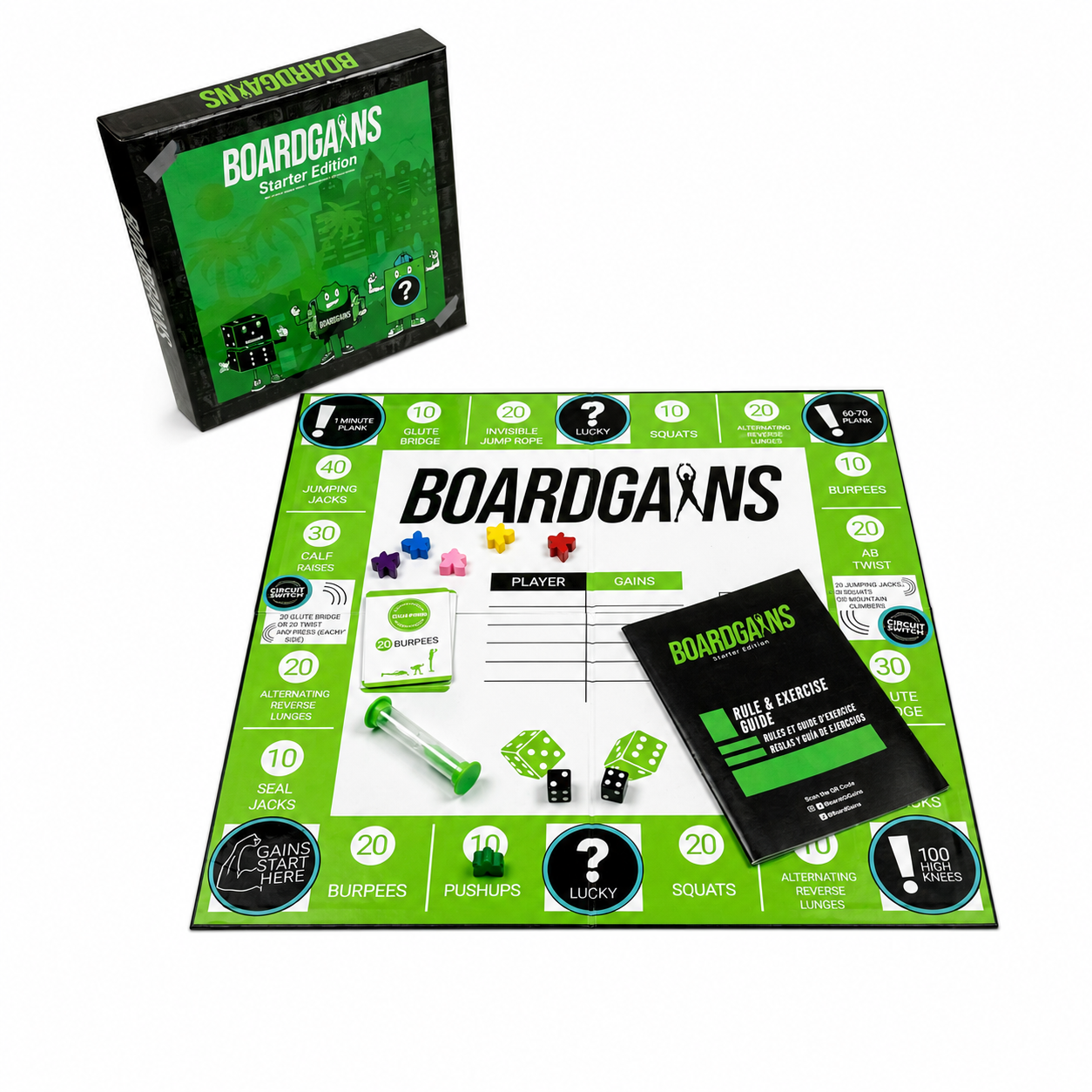
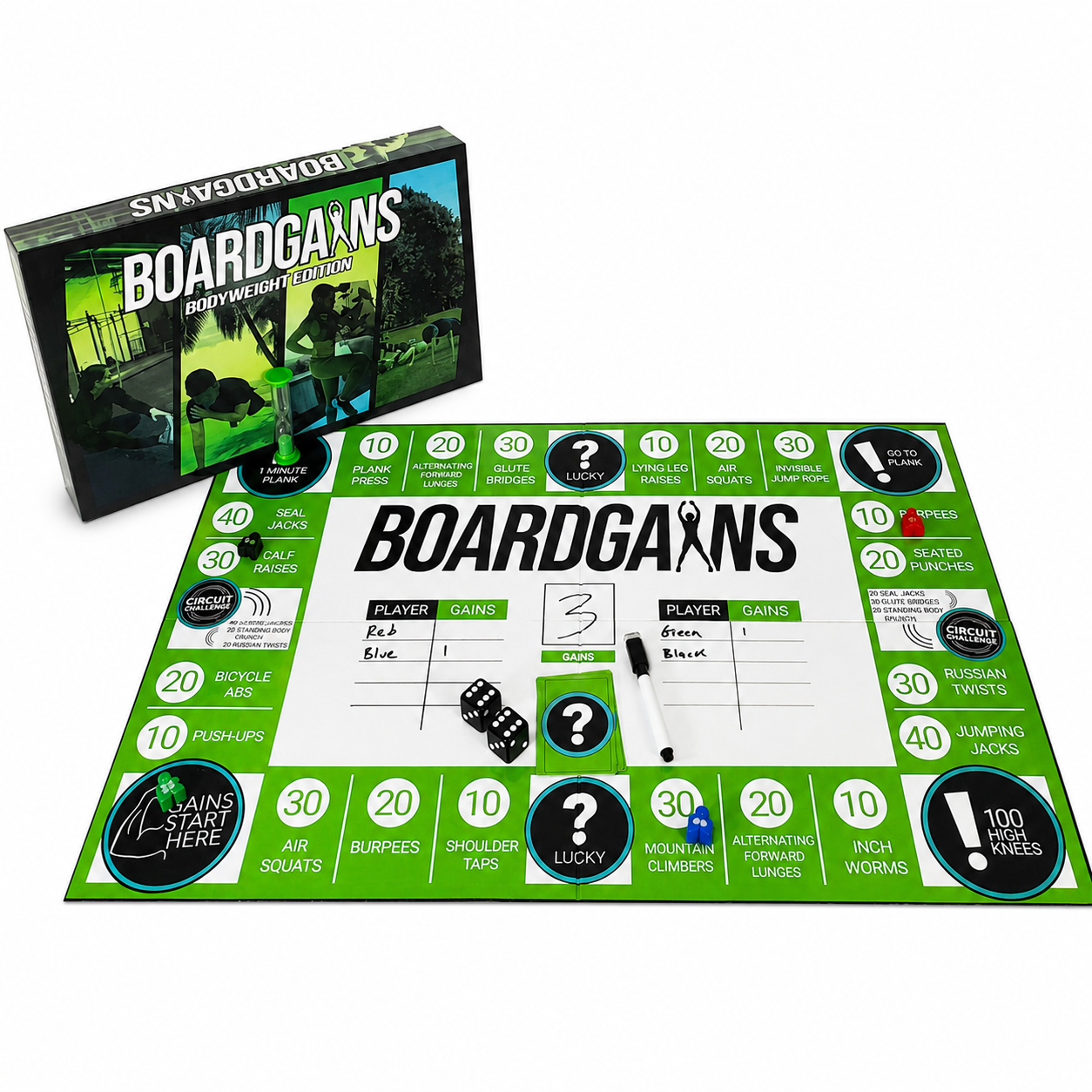
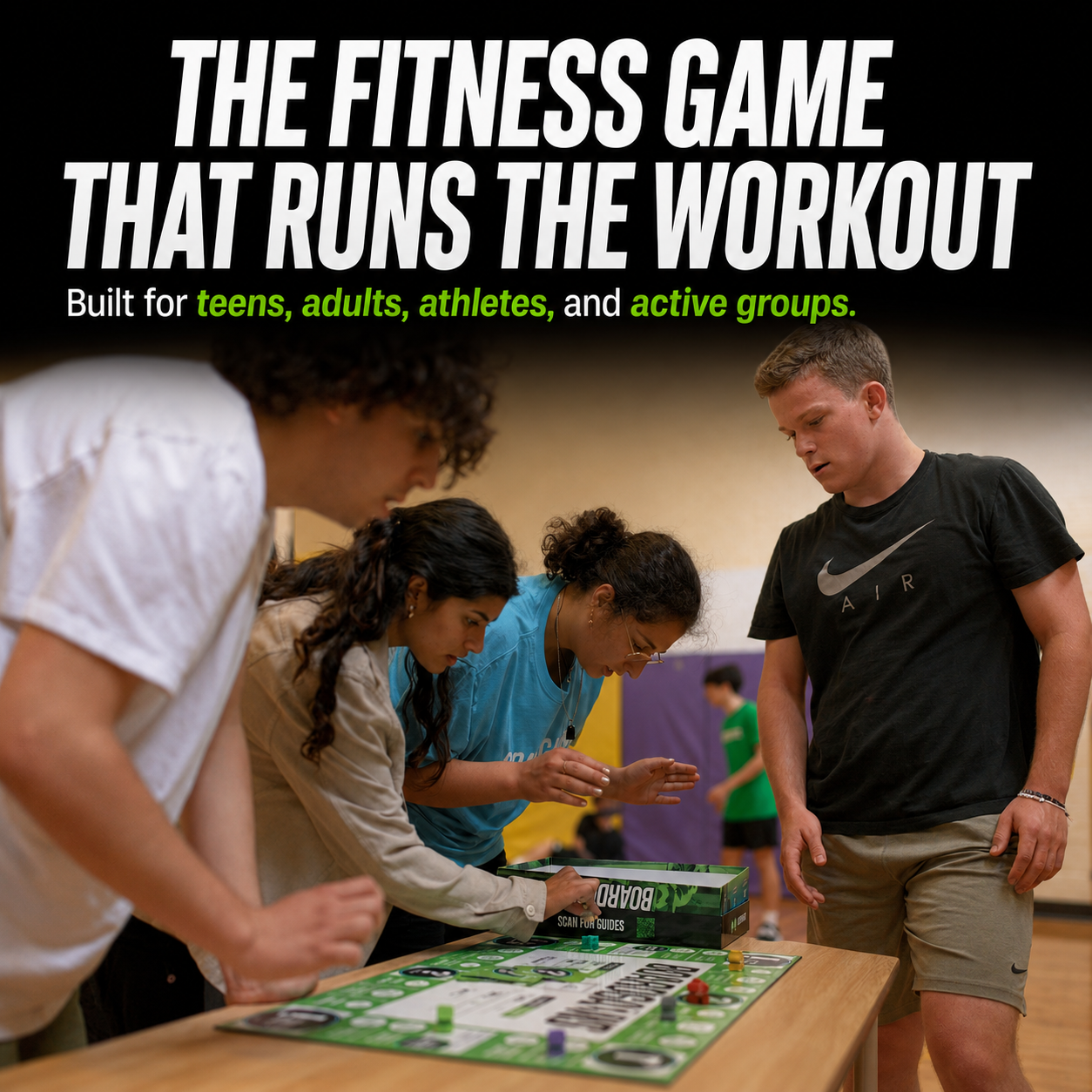
BoardGains can support a movement habit by giving the session a clear cue and structure. Keep the box visible, choose two or three regular game days, set a short Gains Goal, and invite a partner, family member, class, or team to play.
Learn How to Play BoardGains →
How to Handle Missed Days
Missing a day does not erase the repetitions you already completed. It gives you information about the plan.
Use This Four-Step Reset
- Remove the guilt: Treat the miss as feedback rather than a personal failure.
- Name the barrier: Were you short on time, away from the cue, tired, unprepared, or trying to do too much?
- Shrink the next action: Return using the minimum version of the habit.
- Adjust the plan: Move the cue, prepare earlier, or create a better backup option.
Example: If a 30-minute workout did not happen, complete a five-minute walk or one short circuit at your next planned cue. The goal is to restart the pattern quickly.
How to Track Progress Without Becoming Obsessed With a Streak
A tracker should help you learn—not make you feel punished.
Track three simple items:
- Did I perform the habit? Yes, minimum version, or not today.
- Did the cue work? Was it clear and reliable?
- What got in the way? Record one short note when needed.
You can also track a result that matters, such as energy, mood, confidence, sleep routine, or enjoyment. Avoid expecting major physical changes from only three weeks. The main win is building a repeatable process.
What to Do After Day 21
Do not abandon the habit just because the challenge ended. Review the experiment and plan the next phase.
Keep It the Same If:
- The cue is reliable.
- The action fits your schedule.
- You can repeat it without major stress.
- You notice a useful or enjoyable benefit.
Adjust It If:
- You regularly miss the same day or time.
- The minimum action is still too large.
- Your environment creates avoidable barriers.
- The habit no longer supports your goal.
Grow It Slowly If:
- The minimum habit feels stable.
- You want a bigger challenge.
- The increase can still fit your normal week.
Continue for another 21 days before adding several new habits. Lasting change comes from repeated practice, not a perfect three-week streak.
Healthy Habit Frequently Asked Questions
Can you really form a habit in 21 days?
Possibly, but it is not guaranteed. Some simple behaviours may begin feeling easier within three weeks, while many habits take several months to become automatic. Use 21 days to establish a strong starting routine.
How long does it usually take to build a habit?
There is no universal timeline. Research has reported median estimates around two months, but the range is wide. Complexity, repetition, timing, context, and individual differences all matter.
Should I work on more than one habit at once?
Start with one when possible. Once the first habit fits your routine, you can build on it or add another small action.
What if I miss a day?
Restart at the next useful opportunity. Identify what interrupted the routine and use a smaller backup version if needed. One missed day does not make the entire challenge a failure.
What is the easiest healthy habit to start?
The easiest habit is one that is small, meaningful, and connected to something you already do. A five-minute walk after lunch or filling a water bottle after breakfast may be easier to repeat than a complete lifestyle change.
Do habit trackers work?
A simple tracker can provide reminders, feedback, and a visible record of consistency. It works best when you also examine the cue and barriers instead of focusing only on an unbroken streak.
How do I make an exercise habit more enjoyable?
Choose activities you like, train with other people, use shorter sessions, vary the workout, listen to music, or turn fitness into a game. Enjoyment can make repetition easier.
Research Behind This Guide
- Time to Form a Habit: A Systematic Review and Meta-Analysis
- Making Health Habitual: The Psychology of Habit Formation
- Effects of Habit-Formation Interventions on Physical Activity Habit Strength
Make Movement the Habit You Look Forward To
BoardGains turns bodyweight exercise into a social fitness game for classes, gyms, teams, and families.
Roll. Move. Sweat. Repeat.
About the Author
Eric Mathura is a CSEP-Certified Personal Trainer with a B.Sc. in Kinesiology and more than 10 years of experience leading personal training, bootcamp, and group fitness sessions. He created BoardGains to make fitness more active, social, and fun for schools, gyms, teams, and families.
Updated August 2026.




Leave a comment
This site is protected by hCaptcha and the hCaptcha Privacy Policy and Terms of Service apply.