
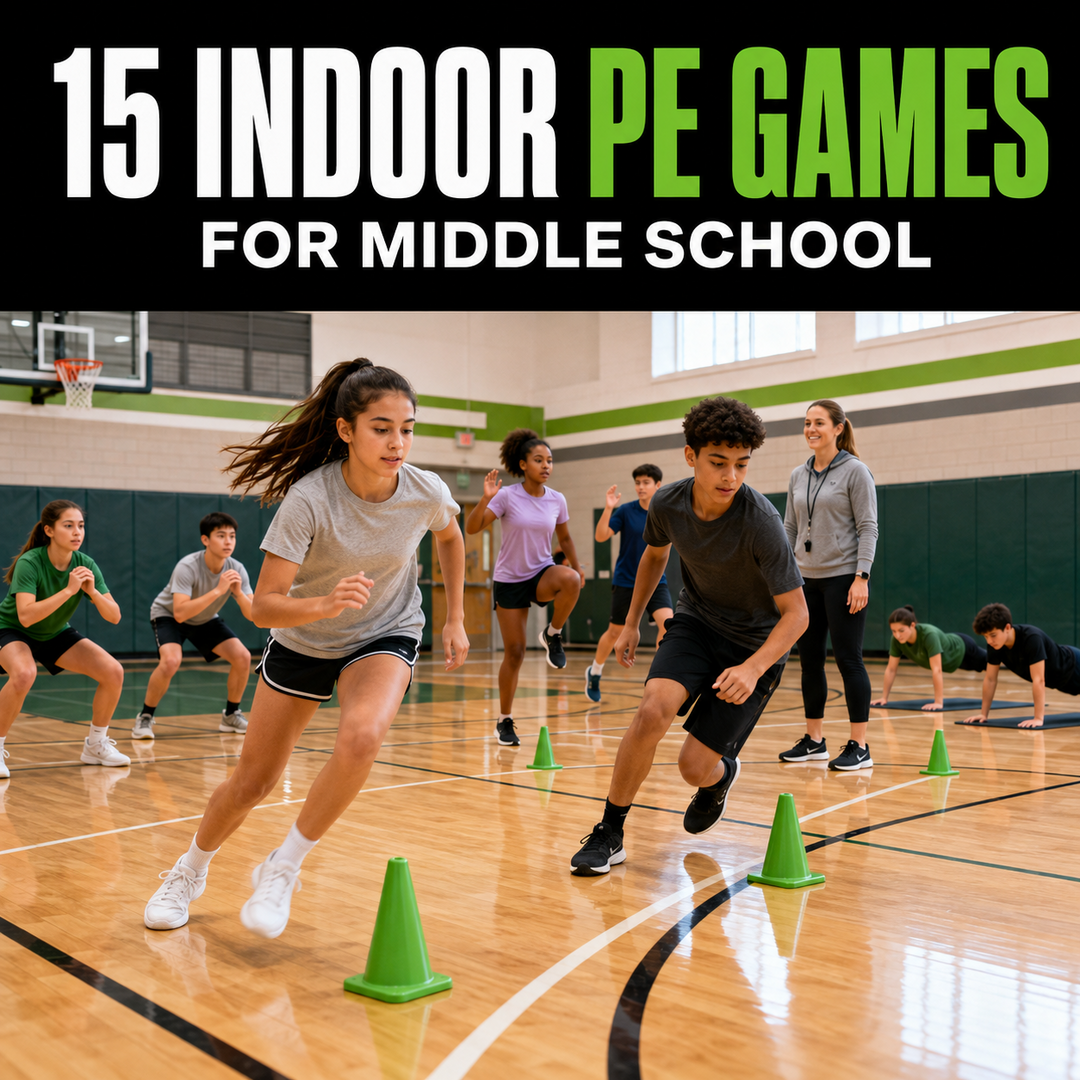
Indoor PE does not have to mean a quiet backup lesson. With the right games, a gym, multipurpose room, or open classroom can become an active space for teamwork, fitness, and friendly competition.
Middle school students usually respond best to activities that give them choice, a clear challenge, and a chance to work with friends. The 15 indoor PE games below are designed for grades 6–8 and include setup instructions, equipment, safety tips, and modifications for different abilities.
Quick answer: For a full indoor PE lesson, try BoardGains, a team circuit, or a movement scavenger hunt. For a warm-up, use Four Corners or Reaction Cones. For teamwork, try Capture the Cones, Fitness Bingo, or a partner challenge.
Table of Contents
- What Makes an Indoor PE Game Work?
- Quick Game-Selection Guide
- 1. BoardGains Team Challenge
- 2. Fitness Four Corners
- 3. Team AMRAP
- 4. Fitness Dice
- 5. Reaction Cone Challenge
- 6. Capture the Cones
- 7. Movement Scavenger Hunt
- 8. Indoor Fitness Relay
- 9. Fitness Bingo
- 10. Rock-Paper-Scissors Fitness
- 11. Team Circuit Challenge
- 12. Volleyball Skills Challenge
- 13. Target Toss Fitness
- 14. Mystery Movement Cards
- 15. Beat-the-Clock Class Challenge
- 20-, 30-, and 60-Minute Class Plans
- Frequently Asked Questions
What Makes an Indoor PE Game Work for Middle School?
Middle school students are ready for more independence and strategy, but they still benefit from simple rules and quick demonstrations. A strong activity should feel like a game—not a worksheet with exercises added to it.
Look for games that include:
- A clear goal students can explain in one sentence
- Small teams and short waiting times
- Choice between movements or roles
- Friendly competition without long elimination
- Simple ways to adjust impact and difficulty
- Enough structure to control traffic indoors
Indoor PE Safety Checklist
- Check the floor for bags, water, loose equipment, and slippery areas.
- Mark clear boundaries and travel lanes.
- Use foam balls or other soft equipment.
- Review safe stopping, turning, and passing before adding speed.
- Avoid blindfolded activities, dark rooms, and games that reward hard contact.
- Offer walking, seated, and lower-impact options before the game begins.
Quick Indoor PE Game-Selection Guide
| Need | Best Games | Equipment |
|---|---|---|
| Full PE workout | BoardGains, Team AMRAP, Team Circuit | Low to moderate |
| Small space | Fitness Dice, Bingo, Mystery Cards | Very low |
| Teamwork | Capture the Cones, Scavenger Hunt, Class Challenge | Low |
| Quick warm-up | Four Corners, Reaction Cones, Rock-Paper-Scissors | None to low |
| Skill practice | Volleyball Challenge, Target Toss, Relay | Moderate |
1. BoardGains Team Challenge
Best for: A complete fitness lesson | Equipment: BoardGains | Time: 15–35 minutes
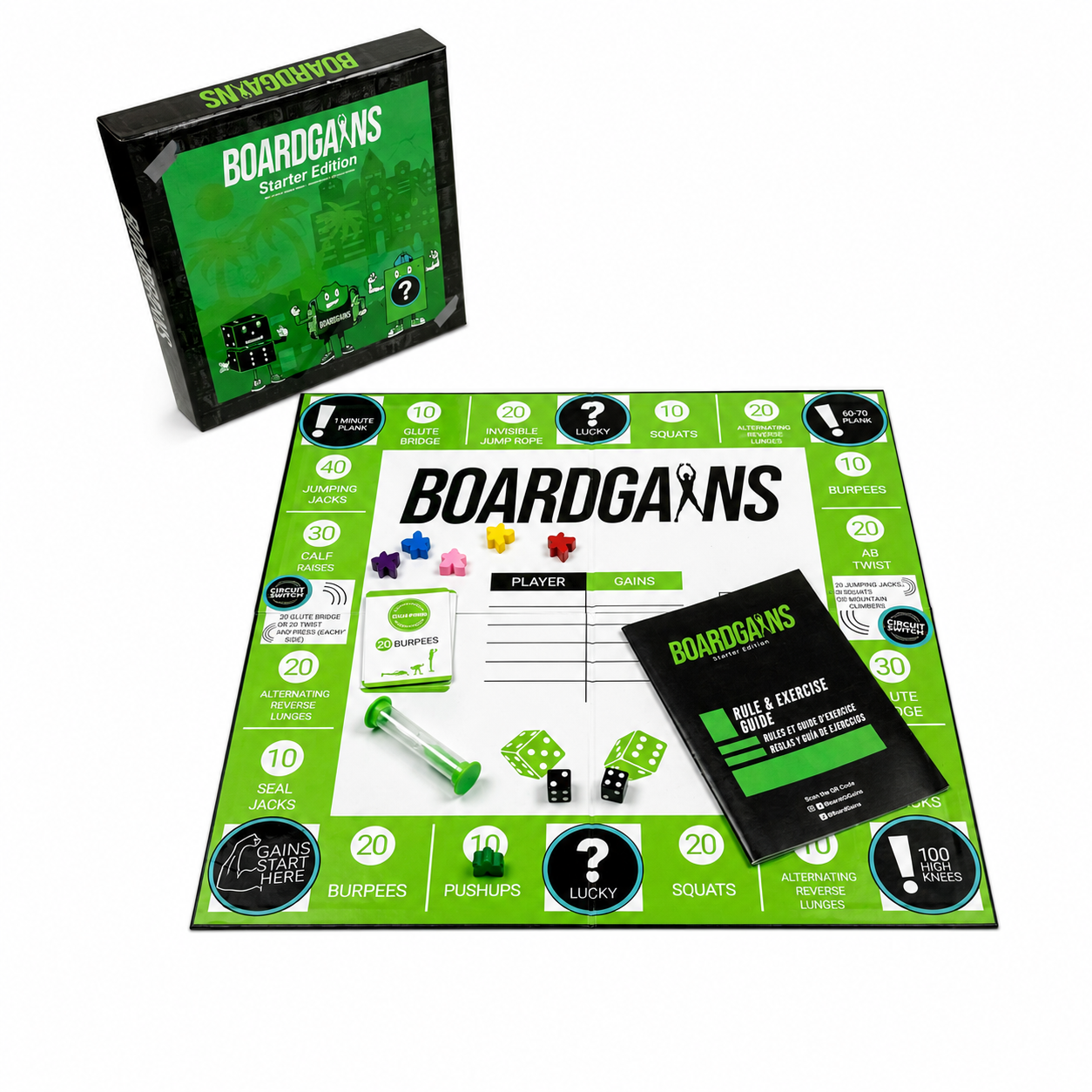
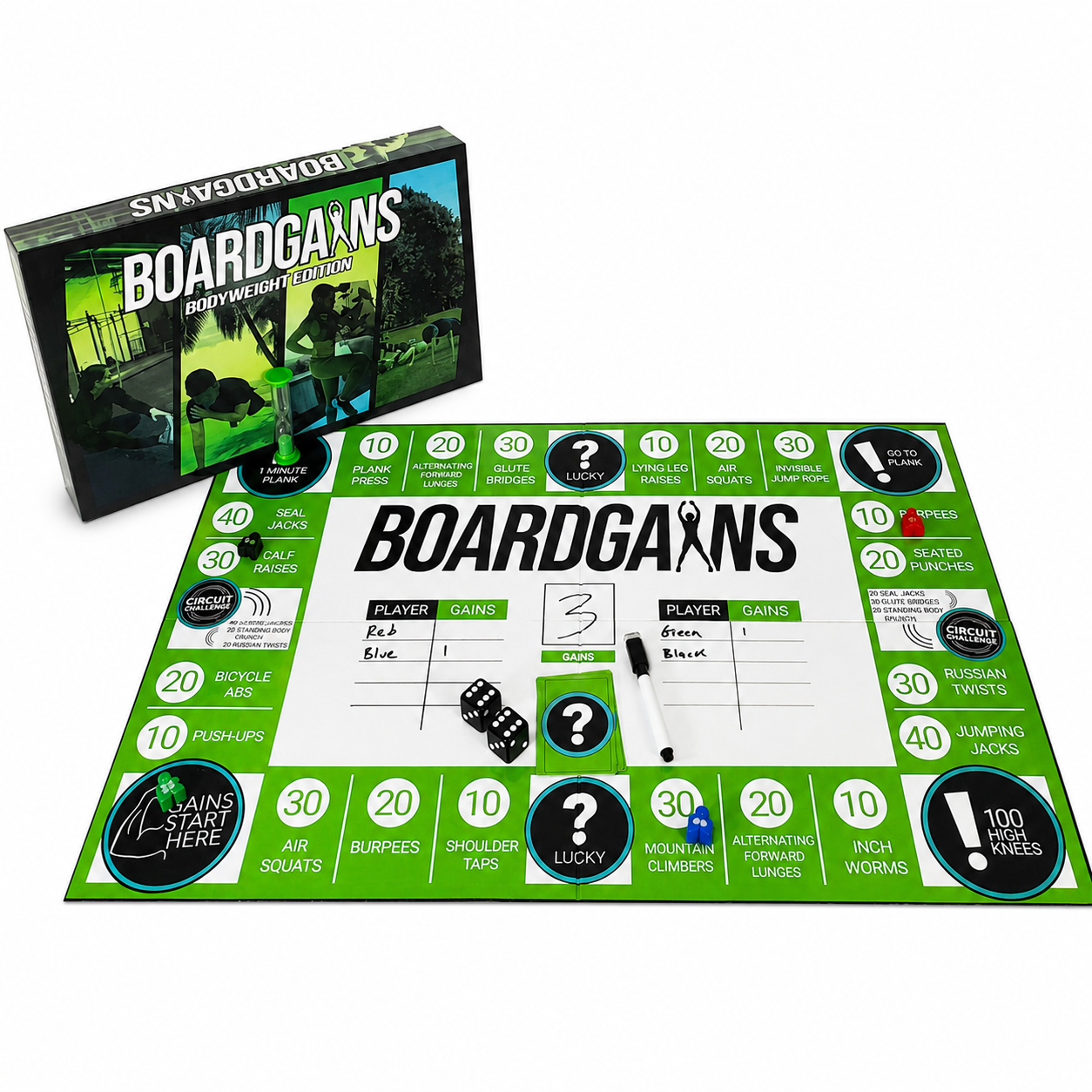
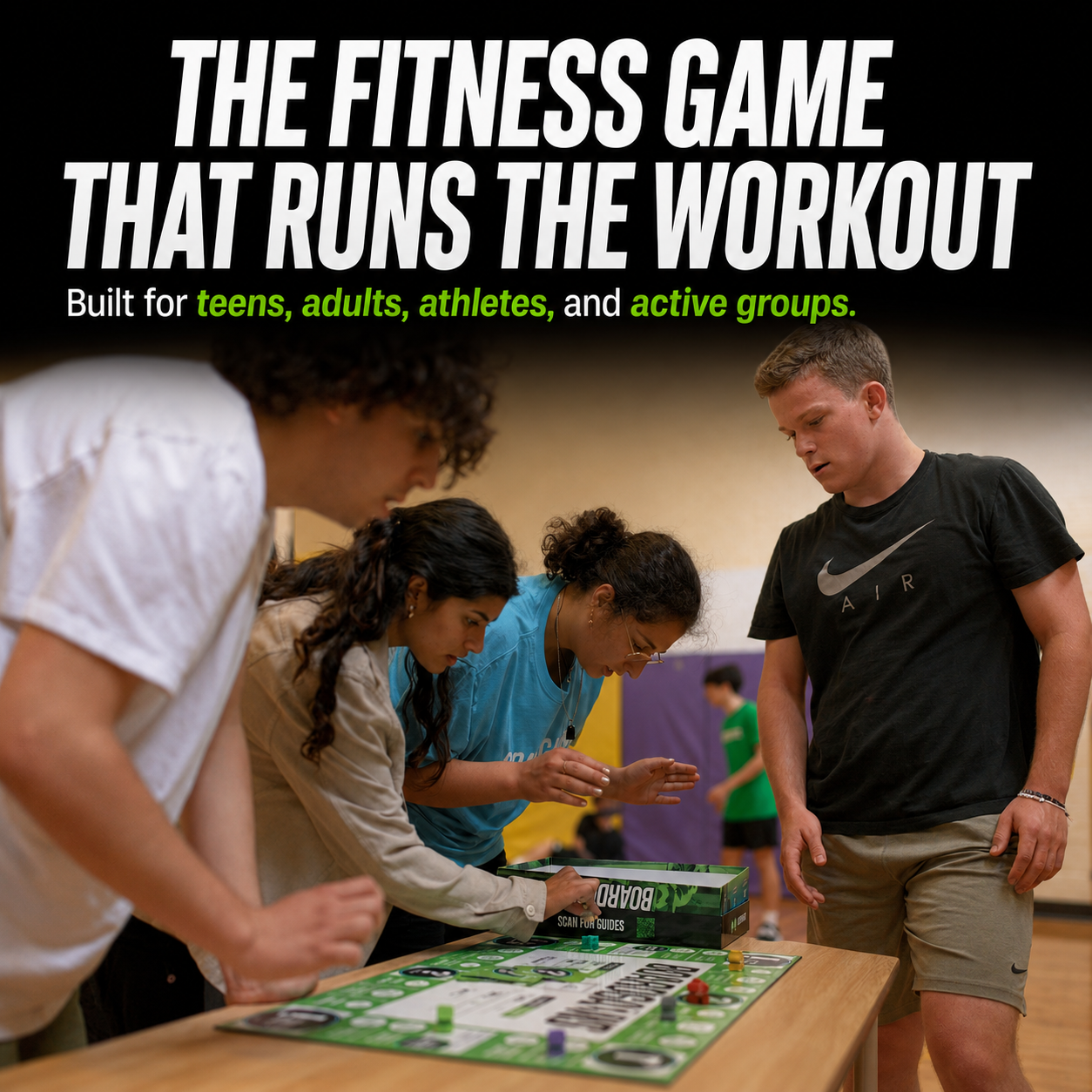
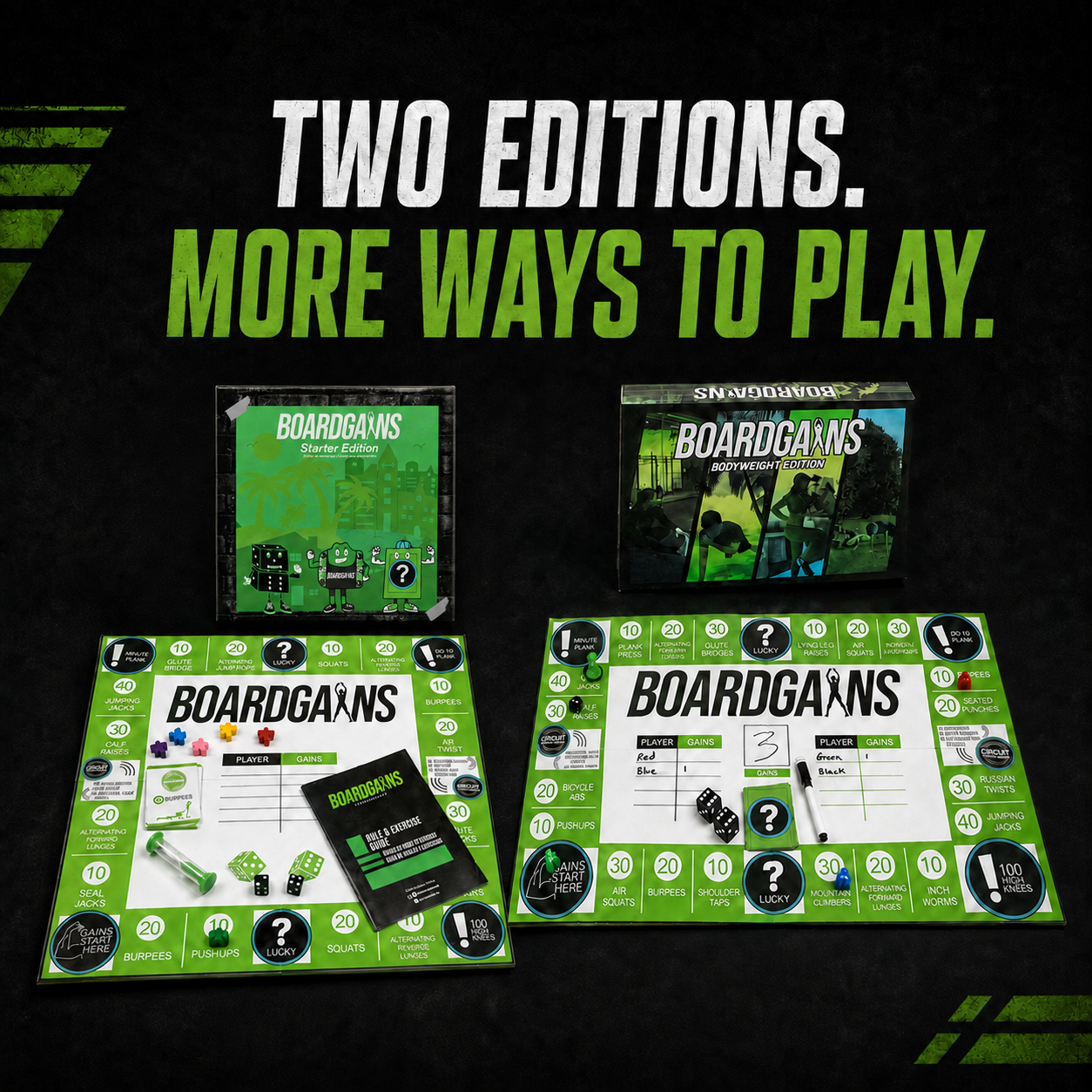
BoardGains turns bodyweight exercise into a race around a board. Every space gives students a movement, while the Gains Goal creates a clear finish line.
How to Play
- Choose a Gains Goal. One lap around the board equals one Gain.
- Divide the class into players or teams and assign workout spaces.
- Review new exercises and modifications.
- Start everyone together. Teams roll, move, exercise, and repeat.
- The first player or team to reach the Gains Goal wins.
Teacher tip: Give each team a roller, mover, exercise leader, and counter. Rotate jobs every turn so all students contribute.
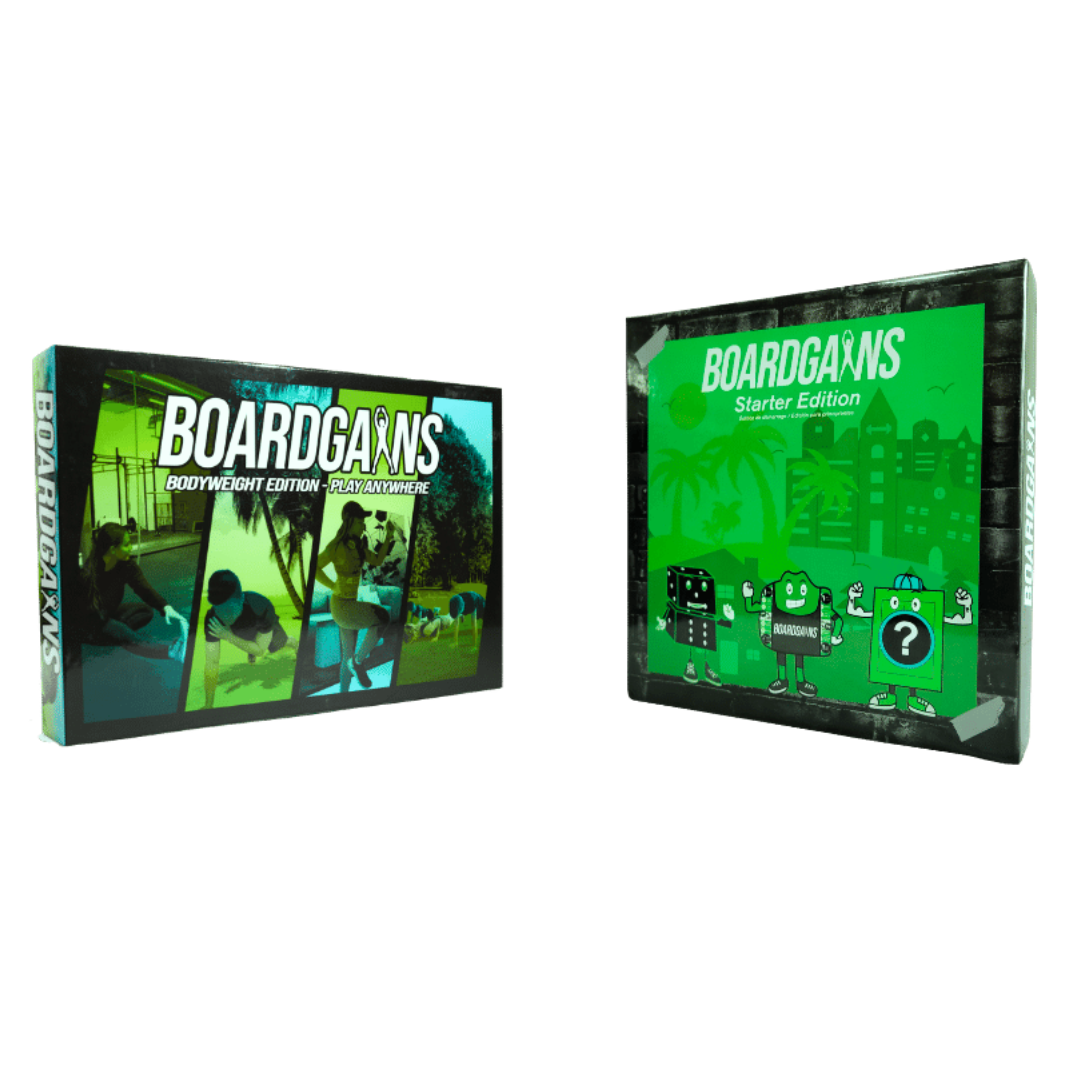
Modification: Use the Starter Edition for a beginner-friendly workout or the Pro Edition for more movement variety.
2. Fitness Four Corners
Best for: Warm-ups and small spaces | Equipment: Four signs | Time: 5–12 minutes
Post one movement in each corner. Students choose a corner, complete a short interval, and move when the next round begins.
- Label the corners strength, cardio, core, and mobility.
- Students choose any starting corner.
- Run a 20- to 40-second work period.
- Give 15 seconds to select a new corner.
- Continue until students visit all four areas.
Keep it engaging: Roll a die to award a bonus point to one corner, but never eliminate students.
3. Team AMRAP
Best for: Fitness and student choice | Equipment: Exercise list | Time: 12–20 minutes
AMRAP means “as many rounds as possible.” Small teams divide a shared exercise total and try to complete quality rounds before time ends.
- Create teams of three or four.
- Post three to five exercises with team repetition totals.
- Let students decide how to divide the work.
- Record one round after every exercise is complete.
- Continue until the timer ends.
Example round: 30 squats, 40 seated punches, 30 step jacks, and 60 total seconds of plank.
Modification: Students can choose standing, seated, or floor options while still helping with the team total.
4. Fitness Dice
Best for: Quick setup | Equipment: Dice and movement chart | Time: 8–15 minutes
One die selects the exercise and a second die selects the repetitions or work time.
- Assign one movement to each number from one to six.
- Teams roll to select the movement.
- Roll again and multiply by two for repetitions or five for seconds.
- Everyone completes the movement together.
- Rotate the roller after each turn.
Teacher tip: Add one “team choice” number so students have some control over the workout.
5. Reaction Cone Challenge
Best for: Agility and listening | Equipment: Four colored cones per group | Time: 5–10 minutes
Students react to a color or number call, move to the matching cone, and return to the middle.
- Place four cones around groups of three to five.
- Students begin in the centre.
- Call a cone color or number.
- Students move, touch beside the cone, and return under control.
- Add a squat, step jack, or balance after each return.
Modification: Students can point, step, reach, walk, or wheel toward the called cone.
6. Capture the Cones
Best for: Strategy and teamwork | Equipment: Cones or beanbags | Time: 10–18 minutes
Teams collect objects from the middle and return them to their home zone. The game uses clear light, visible boundaries, and no body contact.
- Create four team zones around a centre circle.
- Place cones or beanbags in the middle.
- One player per team enters the centre at a time.
- The player collects one object and returns it to the team zone.
- Rotate runners until time ends.
Active waiting: Teammates complete a low-intensity movement beside their zone.
Rule: Students may not block, guard, or take objects from another player's hands.
7. Movement Scavenger Hunt
Best for: Choice and problem-solving | Equipment: Clue or exercise cards | Time: 15–25 minutes
Teams search for stations around the gym and complete each movement challenge.
- Place numbered cards around the activity area.
- Give every team a different starting number.
- Teams travel together and complete the listed task.
- Students record the station before moving on.
- The team that completes the most quality stations wins.
Teacher tip: Let teams visit stations in any order to prevent crowding.
8. Indoor Fitness Relay
Best for: High energy and locomotor skills | Equipment: Cones | Time: 8–15 minutes
- Create short lanes with clear turning cones.
- The first student travels to the cone and returns.
- The student completes five controlled exercise repetitions.
- The next teammate begins after a clear signal.
- Change the travel pattern each round.
Travel ideas: Power walk, jog, side shuffle, skip, or controlled backward walk when the space allows.
Teacher tip: Use teams of three to five instead of two long lines.
9. Fitness Bingo
Best for: Mixed abilities | Equipment: Bingo cards | Time: 10–20 minutes
Replace numbers with movements such as squats, step jacks, wall push-ups, balance holds, and seated punches.
- Give each student or team a card.
- Call a square or let students choose their path.
- Complete the movement before marking the square.
- Play for one line, four corners, an X, or a full card.
Modification: Put two movement choices in each square so students can select the option that works for them.
10. Rock-Paper-Scissors Fitness
Best for: Social warm-ups | Equipment: None | Time: 5–10 minutes
- Students pair up and play one round of rock-paper-scissors.
- The result selects a short movement: rock = squats, paper = step jacks, scissors = standing body crunches.
- Both students complete the movement together.
- Partners separate and find someone new.
Teacher tip: There is no elimination. Everyone performs the movement and returns to play.
11. Team Circuit Challenge
Best for: Full-body fitness | Equipment: Station signs and optional mats | Time: 15–30 minutes
Create six stations that train different skills. Teams collect points for completing quality work at each station.
Station ideas: Squats, wall push-ups, high knees, glute bridges, balance, and mobility.
- Place three to five students at each station.
- Work for 30 to 45 seconds.
- Allow 15 to 20 seconds to rotate.
- Complete two or three laps.
- Give bonus points for teamwork and clean transitions.
12. Volleyball Skills Challenge
Best for: Coordination and communication | Equipment: Balloons, beach balls, or lightweight balls | Time: 10–20 minutes
Small teams try to complete a set number of controlled passes without the ball touching the floor.
- Create teams of three to six.
- Give each team a light ball and marked space.
- Count consecutive passes.
- Reset the count after a drop.
- Add a new challenge after teams reach the first target.
Challenge options: Use forearm passes only, require every teammate to touch the ball, or alternate high and low passes.
13. Target Toss Fitness
Best for: Accuracy and active recovery | Equipment: Beanbags, hoops, buckets, or floor targets | Time: 10–18 minutes
- Create several targets with different point values.
- Students take one controlled toss per turn.
- The point value selects repetitions or team points.
- Teammates complete an active recovery while waiting.
- Rotate the throwing distance between rounds.
Modification: Change the target size, distance, throwing position, or object rather than removing a student from the game.
14. Mystery Movement Cards
Best for: Small spaces and workout variety | Equipment: Exercise cards or blocks | Time: 8–18 minutes
- Place movement cards face down in the centre of each group.
- One student selects a card.
- The student reads or demonstrates the exercise.
- Everyone completes the movement together.
- Rotate the leader after every card.
Teacher tip: Include wildcard cards such as “team choice,” “coach's challenge,” or “choose a mobility movement.”
15. Beat-the-Clock Class Challenge
Best for: Teamwork and class finishers | Equipment: Timer and movement totals | Time: 5–12 minutes
The entire class works together to complete a shared challenge before time ends.
- Divide the class across four movement stations.
- Give every station a class total.
- Students divide the work safely.
- Stop each station when its total is complete.
- The class wins when all four stations finish.
Example totals: 150 squats, 300 seated punches, 150 step jacks, and 120 total seconds of plank or wall plank.
Teacher tip: Repeat the challenge later and let students try to beat their own class time—not another class.
How to Keep Every Student Active
- Use more teams with fewer students.
- Start groups at different stations.
- Add active waiting zones with marching, balance, or mobility.
- Use timed rounds instead of elimination.
- Give students roles such as roller, counter, leader, coach, or scorekeeper.
- Reward safe form, communication, and effort—not just speed.
Inclusive Modifications for Indoor PE
| Game Element | Possible Modification |
|---|---|
| Running | Walk, wheel, march, or shorten the lane |
| Jumping | Step or reach instead |
| Floor exercise | Use a wall, bench, chair, or standing option |
| Small target | Increase target size or reduce distance |
| Fast response | Use a visual cue and allow more time |
| Individual score | Use team completion or personal improvement |
Indoor PE Plans for Different Class Lengths
20-Minute Quick Game
- 3 minutes: Dynamic warm-up
- 3 minutes: Explain and practise
- 11 minutes: Fitness Dice, Four Corners, or Relay
- 3 minutes: Cooldown and review
30-Minute PE Class
- 5 minutes: Reaction Cone warm-up
- 5 minutes: Exercise review and teams
- 15 minutes: BoardGains, Bingo, or Team Circuit
- 5 minutes: Cooldown and team reflection
60-Minute Full Lesson
- 8 minutes: Warm-up game
- 7 minutes: Skill and movement practice
- 20 minutes: Main game
- 15 minutes: Second game or team challenge
- 10 minutes: Cooldown, cleanup, and reflection
Frequently Asked Questions
What are the best indoor PE games for middle school?
The best games feel age-appropriate, include choice and strategy, and keep students active. BoardGains, team circuits, Fitness Bingo, reaction games, scavenger hunts, and team challenges are strong options for grades 6–8.
What indoor PE games require little equipment?
Fitness Four Corners, team AMRAPs, Fitness Dice, rock-paper-scissors fitness, and Beat-the-Clock challenges need little more than signs, dice, or a whiteboard.
How can I run PE in a small space?
Use stationary movements, partner challenges, short travel lanes, small teams, and clear personal workout spaces. Avoid activities that send many students across the room at once.
How do I make indoor PE engaging for reluctant students?
Offer movement choices, use short rounds, let students choose roles, and score teamwork or improvement. Avoid public elimination and activities where one mistake removes a student from play.
How can I modify games for different abilities?
Adjust travel, impact, range of motion, equipment size, distance, repetitions, or work time. Students can also lead, roll, count, coach, or track team progress.
How many students should be on each team?
Teams of three to six usually create more turns and less waiting. Use additional teams when your space and equipment allow.
Can these indoor games fill an entire PE lesson?
Yes. BoardGains, a team circuit, AMRAP, or scavenger hunt can serve as the main activity. Add a short warm-up, movement review, and cooldown to create a complete class.
How can I make competition more inclusive?
Award points for effort, movement quality, communication, team spirit, and improvement. Use timed rounds so every group stays active until the same finish signal.
Make Indoor PE the Class Students Look Forward To
Indoor PE games work best when students understand the goal, have enough space, and know how they can contribute. Keep the rules simple, demonstrate the movements, and offer choices before the action starts.
You do not need a complicated setup to create an exciting lesson. One game, clear team roles, and a short Gains Goal can turn a rainy-day class into an active experience students remember.
Turn Your PE Class Into a Game
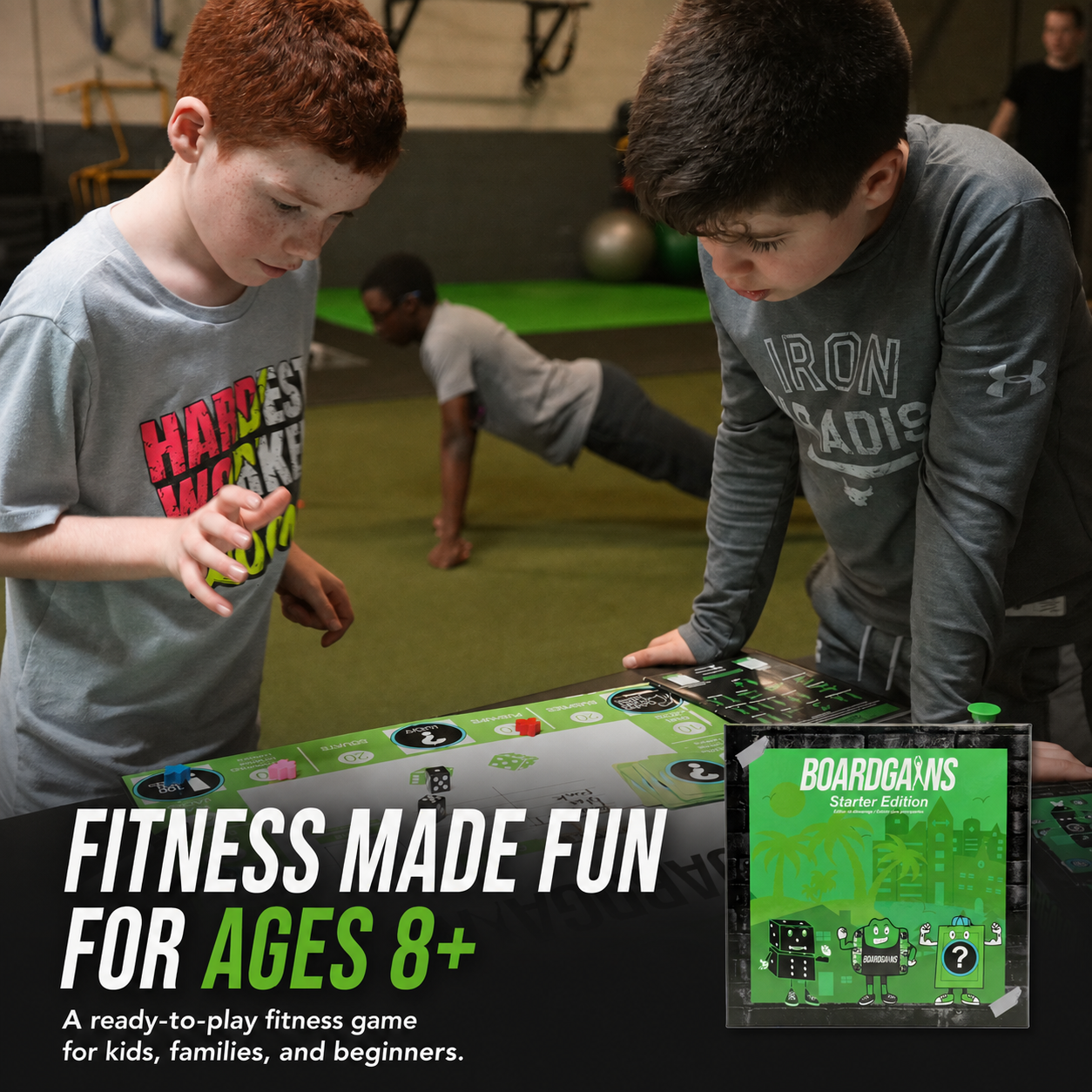
BoardGains gives middle school students a fun, social bodyweight workout while the board guides the activity. Set your Gains Goal, start every team together, and let the game run the workout.
Source
About the Author: Eric Mathura holds a B.Sc. in Kinesiology and has more than 10 years of experience as a personal trainer and group fitness instructor. He created BoardGains to make fitness more fun, social, and engaging for every group.
Updated August 2026.

Leave a comment
This site is protected by hCaptcha and the hCaptcha Privacy Policy and Terms of Service apply.