
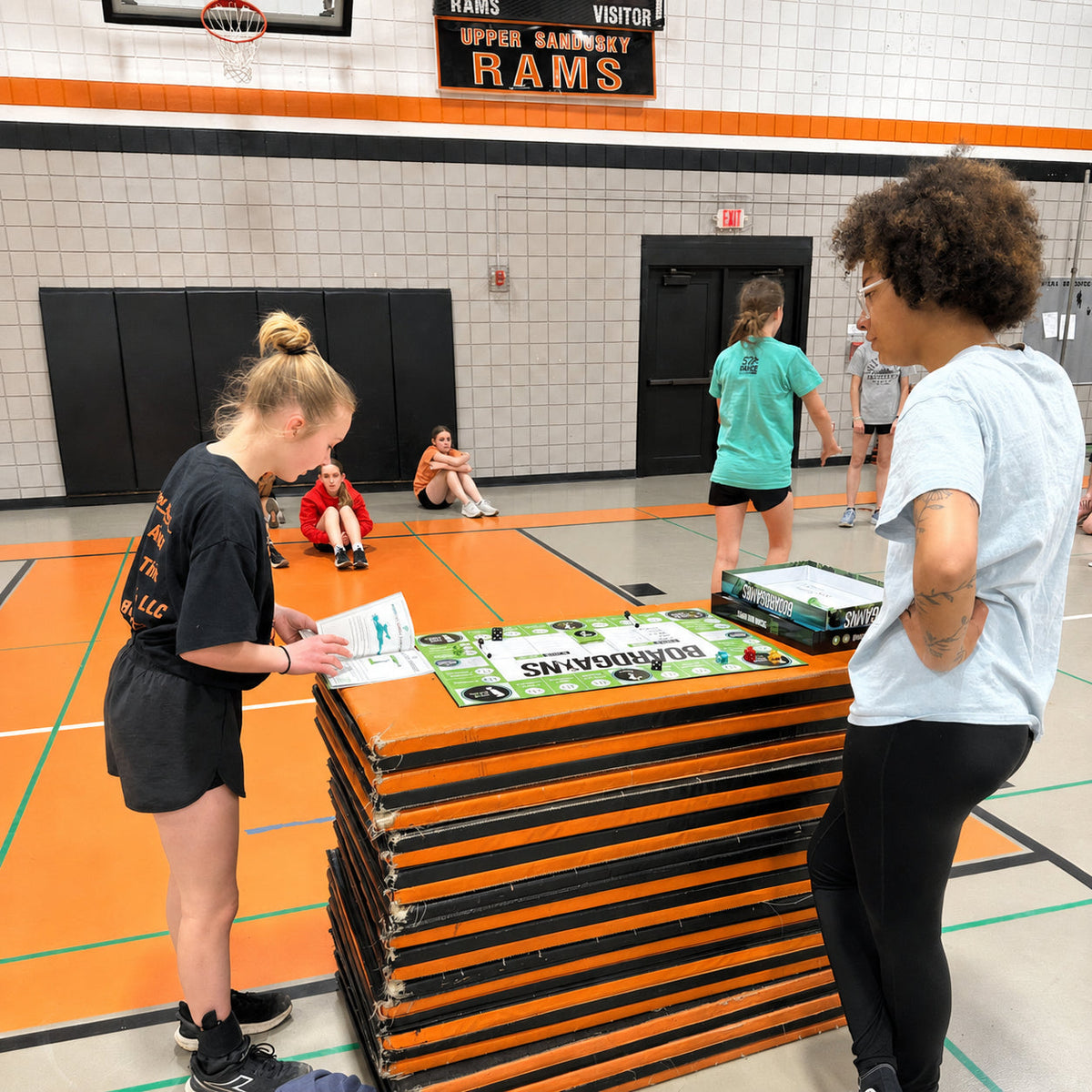
Rain may move track practice indoors, but it does not have to take the energy out of the session.
During his first year coaching middle school track and field, Josh O. added BoardGains to his rainy-day practice plan. The athletes enjoyed it. The other coaches enjoyed it. Even the school’s Athletic Director took notice.
“5 Stars. 10 out of 10. HIGHLY recommend this game for adding competitive fun to your workouts and training.”
— Josh O., middle school track coach
See how BoardGains works for schools and PE programs →
The Rainy-Day Practice Problem
Track and field athletes are used to open space, running lanes, and event-specific practice. When bad weather moves everyone indoors, coaches need an activity that keeps a large group moving without needing a full weight room or complicated station setup.
Josh wanted something that could add conditioning and competition to indoor practices. BoardGains gave him a ready-to-run bodyweight workout that athletes could play in teams.
Before your first game, use the free BoardGains Exercise Guide to review the movements and choose modifications for your athletes.
How Josh Sets Up His Track Team
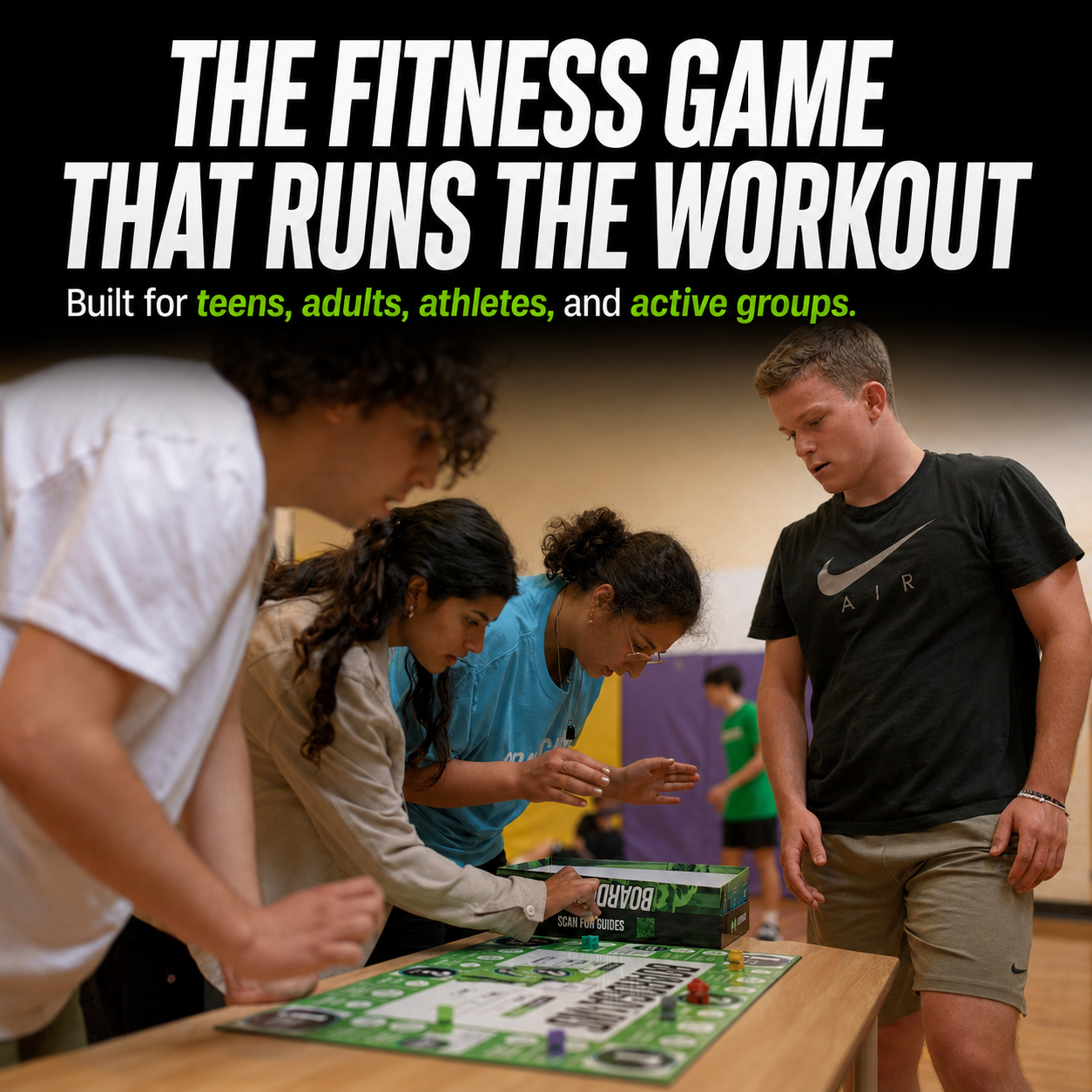
Josh divides the athletes into even teams. Each team chooses one Captain who rolls the dice and moves the game piece around the board.
This small leadership role made a big difference. During the first game, everyone crowded around the board because every athlete wanted to see the action. Josh said the chaos added to the fun—but it also made the game harder to referee.
Giving one Captain control of the dice and game piece helped organize each team while keeping everyone involved in the workout.
Coach tip: add a Co-Captain
For larger groups, appoint a Co-Captain too. The Captain rolls and moves the piece. The Co-Captain checks the exercise, repetitions, and team progress. Rotate both roles during the next game so more athletes get a chance to lead.
Four Smart Upgrades From a Real Coach
Josh did more than open the box and play. He adjusted the setup to fit his athletes and coaching space.
1. Use markers that match the game pieces
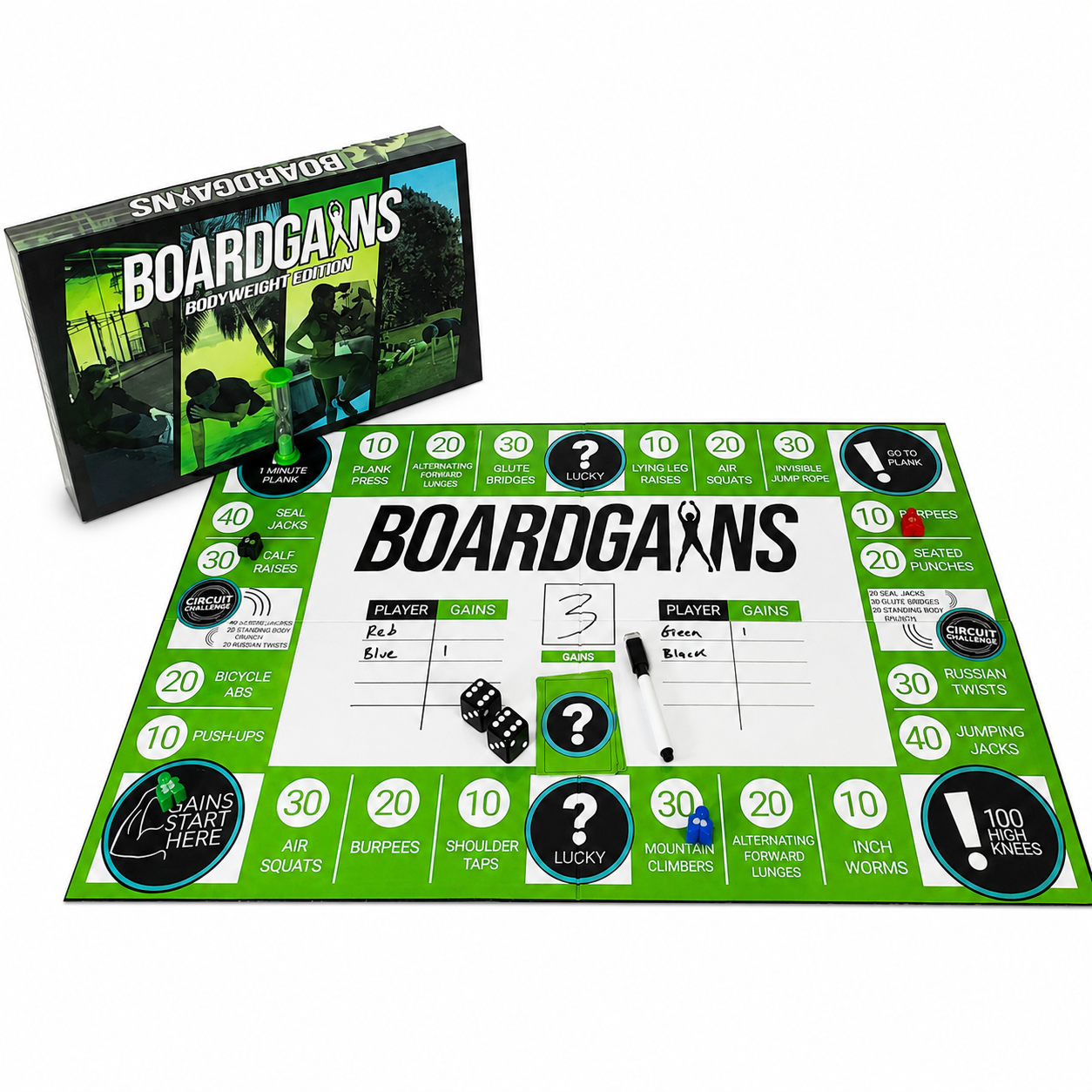
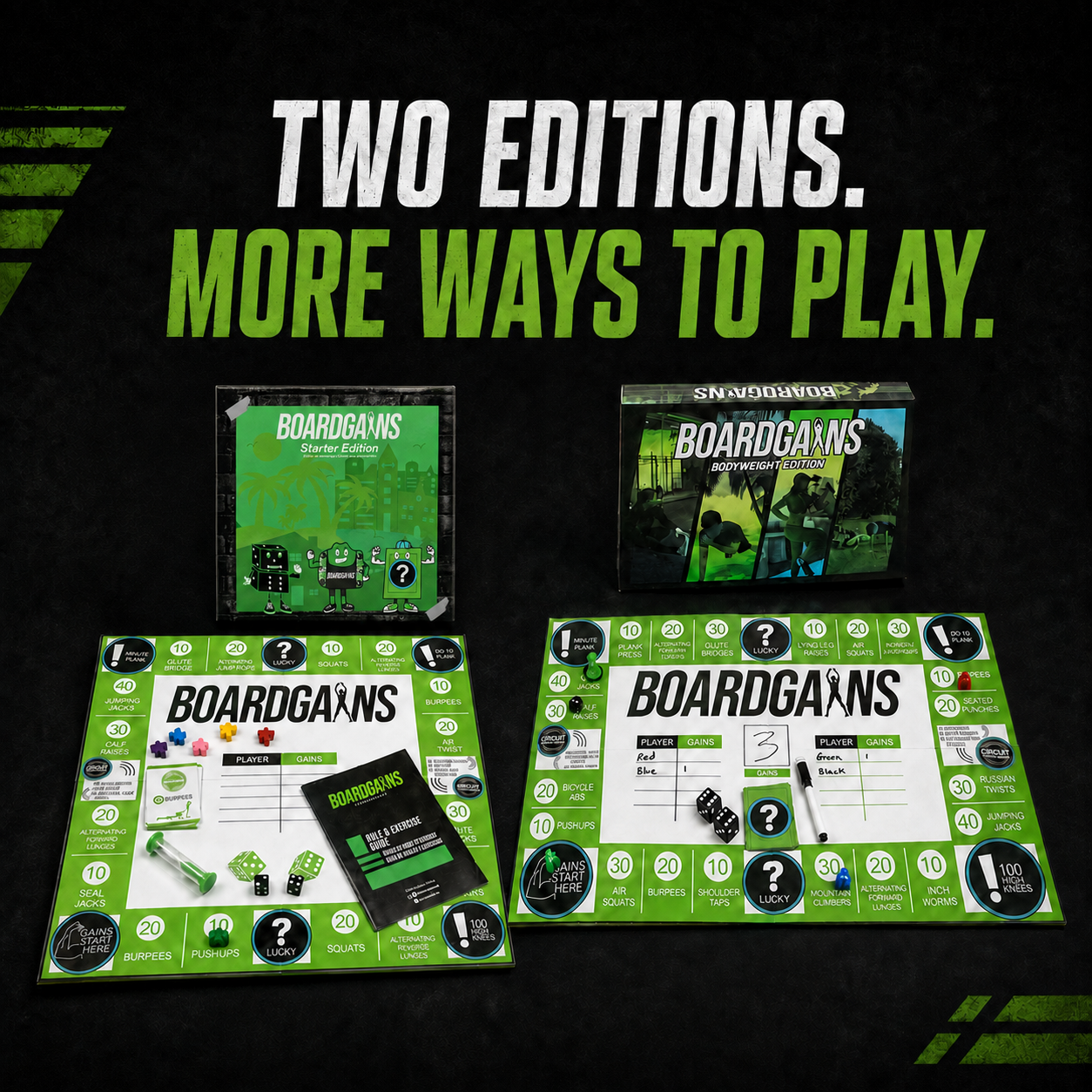
Josh added extra dry-erase marker colours that match the team pieces. Each team can clearly see its score or lap tally without confusing it with another team’s progress.
2. Turn the box cover into a dice tray
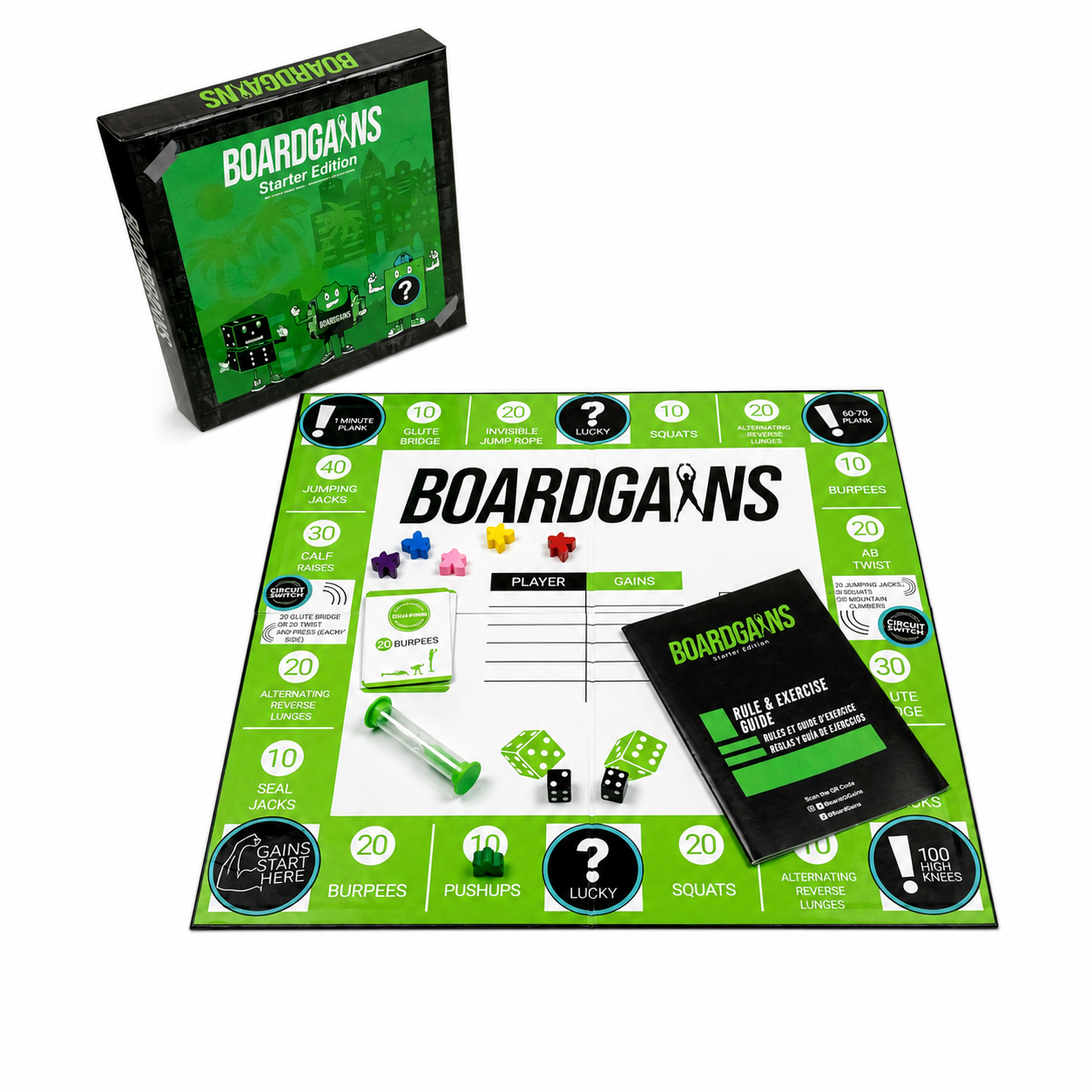
Josh added a dice tray to keep the dice off the gym floor and away from the scoreboard. BoardGains already has a simple version of this tip in the School Guide: flip the box cover upside down and use it as the dice tray. It contains every roll, reduces hands reaching across the scoreboard, and requires no extra equipment.
3. Use two dice when you want a faster game
Rolling both dice helps teams move around the board faster. This works well when indoor practice time is short or when you want to play more than one match.
4. Use one die when you want a longer game
Josh found that his athletes often finished faster than expected. Removing one die slowed the pace and extended the game without changing the exercises or adding more equipment.
Game length also depends on the number of laps. In BoardGains, one lap around the board equals one Gain. Coaches can adjust both the dice and the Gains Goal to fit the time available.
Need a quick rules refresher? Visit the How to Play BoardGains page and keep the free Exercise Guide nearby during the first session.
Steal Josh’s Indoor Track Practice Setup
Here is a simple version another track coach can run during a rainy-day practice.
1. Form balanced teams
Split athletes by mixing event groups, experience levels, or fitness levels. Three to six teams works well for larger practices.
2. Set up the built-in dice tray
Flip the BoardGains box cover upside down and place it beside the board. Captains roll inside the cover so the dice stay contained and away from the scoreboard.
3. Create team zones
Give each team a safe exercise area about 10 feet from the board. Only the Captain needs to approach the board. This reduces crowding and gives athletes room to move.
4. Choose the pace
- Shorter practice: Use two dice and a lower Gains Goal.
- Longer practice: Use one die and increase the Gains Goal.
- Quick rematch: Keep the goal low, switch Captains, and play again.
5. Roll, move, and sweat
The Captain rolls the dice, moves the piece, and calls out the exercise. The full team completes the movement together before the next roll.
6. Track every Gain
Use matching dry-erase markers to record each completed lap. The first team to reach the Gains Goal wins.
A Ready-to-Run 45-Minute Rainy-Day Practice
- 5 minutes: Dynamic warm-up and movement preparation
- 5 minutes: Demonstrate key exercises and explain the rules
- 3 minutes: Form teams, choose Captains, and assign team zones
- 25 minutes: BoardGains team competition
- 7 minutes: Cooldown, announce the winning team, and review the practice
Coaches can also connect the workout to track goals. Ask athletes to focus on controlled landings, strong posture, steady pacing, and supporting teammates between turns.
Why It Worked With Middle School Athletes
Middle school athletes often respond well to short goals, team roles, and friendly competition. Instead of presenting indoor conditioning as a backup workout, BoardGains turns it into something athletes can look forward to.
The game also gives the coach a clear plan. The board selects the movements while the coach watches technique, manages the room, and encourages the athletes.
You run the room. The game runs the workout.
Looking for more weather-proof activities? Explore these indoor PE games for middle school students.
Frequently Asked Questions
Can BoardGains work for a large track team?
Yes. Divide athletes into three to six teams and give each team its own exercise space. A Captain controls the game piece so the board does not become crowded.
Does the game require workout equipment?
No. BoardGains uses bodyweight exercises, making it useful when the track team moves into a gym, classroom, hallway, or other approved indoor space.
How can a coach change the game length?
Use two dice for faster movement, one die for a slower game, and adjust the number of laps needed to win. One completed lap equals one Gain.
Can athletes of different fitness levels play together?
Yes. Coaches can adjust repetitions, pace, range of motion, or exercise options. Teammates can also share repetitions while working toward the same goal.
Where can coaches learn the exercises?
Download the free BoardGains Exercise Guide for movement demonstrations and exercise support.
Make the Next Rainy Day a Game Day
Josh’s first season shows that an indoor practice can still build fitness, leadership, teamwork, and competitive energy. A few simple coaching adjustments helped him control the room and shape the game around his schedule.
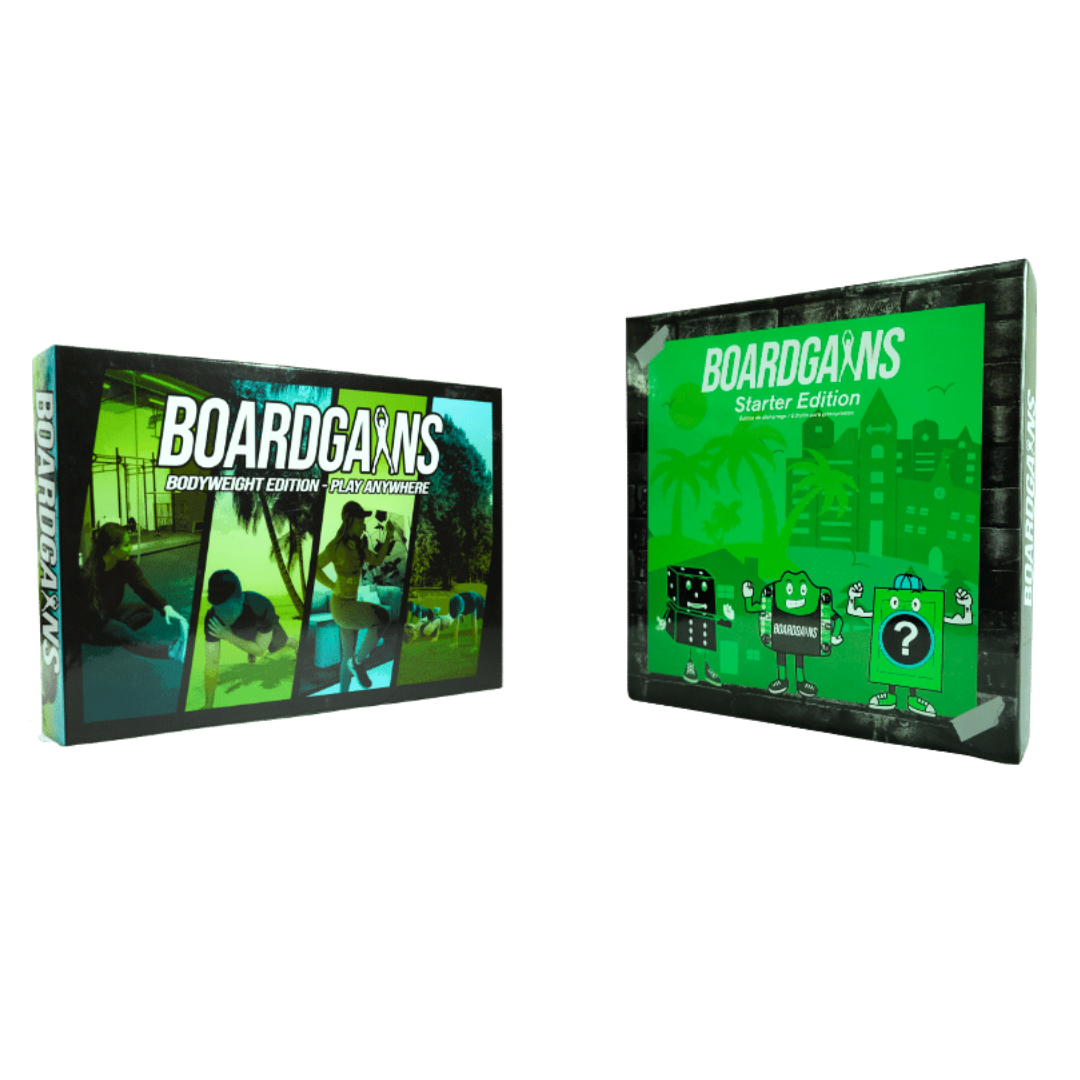
Shop the BoardGains Pro Edition for your team →
Fun like a game. Tough like a workout.

Laisser un commentaire
Ce site est protégé par hCaptcha, et la Politique de confidentialité et les Conditions de service de hCaptcha s’appliquent.